



The Power Of Routine: Creating Daily Habits For Successful Trading


Developing a strong trading habit doesn’t happen overnight. These are behaviours that can take months, even years, to form. Luckily for you, there are things that you can do to help bring forth these trading habits sooner than many would think possible.
Building positive habits that can lead to success in the trading world requires a conscious effort. All you need to do is implement a consistent daily routine and you can set yourself on the right path to achieving them.
Think about it – Do you have a routine for trading? What’s the first thing that comes to mind? Did you know that ALL professionals, including doctors, athletes, and traders, have strict routines that they follow, even without realising it. They follow these routines and plans like clockwork – everything from sleep, diet, meditation, and exercise. These practices become ingrained habits over time. And when they do, it’s like switching to autopilot.
Why Routine Matters In Trading
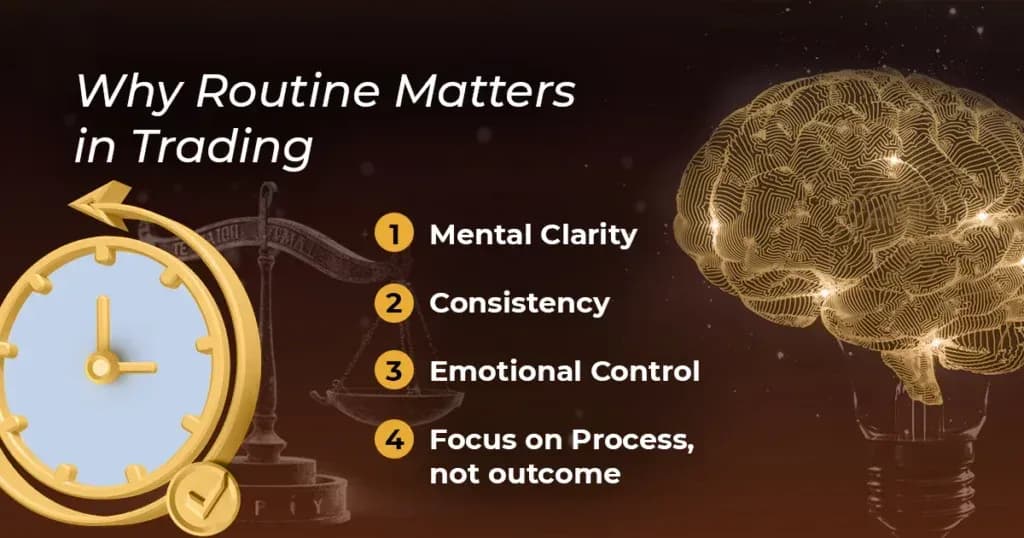
Trading isn’t just about reading charts or executing strategies – it’s about mental discipline and emotional control. A routine creates structure, which is a good foundation for uncertainty. Here are a few reasons why having a routine is critical:
- Mental Clarity Trading requires sharp decision-making under pressure. A solid routing primes our brain to perform optimally, minimising distractions and indecision. Getting enough sleep and exercise is needed for optimal trading performance. Having a good night’s sleep, coupled with a regular workout, can help increase energy levels, reduce stress and anxiety, and improve your health and general well-being.
- Consistency Routine reinforces positive habits and eliminates guesswork. It’s easier to track performance, refine strategies, and learn from mistakes when you’re working within a structured framework. Sticking to a routine ensures you never deviate from your trading strategy and that you always make sure to implement proper risk management practices. By doing so, you get to remain focused, become profitable, and avoid impulsive decision-making.
- Emotional Control Traders often battle psychological challenges such as fear and greed. A well-designed routine includes breaks and stress-relief activities, helping to stabilise emotions. Your ingrained habits help make you self-aware. By establishing a routine and sticking to it, it becomes easier to implement risk management strategies, seek support from mentors and peers, and account for every position you open or close in the markets.
- Focus on Process, not outcome Successful traders don’t just focus on making money—they focus on following their plan. A routine helps shift the focus from the unpredictable outcome of individual trades to the consistent execution of your trading plan. It changes your thinking by making you want to WAIT for a setup that satisfies certain conditions. A routine guarantees that you won’t get lured into opening a position until all these conditions have been met.
Key Elements Of A Productive Trading Routine
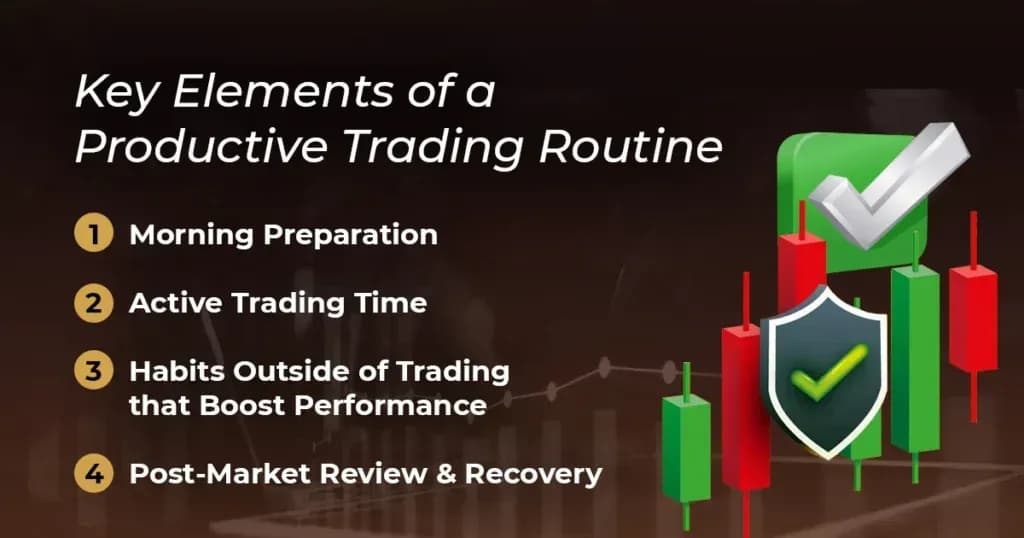
A well-defined trading routine helps foster focus and trading discipline. This structured approach to trading enables you to analyse markets, identify excellent trade opportunities, and execute strategies. Ultimately, the routine helps improve your ability to navigate market fluctuations and potentially attain consistent profits in the long run.
To build a powerful trading routine, you need to design it with productivity and self-care in mind. Here’s a step-by-step guide to structuring your day for peak trading performance.
Morning Preparation
Morning preparation activities help you clear your mind and are key to getting you in the zone for trading. Before you start looking at charts, set aside a few minutes each morning to complete the following activities:
- Physical exercise Physical activity improves focus, reduces stress, and boosts overall energy levels. Whether it’s a morning run, yoga, or just some stretches, starting your day with exercise sharpens your cognitive function for trading.
For a simple routine, try incorporating seated leg lifts or core twists while sitting, or standing exercises like calf raises or squats to improve blood circulation during trading breaks. For more fitness ideas, check out blogs like Nerd Fitness or Breaking Muscle, and explore Youtube channels like Yoga with Kassandra or HASfit for a variety of exercises you can do at home.
- Meditation or Mindfulness Incorporating 10-15 minutes of meditation helps improve concentration and emotional control—skills vital for traders dealing with high-pressure situations. Simple practices like deep breathing or guided visualisations can help you stay calm and focused during stressful moments. For guided meditation, check out Youtube channels like Headspace, The Honest Guys, and Great Meditation. These channels offer a variety of mindfulness exercises, from quick sessions to more in-depth practices, tailored to help you sharpen your mental clarity and resilience.
- Healthy Nutrition What you eat directly influences your brain function and energy levels. A balanced breakfast that’s rich in protein, healthy fats, and fibre keeps your mind sharp throughout the trading session. Avoiding excessive sugar and caffeine also prevents energy crashes later in the day. We all know it’s easier said than done – after all, who can resist a good cup of coffee or a sweet treat now and then?
- Market Overview Before jumping into trades, take a moment to review the news, economic events, and major overnight market movements. This gives you a sense of what to expect and prepares you for possible volatility. Think of it as your trading compass – because let’s face it, navigating the market without this is like trying to find your way in a maze blindfolded.
- Plan Your Trades Identify key levels, setups, and potential opportunities for the day. Drafting a solid trading plan is like setting up your roadmap. Write down your trading plan, which should include entry and exit strategies, risk parameters, and overall goals. After all, trading without a plan is like going on a road trip without a GPS; sure you might end up somewhere interesting, but it’s a lot easier when you know where you’re headed.
Active Trading Time
Trading routines are decisive when it comes to attaining success in the financial markets. You must remember that there’s no algorithmic trading robot or magic indicator that will transform you into a profitable trader overnight. Your trading routine can lead you to insane financial success, but you’ll first need to develop it.
See also How Real and Profitable is Forex Trading?
For this to happen, you need to do the following:
- Stick to Your Strategy: During the trading session, it’s crucial to follow your pre-set rules. Avoid impulsive trades based on gut feelings or market noise. Review your charts, indicators, and other analysis tools regularly.
- Take Regular Breaks: Trading can be mentally exhausting. Schedule short breaks to avoid burnout and emotional fatigue. During breaks, step away from your screens, get some fresh air, or do something unrelated to trading.
Incorporating these two factors into your daily trading routine will help change the way you approach your decision-making.
Habits Outside Of Trading That Boost Performance
It may seem counterintuitive to a beginner trader, but the events happening outside your normal trading hours can significantly impact your state of mind during active trading. And when this happens, the result typically tends to be negative.
Stress and anxiety in any form are pervasive. Whether it’s a bad relationship, fatigue, the death of a loved one, or low self-esteem, stress can have a derogatory impact on your decision-making processes. When you add financial pressure to all this, it becomes clear why many new traders trip up in the first few weeks.
The following is a list of habits that you should strive to form outside of your normal trading hours to boost your performance in the money markets.
- Daily Exercise Physical activity doesn’t just have to be a morning routine. Taking time to move your body throughout the day—whether that’s a midday walk or evening gym session—improves overall well-being and reduces the physical toll of sitting at a desk. Regular workout also releases endorphins, which can assist in improving mood levels and decreasing stress.
- Adequate Sleep Sleep is one of the most overlooked components of successful trading. Lack of sleep impairs judgement, reduces concentration, and leads to poor decision-making. Aspire to get 7 to 8 hours of uninterrupted sleep nightly to ensure you’re sharp and alert for the next trading session.
- <strong>Reading and Continuous Learning Successful traders are always looking to expand their knowledge. Take time daily to read trading books, listen to podcasts, or watch market-related webinars. Continuous learning not only improves your skillset but keeps your mind engaged with fresh ideas. For insightful reads, consider these books:
- “Trading for a living” by Dr. Alexander Elder
- “The Intelligent Investor” by Benjamin Graham
- “A Random Walk Down in Wall Street” by Burton G. Malkiel
- “Market Wizards” by Jack D. Schwager
- “One Up on Wall Street” by Peter Lynch
- Journaling and Reflection Keeping a journal of both your trades and personal reflections can be extremely beneficial. Note your daily trading performance, emotional state, and any patterns or insights you observe. Personal reflections on stress levels, emotional reactions, and how external factors (like sleep or stress) affected your trades can offer valuable insights for growth.
See also 5 Questions to ask yourself before start trading ?
It’s important to understand that trading the markets is more like taking part in a professional sport than being part of an accounting exercise. Trading requires you to have a plan, to practice, be patient, and have a healthy body and mind.
Post-market Review & Recovery
As a trader, just because the trading day has come to an end doesn’t mean that you can afford the luxury of finishing your trades and simply walking away. You need to remember that as much as Forex Trading is about discipline, it’s also about being able to evaluate your actions and decisions.
The reality is that there’s no one formula for successful trading. As such, your formula needs to evolve over time, and this can only happen if you’re able to evaluate your ideas intellectually. To help with this, you should make it a point to conduct a post-trade analysis. Creating a post-trade processing workflow is an excellent way to get started.
The steps below can help with the post-market review and recovery process:
- Analyse Your Trades: Review the day’s trades objectively. Look at what worked, what didn’t, and whether you adhered to your plan. Keeping a detailed trading journal helps track your progress over time and identifies areas for improvement.
- Relax and Unwind: Trading can be mentally exhausting, so it’s crucial to switch off and decompress after the markets close. Engage in hobbies you enjoy, whether it’s playing a sport, spending time with family, or watching a favourite show. Unwinding helps reset your mind, preventing burnout and keeping your stress levels in check.
- Plan for Tomorrow: Before bed, do a quick review of tomorrow’s market events and possible setups. This reduces anxiety, gives you a sense of preparedness, and helps you sleep with peace of mind, knowing that tomorrow is planned.
Long-term Impact
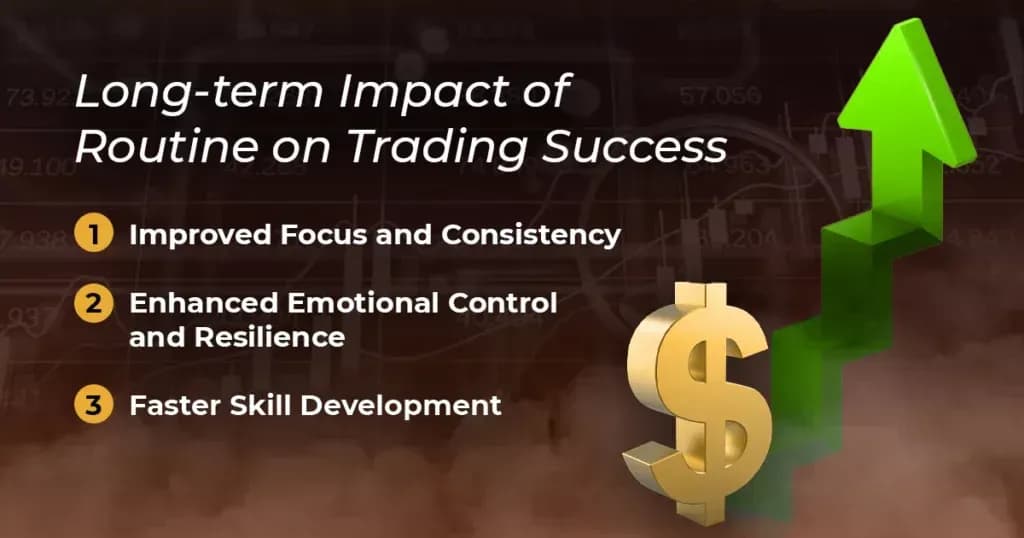
Building and sticking to a routine might feel like a small effort in the short term, but over time, it creates a powerful compounding effect. Traders who consistently follow routines become more disciplined, make fewer emotional mistakes, and are better equipped to adapt to changing market conditions. Here are some long-term benefits of maintaining a daily trading routine:
- Improved focus and consistency
- Enhanced Emotional Control and resilience
- Faster Skill Development
- It helps cultivate different attitudes, such as patience and discipline
Conclusion
The daily routine of any successful trader revolves around discipline, preparation, and continuous improvement. Incorporating habits such as exercising and journaling into your trading day can help enhance your decision-making processes. These are habits that will enable you to manage your risks more effectively and boost your chances of becoming consistently profitable. But for this to happen, you must have a routine.
For more tips on how to create daily habits for successful trading, let’s continue this conversation on our discord channel and share your tips and tricks with our community

Bereit, diszipliniertes Risiko auf Krypto anzuwenden? Entdecken Sie die neuen Krypto-Instrumente von Audacity Capital und bringen Sie Ihre Trading-Strategie mit.
Mehr erfahrenNewsletter
Treten Sie unserem Newsletter bei, um auf dem Laufenden zu bleiben.
Treten Sie unserer sozialen Gemeinschaft bei

Beginnen Sie Ihre Reise heute Mit unserer kostenlosen Testversion
Präsentieren Sie stolz Ihre Fähigkeiten und Leistungen durch Zertifikate und erhalten Sie Anerkennung für Ihre harte Arbeit und Ihr Engagement von potenziellen Investoren und Kollegen.
Kostenlose TestversionVerwandte Artikel

How Trading Can Make You A Better Person?
Experience the transformative journey of becoming a trader. Learn how trading tests your ego, challenges your beliefs, and helps you grow as a person.


Why We Dont Use Demo/simulator Trading During Our Training Programs?
Learn why we don’t use demo or simulator trading during our training programs and why real market experience is essential for building discipline and confidence.
Top 10 Mistakes Funded Forex Traders Make And How To Avoid Them

Decision Making In Forex Trading
Improve your forex trading skills with effective decision making. Avoid common mistakes and increase your chances of success in the market.