



How To Build A Winning Trading Routine: Habits Of Successful Traders



Do you have a plan for how you approach your trading day? Becoming a successful and consistently profitable FX trader isn’t always a matter of chance. For example, one of the biggest differentiators between an amateur and a professional trader is their approach to trading. This is because one has a well-laid-out trading routine, while the other continuously finds themselves stumbling from one bad trade to the next.
The reality is that developing successful trading habits can help any trader improve their results while allowing them to reduce their overall trading time significantly. For instance, you’ll find that some seasoned traders rarely spend more than an hour a week on their trading. And all this is because they have learned how to become more effective and efficient in their trading. Read on to learn how you can develop some of these successful trading habits.
Why A Routine Is Critical For Trading Success
I think we are all in agreement in saying that your habits are what will determine whether you’ll become successful in any endeavour you choose to take on. The same holds true for trading. But how do you go about developing the kind of habits that will help you become a profitable trader? The answer is simple: trading discipline .
Unfortunately, proper trading habits don’t just appear out of nowhere. These can take years to form. The good news is that we all have the power to implement measures that can enable us to develop proper trading habits sooner than otherwise possible. A good starting point would be to make a conscious decision to implement routines that will contribute to consistent trading.
The Power Of Consistency In Trading
Consistency in trading involves much more than repeating the same set of actions day in, and day out. It requires you to maintain a steady approach, stick to your trading plan, and keep your emotions in check no matter what’s happening in the money markets. Whether trading indices, commodities, or forex, having a trading discipline will contribute to informed decision-making.
In the world of trading, a consistent trader is one who:
- Review their performance frequently, making sure to learn from their mistakes and refine their trading approaches.
- Sticks to their predetermined risk management strategies and understand the need to avoid excessive risk-taking even when the market conditions appear favourable.
- Execute trades based on well-thought-out entry and exit points. These are people who can follow their trading plans.
In this first quarter of 2025, many pro traders have already started thinking about what they intend to achieve by year’s end. The key to making sure that their goals will come to fruition will be to maintain focus in the coming days. If you’re to join them in attaining consistent trading profits, make sure to practice trading discipline.
Reducing Emotional Decision-making
Investor behaviour is normally driven by the collective psychology and action of the different players in the market. These psychological drivers can influence market trends, create price movements, and lead to the emergence of different types of behavioural finance biases. The chart below helps showcase some of these biases:
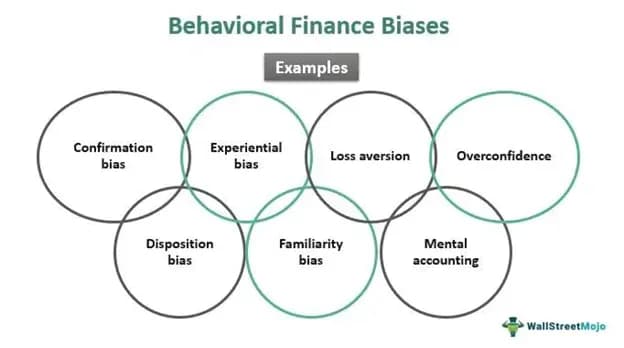
These biases often form due to the presence of key psychological drivers of market behaviour such as:
- Fear and Greed
- Overconfidence
- Herd Mentality
- Confirmation Bias
- Loss Aversion
It’s only by understanding these drivers that you can begin to implement measures that can help in mitigating their impact. Additionally, realizing that market movements don’t always occur due to rational decision-making may also help you make more informed decisions.
Essential Components Of A Winning Trading Routine
Make no mistake, you need a healthy trading habit if you’re to remain consistently profitable. For this, you must understand that there’s a difference between developing good trading habits and having a trading plan. The habits you develop along the way are what will give you the fortitude to put your trading plan into action. Examples of such habits include getting enough sleep, eating well, maintaining meticulous notes of your trading sessions, and sticking to your predefined plan even when market movements fluctuate. The infographic below shows an example of an ideal trading day .
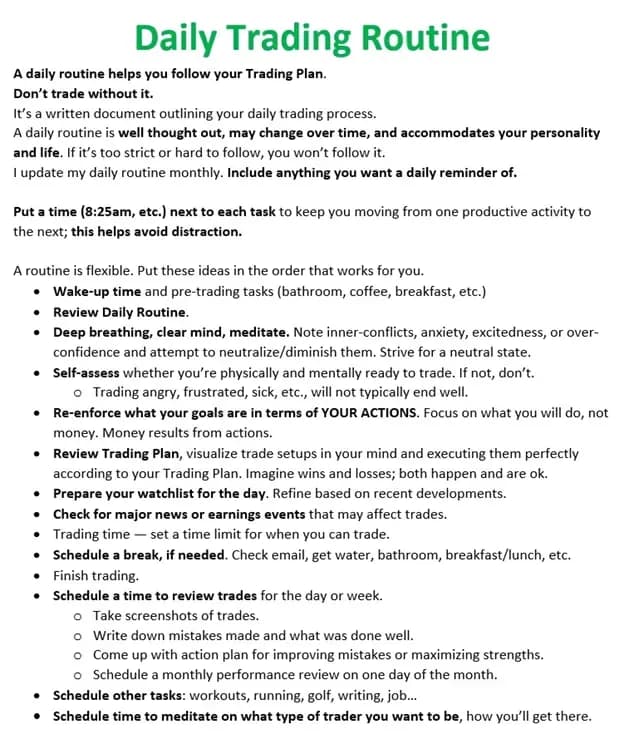
Source: TradeThatSwing
To develop a solid daily trading plan, make sure to include the following:
Pre-market Preparation: Analysing The Market And News
Professional traders consider it an urgent task due to the competitive nature of the financial markets. You must remember that these markets are in constant realignment, hence the need to be able to adapt fast.
Therefore, rather than try to squeeze in a few minutes of sleep each day, you should consider waking up early to analyse the market and news. The analysis you make will give you an idea of how the overnight session may impact your trading activity on that day. In your pre-market checklist, make sure to do the following:
- Check Index Futures
- Review the Macro Forces
- Filter the News Flood
- Look at What the Other Traders and Investors are Doing
- Note Down the Key Levels
- Identify Pre-Market Levels
- Find Safe Exit Points
- Buy the Dips

Executing The Trading Plan: Following Set Rules
Your trading plan will only be effective if you abide by it. And as simple as this may sound, many traders are unable to do so. The main reason for this is trader incompatibility. If a plan is to work, it needs to be personalized for your trading style. This means it should fit within your goals, risk tolerances, and personal preferences .
As a rule of thumb, your trading plan should include the following:
- Entry and Exit Rules: Clearly state when you intend to enter or leave a position. Mention how you’ll identify a good trade, including the indicators you’ll use in doing so.
- Risk Management: Establish how much money you’re willing to risk on a single trade. Be sure to set the maximum acceptable loss amount per trade.
- Position Sizing: State the number of lots, contracts, or shares you’ll trade. Your risk management rules can help you determine this.
- Trading Psychology: Create a set of rules that will help you keep your emotions in check when trading. These rules should include sticking to your trading plan.
Post-market Reflection: Reviewing Trades
Every trader should have a post-market review routine. This routine is just as important as the pre-market preparation routine. Here, you get to engage in what seasoned traders call a trade review exercise. During your reflection, consider doing the following:
- Journaling the Trades Taken: Enter all the trades you took during the trading session into your journal. You’ll need this information when preparing for the next day’s trading activities.
- Manage Your Trades: When managing your trades, you should ask yourself the following questions: Is there a major news event planned for later that night? If so, should you adjust your trades in anticipation?
- Should you move your Stop loss orders?
- Review each open trade and manage it based on your active trading strategy
Habits Of Successful Traders
By now, you’re aware that the most consistently profitable traders are those who have learned the importance of developing a trading routine. Besides having a routine, many of them also have habits that they do each day before they begin trading to boost their chances of success. Before we look at these habits, we must first answer the question, ‘ What is a habit? ’
A habit refers to an action that you make without any effort or intent!
With this out of the way, let’s now look at the table below which shows the difference in habits between successful and struggling traders.

The following is a more detailed look at the habits of successful traders:
Journaling Trades: Learning From Mistakes
As a trader, the best education tool you’ll ever have access to is your trading journal. Trading journaling allows you to capture your thoughts and ideas. It enables you to jot down your thoughts on paper, making it easier to analyse the mistakes you may have made during the day. An experienced trader will regularly keep extensive notes as it helps them organize their thoughts, set goals, and keep track of any new ideas that may have cropped up.
Managing Stress With Breaks And Mindfulness
The importance of developing successful trading habits involves learning how to practice mindfulness. If you’re to become successful and profitable, you must appreciate the need to disconnect and recharge. Taking regular breaks will aid in supporting mental sharpness and in boosting your decision-making ability. You must understand that trading isn’t everything and that there’s more to life than merely looking at price charts.
Consistently Educating Themselves
The world is constantly changing, and the only way to ensure that you don’t get left behind is to consistently educate yourself. As a trader, you can do this by reading articles, news, and books related to trading and investing. Focus on those that are related to the markets you trade or have an interest in pursuing in the coming days.
Tips For Sticking To Your Routine
Regardless of your preferred trading style, you’ll soon note that everyone will at some point encounter obstacles in their trading. For a full-time trader, this can be in the form of recurrent losses leading to a lack of mental strength. To avoid this, you need to learn how to develop productive trading habits – habits that will make sure you don’t deviate from your trading style.
The following three tips can help you get started:
Setting Realistic Goals
Every trader needs to have a set of realistic goals. These should include what they hope to achieve and how they intend to go about it. For any goal that you set, you’ll need to ensure that it’s more than a simple statement. It will need to be SMART and should reflect the kind of trader you are and the type of trading that you do.
When it comes to creating a trading style, you must ensure that it’s based on your personality, risk tolerance, and the amount of time you intend to commit to trading. Today, there are four main types of trading styles:
- Position Trading
- Day Trading
- Swing Trading
- Scalping
Choose the one that works best for you based on your availability and risk tolerance.
Avoiding Distractions During Trading Hours
Learning how to avoid distractions when trading is one of the most important trading discipline tips that every trader should master. Trading distractions can take on many forms including an empty stomach, a clingy dog, an annoying sibling, or even a catchy TikTok video. No matter the form it takes, a distraction is a distraction, and you must find a way to deal with it.
Use the following four tips to help you get started:
- Set a strict trading schedule. Whether you’re a part-time or full-time trader, having a schedule helps you maximize the time dedicated to trading.
- Remind the people in your life not to disturb you during your active hours. Asking your loved ones to be mindful of your schedule can do wonders for your consistency.
- Steer clear of non-trading websites when trading. For this, you may want to prepare a list of websites that tend to distract you so that you can avoid them.
- Only include trading-related material on your work desk. This will mean getting rid of your PS5 and other gaming devices.
Rewarding Yourself For Consistency
Success in the world of trading means being consistently profitable, which calls for you to develop a good trading plan. Once in place, you must abide by it, something that’s easier said than done. For a trader, one of the most destructive habits is that you can engage in ignoring your own rules when entering or exiting a trade. To break this habit, start by examining how you view success or failure .
You can judge your success or failure by checking whether you have been following your trading plan, as opposed to whether the trade resulted in a loss or profit. If you notice that you have remained consistent in your trading, grant yourself some reward to celebrate this milestone. Rewarding yourself for consistency will motivate you to keep learning and refining your plan.
Conclusion & Next Steps
If your goal is to become a successful trader, you must start by acting like one. Creating a trading routine is a step every trader must take if they’re to take their trading activities to the next level. And while this probably sounds like a lot of work for a beginner trader, you ought to realise that the only way you’re going to remain profitable is by developing successful trading habits. Many amateur traders fail because they lack the consistency and guidance needed to engage in full-time trading. Therefore, instead of straying around and hoping that things will work out eventually, why not create a routine today and wait to see its benefits within a few weeks?

Prêt à appliquer un risque discipliné aux cryptos ? Explorez les nouveaux instruments crypto d'Audacity Capital et apportez votre stratégie de trading.
En savoir plusNewsletter
Rejoignez notre newsletter pour rester informé.
Rejoignez Notre Communauté Sociale

Commencez Votre Voyage Aujourd'hui Avec Notre Essai Gratuit
Affichez fièrement vos compétences et réalisations grâce à des certificats et obtenez la reconnaissance de votre travail acharné et de votre dévouement auprès d'investisseurs potentiels et de pairs.
Essai GratuitArticles Connexes

Gold Hits Record Highs Then Crashes: The Full Fundamental Breakdown
Gold hit record highs before falling sharply. Why is gold crashing and will gold crash further? Discover the real reasons behind the gold price crash with insights from Audacity Capital.


How to Trade Gold (XAUUSD): The Complete Guide
Learn how to trade Gold (XAUUSD) like a professional trader with Audacity Capital. Discover proven strategies, risk management techniques, session timing, and expert tips for consistent gold trading success.

The Golden Cross And Death Cross A Simple Yet Powerful Forex Strategy Explained

Supply And Demand Zones: A Complete Guide For Serious Traders
Learn how to trade supply and demand zones with proven strategies, real examples, and smart risk management tips to improve consistency with Audacity Capital.