



How To Develop A Profitable Forex Trading Plan?



Do you ever find yourself feeling lost when trying to trade in a trading firm and miss out on profitable trading opportunities? Many traders constantly hunt around for signals, jump around time-frames, and chase the price only to end up being too late for worthy trades.
Following this type of reactive approach when trading will drain your energy and can also lead to emotionally driven trading mistakes such as price chasing. Additionally, many reactive traders tend to reach the end of a week feeling mentally exhausted and disheartened.
This approach contrasts sharply with proactive trading, where traders are able to use solid analysis to anticipate price movements. Experienced traders generally plan their trading sessions early on and then simply execute based on their forex strategies.
For you to transition into a proactive trader , consider using a trading plan backed by multiple risk management strategies. When you adhere to a trading plan, you get to maintain discipline, align your decisions with the market conditions, and minimize impulsive decision-making.
Key Components Of A Forex Trading Plan

The best forex trading plan serves as the keystone of any effective trading strategy.
- You should approach trading as a business, not a job or hobby
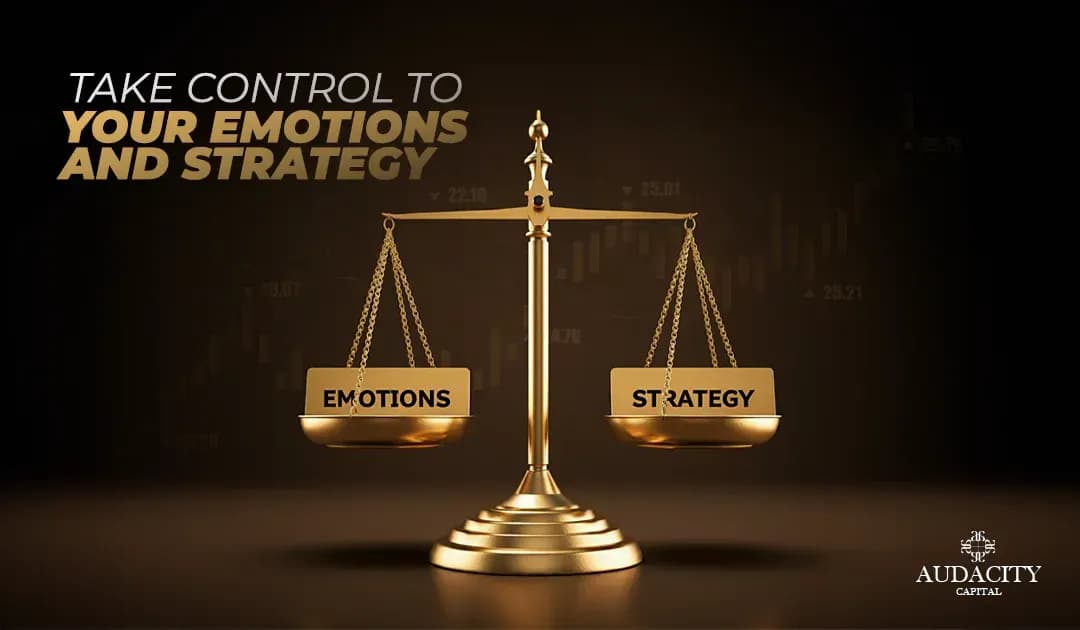
- A well-detailed plan allows you to make objective and logical trading decisions, thus helping reduce the influence of emotions.
- Successful traders approach it as a business, understanding that it will come with risks, expenses, losses, and taxes.
Below are some of the key components of a trading plan.
Defining Clear Goals
Any trading plan you create when trading on a funded account forex platform should be more than a simple statement. The plan should be SMART (specific, measurable, attainable, relevant, and time-bound). For example, you can start by saying that you want to increase the value of your portfolio by 20% in the next year. This goal is SMART because the figures mentioned are specific in that you can measure the success achieved, it’s attainable, it’s related to trading, and you have attached a time frame to it.
While at it, you should also decide on the type of trader you want to become. You should base your trading style on your attitude to risk, personality, and the amount of time you wish to commit to trading.
Selecting The Right Currency Pairs And Time-frames
As part of your trading plan, you need to define the currency pairs that you wish to trade. As is the case with your trading plan, this watchlist will evolve with time. Experienced traders recommend that you start with at least ten currency pairs to watch at any given moment. Such a list will give you lots of setups each week, even when trading on higher time frames.
Speaking of time-frames, you’ll want to define the time-frames you wish to trade. Failure to do so has been the cause of heavy losses and recurring headaches for many beginner traders. It’s best to choose a time frame that you’re most comfortable with and make sure that you don’t deviate from it.
Using Technical Indicators And Fundamental Analysis To Make Informed Decisions
Market timing is a vital aspect of successful investing. Blending fundamental analysis with technical indicators can help investors and traders time their market entry and exit positions in a more efficient manner.
While fundamental analysis helps provide you with insights into an asset’s intrinsic value, technical indicators provide real-time information about trends and price movements.
Fusing these two approaches allows you to gain a comprehensive understanding of both the short- and long-term market dynamics. This, in turn, allows you to make a well-thought-out decision on when to buy or sell an asset, minimizing your risks and maximizing your returns.
Setting Up Risk Management Strategies
Setting up rules for how you’ll manage your risk when trading is a vital aspect of every successful trading plan. While you may have already established where you’ll place your stop-loss, it may also be a good idea to outline how you’ll trace it if it fails.
For example, many experienced traders prefer using the highs and lows recorded in the previous day’s trading as a place where they can “hide” their stop loss. But while this is the case, they’ll, in most cases, not move their stop until the prices have moved beyond their entry positions.
The subject of risk management is what makes or breaks an investor. As you may have deduced by now, it’s not your win rate that will make you a consistently profitable trader, but rather the profits you make compared to your losses. To ensure that you’ll tip the scales in your favor, you must have a solid risk management strategy.
Developing An Entry And Exit Strategy
When it comes to creating an entry and exit strategy, you’re at liberty to choose between different options. Your choice will depend on the trading style you have adopted. For example:
- A day trader can use an end-of-day exit strategy where they’ll close all their open positions when the trading day ends. This is called a time-based exit .
- A fixed exit approach is where you use a pre-determined take-profit order. Here, you’ll need to calculate the risk-reward ratio of each trade and apply a passive trade management approach.
- If you’re a swing trader, it means you won’t need to use a time-based exit, as you may have to hold onto your position for extended periods of time.
Incorporating Consistency
Evaluating and adjusting your trading plan is crucial because it enables you to adapt to the changing market dynamics. Market volatility has the potential to affect the efficiency of a trading strategy, making it crucial to adjust it to minimize losses and maximize profits.
Additionally, changing politics and economic conditions can also impact the viability of your strategy. Without ongoing evaluation and adjustment, the strategy may become obsolete, leading to heavy losses.
Cases such as the recent COVID-19 pandemic and the housing market collapse of 2008 have shown the importance of adjusting a trading plan in response to changing market events.
In both cases, professional traders who failed to adjust their trading plans ended up suffering significant losses. On the other hand, those who were able to evaluate and adjust their strategies managed to reduce their losses and take advantage of emerging opportunities.
Importance Of Trading Psychology
Trading psychology represents the behaviors and characteristics that influence your actions when trading securities. While various aspects– such as trading knowledge and experience–can affect your success as a trader, trading psychology is another crucial factor that can make or break a position.
When you create a trading plan, make sure to stick to it. This will require you to avoid situations that may force you to abandon the trading strategy impulsively because the market has done something that has elicited an emotional response, such as greed or fear.
Try to train yourself to embrace consistency and discipline when opening or closing a position.
Real-life Examples

According to Tyson Mike, a professional forex trader, “ My most profitable strategy on the first look are simple: trend trading and breakouts. To look further, I focus on certain types of currencies/commodities. Key elements are that I trade either the first 1–2 hours of the London session or the overlap between London and New York, which is also around 1–2 hours. My strategy is based on day trading, so I focus on shorter price action. “Click here to learn more!
In summary, every serious trader needs to have a trading plan. The plan provides a clear roadmap for their trading activities and helps them reduce impulsive decision-making, maintain discipline, and align their trading decisions with the market environment. To ensure that your plan won’t become obsolete, analyze it on an ongoing basis and use the strategies mentioned in this post for improved profitability.

Bereit, diszipliniertes Risiko auf Krypto anzuwenden? Entdecken Sie die neuen Krypto-Instrumente von Audacity Capital und bringen Sie Ihre Trading-Strategie mit.
Mehr erfahrenNewsletter
Treten Sie unserem Newsletter bei, um auf dem Laufenden zu bleiben.
Treten Sie unserer sozialen Gemeinschaft bei

Beginnen Sie Ihre Reise heute Mit unserer kostenlosen Testversion
Präsentieren Sie stolz Ihre Fähigkeiten und Leistungen durch Zertifikate und erhalten Sie Anerkennung für Ihre harte Arbeit und Ihr Engagement von potenziellen Investoren und Kollegen.
Kostenlose TestversionVerwandte Artikel

The Support And Resistance Bounce Strategy A Simple Forex Method That Actually Makes Sense


The Golden Cross And Death Cross A Simple Yet Powerful Forex Strategy Explained

The Human + Machine Equation: Why The Best Traders Think Like Algorithms (And Feel Like Humans)

Supply And Demand Zones: A Complete Guide For Serious Traders