



How to Create a Forex Trading Plan That You Can Actually Follow?



A Forex Trading Plan is your written set of rules that you follow before and during a trade. It is a roadmap that includes:
- What you want to achieve.
- Which market you will trade.
- When to enter a position.
- Are you prepared for a certain trading risk?
Trading without a set of rules or, say, a trading plan is always riskier. A roadmap doesn’t always help you predict market moves but without these rules, you may easily make impulsive decisions, which is any day a bad move as a trader.
With that said, let’s directly get to our guide that explains how to create a forex trading plan step by step.
What Is a Forex Trading Plan?
Before we begin to note down a master plan, it is really important to answer what is a forex trading plan, and how it is different from a strategy.
- A forex trading strategy tells you how to spot a setup and when to enter or exit.
- A forex trading plan uses that strategy inside a wider master plan/ set of rules to cover risks, timing, goals, behavior, etc to answer questions before and during trading.
Having a plan is sort of non-negotiable because even when a trade looks perfect on screen, it can still break your rules. If your plan says you trade EUR/USD in one session and risk a fixed amount, a sudden market move has far less room to make the decision for you.
A good forex trading plan also gives you a way to judge your own trading. You can record the reason for each trade, the amount risked and the result afterwards. Over time, this gives you something useful to review instead of relying on memory.
Why Do You Need a Forex Trading Plan?
The decision you make before entering a trade is mostly different from the decision when there's money on the line - and that's why having a forex trading plan is very useful.
You look at a chart calmly and the trading setup can look fine. But when the position starts moving against you in the next moment, you will increase your next trade's size, start questioning the stop loss, and even enter somewhere you had no plan for.
In situations like these, a written plan helps. You have it all ready: what to trade, how much you can risk, where to stop, what to do if the trade doesn't work and much more. You don't have to invent those rules as the price moves, so no impulsive decisions.
With a forex trading plan, it is also easier to notice mistakes that you often overlook when focusing on the final loss or profit.
So, what is a forex trading plan usefulness? Well, it gives you something to follow when the market starts putting pressure on your decision-making. The trade loss won't disappear, but a plan can stop that one bad decision from turning into a series.
How to Create a Forex Trading Plan?

Any useful forex trading plan is built around those decisions, which can easily go wrong when you are in a position of losing money.
To have a useful forex trading plan template, start with the basics first. Some rules can come later, based on your own way of trading. Here’s what the basics really look like:
Step 1: Specify Your Trading Goals
Decide what you want trading to do for you before you get into which pairs or indicators you will use.
Trader A who sits from 5-7 pm has a very different situation from Trader B who watches the market 14-18 hours a day.
The account balance matters too, plus the amount you can willingly accept if the trading decisions go wrong.
Therefore, write all of these things down.
In your forex trading plan, you must include a financial target while giving yourself some process goals as well.
You might want to:
- Follow your entry rules on every trade for a month.
- Reduce the number of trades you take outside your chosen session.
- Try to learn how a particular strategy behaves in live market conditions.
Once you know your trading reasons, how to create a forex trading plan becomes much easier. The rules or plans should have somewhere to start from.
Step 2: Choose Your Currency Pairs and Trading Time
Have a watchlist to follow. You cannot keep on checking 10-15 charts or else you will be constantly in a seeing trade which is not necessarily useful. Watch a smaller group of pairs so that you have time to learn how those markets behave around the sessions you trade.
In your forex trading plan, there should be written which pairs you can trade and which timeframes you should normally use. Plus, note down the trading sessions you prefer. Forex trades continuously through the main working week, but the conditions change throughout the day. Plus, around major sessions and scheduled news, activities and spreads can also change.
Once you have “your” trading window, give it a fair chance before ever shifting to another timeframe or session.
Step 3: Define Your Trading Strategy and Entry Rules
This is the most important part of this guide.
You forex trading strategy is completely upon you: add price action, technical indicators, fundamental information, forex analysis or a mix of them all, whatever seems sane.
Next is the forex trading plan that needs to explain how you will use it. Before you trade, think through it. Ask yourself the following questions:
- What does the market need to be doing?
- What tells you that the setup is ready?
- Where will you enter?
- At what point is the idea no longer valid?
Now once you have rules, put them into a short checklist of:
- Market condition
- Trade setup
- Entry trigger
- Invalidation point
- Required confirmation
Don’t complicate your checklist. If you need, 5, 6, or 7 indicators to decide if a trade is you will anyway end up second-guessing the setup.
The better test is simple: can you look at the chart and tell whether the trade follows your rules?
Step 4: Before You Enter, Have Your Risk Rules Decided
In this step, your forex trading plan needs to be more specific.
Decide an amount you can willingly lose if the trade fails. Further, use that amount to work out your position size. Decide how much you are willing to lose if the trade fails. This calculation should also include your stop loss, as the distance to the stop affects the size of the position.
Also set a maximum loss for one trading day/ session. Traders who have a plan use a rule that stops them after a certain drawdown/ after a set number of losing trades.
This is all what you decide before the trade. Avoid waiting until you have already lost a position because it is usually a reaction to the previous trade, not a new trading decision.
IMPORTANT: There isn’t a universal risk figure for every trader. You can use risk tolerance, account size, leverage, and the strategy – basically everything that matters. At the end, what’s important is that the amount is known before you place the order.
Step 5: Have Your Exit Rules
By now you have decided where to enter, so now decide when to leave.
Write down your stop-loss level or a method that can determine it.
Next, decide how you will take the profit. If you use a fixed target, make that part of the plan. If you manage the position as it moves, write down the conditions for doing so.
When the original reason for the trade disappears, decide your move for that circumstance too.
If your trade opening has ever been uncomfortable, do not immediately move these rules.
A losing trade can make you want to give it more room, whereas a winning trade can make you want to close it too early, and that’s exactly why you made the exit rules.
Step 6: Decide When You Will Not Trade
Your forex trading plan must have a stepping away rule too. This can be as important as your entry rule because not every market condition suits every strategy.
Many traders decide to stay away from trading when:
A major economic release is close.
Spreads have become unusually wide.
The market is moving too quickly for your normal setup.
Apart from external factors, your own conditions matter too. If you are tired, distracted, or trying to win back money from an earlier loss, opening another position is probably not part of the plan.
Scheduled news can produce sharp price movements, which is why some risk-management guidance recommends being careful around major releases.
NOTE: A good Forex Trading Plan needs boundaries because there is always a market opportunity later on.
Step 7: Add a Review and Adjustment Rule
Now that you can start using the plan, have a record of what actually happens.
Don’t write a post-trade essay every time, but note down the pair, the setup, entry, stop, exit, and result. In this, add anything unusual that affected your decision. Over time, the notes will show you things that are difficult to notice from memory alone, and that’s useful information.
Review the results and record over enough trades to find out any meaningful patterns. Depending on those patterns, change the rules that are now outdated and leave the rest as they are. A trading journal is very useful here.
Forex Trading Plan Template
A forex trading plan template is more useful when you build it around the way forex trades actually work. The pair you choose, the session you trade, the spread you accept and the news you avoid can all affect the rules you follow.
These two templates are meant for different stages of trading, so they do not use the same level of detail.
Forex Trading Plan Template for Beginners
This beginner forex trading plan template is simple enough that you can read it before every trading session. You are not trying to write down everything you know about forex, but deciding what you are allowed to do with your account.
My forex rules | My answer |
What am I trying to achieve? | __________________ |
Which pairs can I trade? | __________________ |
Which session do I trade? | __________________ |
Which days do I trade? | __________________ |
Which timeframe do I use? | __________________ |
What setup am I waiting for? | __________________ |
What confirms my entry? | __________________ |
Where does the stop go? | __________________ |
Where do I take profit? | __________________ |
How much can I risk per trade? | __________________ |
What is my daily loss limit? | __________________ |
How many trades can I take? | __________________ |
When will I stay out? | __________________ |
What news will I avoid? | __________________ |
When will I review the plan? | __________________ |
Fill in the answers using your own trading method. If you have not decided on something yet, leave it blank and settle that rule before you start trading the plan with real money.
Forex Trading Plan Template for Experienced Traders
Your forex trading plan template needs to record more of the conditions around the setup because now you have a strategy backed with enough history.
Area | Rules I will follow |
Pair/market | __________________ |
Preferred session | __________________ |
Market condition | __________________ |
Setup name | __________________ |
Setup conditions | __________________ |
Entry confirmation | __________________ |
Entry trigger | __________________ |
Invalidation level | __________________ |
Stop distance | __________________ pips |
Position size calculation | __________________ |
Maximum risk | __________________ |
Minimum planned R:R | __________________ |
Spread allowed | __________________ |
High-impact news rule | __________________ |
Maximum open exposure | __________________ |
Trade management | __________________ |
Partial close rule | __________________ |
Trailing stop rule | __________________ |
Overnight position rule | __________________ |
Journal entry | __________________ |
Weekly review | __________________ |
Monthly review | __________________ |
This template is deliberately more detailed because an experienced trader may already know the basic rules. The useful part now is recording the conditions around the setup.
How to Create a Forex Trading Plan Without Making Mistakes?
Just because you wrote a plan, it won’t automatically turn useful. The rules have to cover the places where your trading normally goes wrong.
Here are some mistakes worth checking before you call your forex trading plan finished.
1. Don’t treat every currency pair as the same
EUR/USD, GBP/JPY and other pairs do not always move in the same way or offer the same trading conditions. Keep your watchlist focused and give each pair its own place in your testing and review.
2. Leaving the session out of the plan
"Trade during the day" is too vague. Write down the session and the hours you intend to trade. Then your journal can show whether your results actually support those hours.
3. Using a fixed lot size without looking at the stop
A 0.10 lot trade does not carry the same planned loss when the stop distance changes. Work out the risk first and then calculate the position size. This is especially important for smaller accounts.
4. Forgetting the economic calendar
A major central-bank decision, inflation report or employment release can create conditions that your normal setup was never designed for. Decide whether you will avoid new trades before such events or use another rule.
5. Moving the stop because the trade is losing
If the original setup is invalid, moving the stop farther away does not repair it. It only increases the amount you have agreed to lose. Put the stop rule in the plan before you enter.
6. Changing the strategy after a handful of trades
A few losing trades can be enough to make you doubt a strategy. They are not always enough to prove that the strategy has stopped working. Keep your review schedule separate from your trading session and make changes from the records you have collected.
7. Writing a plan you never read
A five-page plan that stays inside a folder is not doing much during live trading. Keep the important rules somewhere you can actually see them before placing an order. One-page summaries are often used for this reason, while the fuller version can contain the supporting details.
Can You Create a $10 Forex Trading Plan?
A $10 forex trading plan is possible, but the small account changes what the plan can realistically do. Finding a strategy is not the main problem, but making the position size, stop distance, and trading costs fit an account with only $10 definitely is.
For that reason, use a $10 forex trading plan mainly to practise the process of trading. The goal can be to follow the rules rather than trying to produce a certain dollar return.
Rule | $10 example |
Starting balance | $10 |
Risk limit | Predefined small amount |
Daily loss limit | Set before trading |
Maximum trades | 1 to 2 |
Main objective | Follow the process |
You also need to check the broker's minimum position size. Some brokers require at least a micro lot, so a $10 account may not allow the small dollar risk you had planned.
How to Create a $100 Forex Trading Plan?
A $100 forex trading plan is more practical, although it is still a small account and needs careful risk control.
Start by deciding the maximum amount you can lose on one trade. If you use 1% as an example, that gives a planned risk of $1 on a $100 account. The number is only an example. Your actual position size still depends on the pair, stop distance, broker requirements and trading costs.
Rule | $100 example |
Starting balance | $100 |
Example risk limit | $1 |
Daily loss limit | $2 |
Currency pairs | 1 to 2 |
Maximum trades | 1 to 3 |
Goal | Follow the trading rules |
Do not let the small account tempt you into using excessive leverage. Leverage gives you access to a larger position with less capital, but the profit and loss still relate to the full position size.
Your forex trading plan template should also include a rule for spreads and other trading costs because these can have a noticeable effect on a small account.
What Should Be in a $100 Forex Trading Plan PDF?

A $100 forex trading plan pdf should be something you can open before a trading session and understand without having to read several pages.
- It should show the starting balance and the amount you are willing to risk.
- After that, include your currency pairs, trading hours, setup, entry conditions, stop-loss, take-profit and position-sizing method.
- You should also have a daily loss limit and a rule for when you will stop trading.
- Add a small area for recording trades and a date for reviewing the results.
A useful $100 forex trading plan pdf is a record of how you intend to trade the account. It is not a calculation showing how long it will take to turn $100 into another amount.
NOTE: Forex involves substantial risk and leverage can increase losses quickly.
Can AI Help You Create a Forex Trading Plan?
AI can save time when you are putting a forex trading plan together. You can give it your strategy and ask it to turn the rules into a checklist. It can also help organise a journal, check whether you have forgotten risk rules and show example calculations for position sizing – that’s commonly what many modern-day traders think.
But that does not mean AI should decide what you trade.
If you search for how to create a forex trading plan using AI, you will find plenty of ways to generate a plan in a few seconds. The harder part is deciding whether the rules make sense and whether they have actually been tested.
Check every rule, whether AI-generated or the ones you read in trading guides, against your strategy. Do not accept an AI-generated claim that a certain indicator or setup will make you profitable. The CFTC warns that no technology can consistently predict the future, including automated trading programs that provide buy or sell signals or execute trades.

Trade with Audacity Capital
Trade NowConclusion
A forex trading plan with the most rules is necessarily not the most useful one. It is always better to have a plan that you can remember and follow when a position starts moving against you.
Write down what you trade, when you trade it, how much you risk, and what will make you leave the position. Then keep a record of what actually happens. Over time, your results will show you where the plan needs more work.
That is the practical side of how to create a forex trading plan. You are giving yourself a set of decisions before the market starts making decisions for you.
FAQ
A forex trading plan is a written set of rules for your trading. It normally covers the currency pairs and sessions you trade, the setups you accept, how you enter and exit, how much you risk and when you stay out of the market.
Start with the amount of time and risk you can manage. Choose your currency pairs, session and timeframe, then define the setup, entry, stop, target and position size. Finish the plan with no-trade rules and a review schedule.
To create a forex trading plan properly, write down the decisions you want made before a position is opened. Include the setup, entry, invalidation, stop, target, risk and conditions for staying out. Then use your trading records to see whether those rules need changing.
Yes, but a $10 forex trading plan may be difficult to use with some brokers because minimum trade sizes and margin requirements can make the planned risk too large. It is better suited to practising the process unless your broker's conditions allow sensible position sizing.
Start by deciding what you want the account to achieve and over what period. Then add goals that measure your behaviour, such as following your risk limit or taking only valid setups. A profit target alone can push you into trades that do not fit your strategy.
Yes. Keep records of your trades and review them after you have enough information to spot a pattern. Do not rewrite the plan because of one losing trade. If the records show a repeated weakness, make one change and continue monitoring the results.

Ready to apply disciplined risk to crypto? Explore Audacity Capital's new crypto instruments and bring your trading strategy.
Learn MoreNewsletter
Join our newsletter to stay up to date on features and releases.
Join Our Social & Community

Start Your Journey Today With Our Free Trial
Proudly showcase your skills and accomplishments through certificates and get recognition for your hard work and dedication from potential investors and peers.
Free TrialRelated Articles

Momentum Trading Strategy: A Comprehensive Guide
Master the core principles of a momentum trading strategy. Learn how to use key indicators, manage sharp-reversal risks, and master exit timing.


Break and Retest Trading Strategy for Beginners
Learn the break and retest trading strategy, how to identify valid breakouts, confirm retests, set stop-losses and manage trading risk.
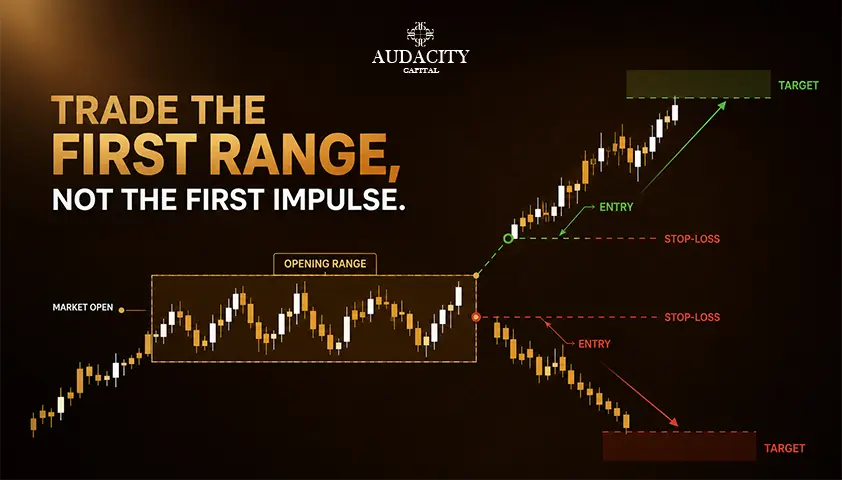
Opening Range Breakout Strategy: Rules, Setups and Examples
Learn how the opening range breakout strategy works, including ORB rules, 5, 15 and 30-minute setups, entry signals, stop losses and risk management.
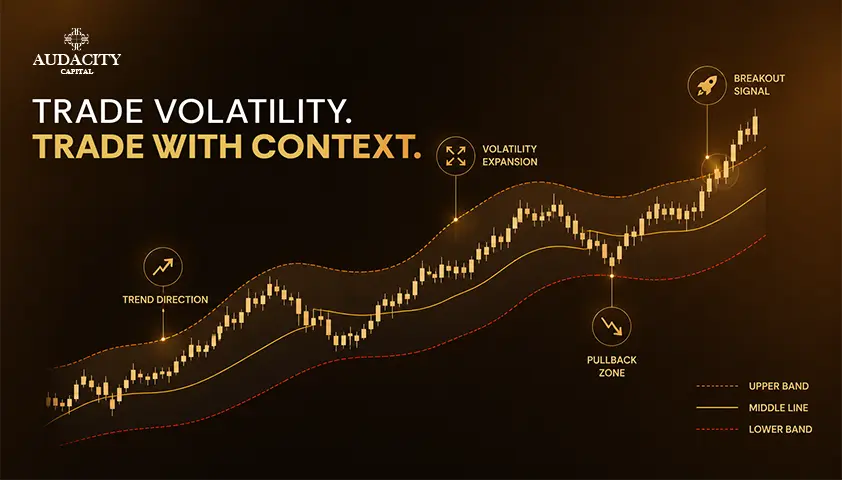
Keltner Channel Trading Strategy: How to Read Volatility With Context
Discover how Keltner Channels measure market volatility, spot trend pullbacks, and confirm breakouts. Includes setup rules, settings, and testing methods.