



Advanced Trading Strategies: Techniques For Consistent Profitability


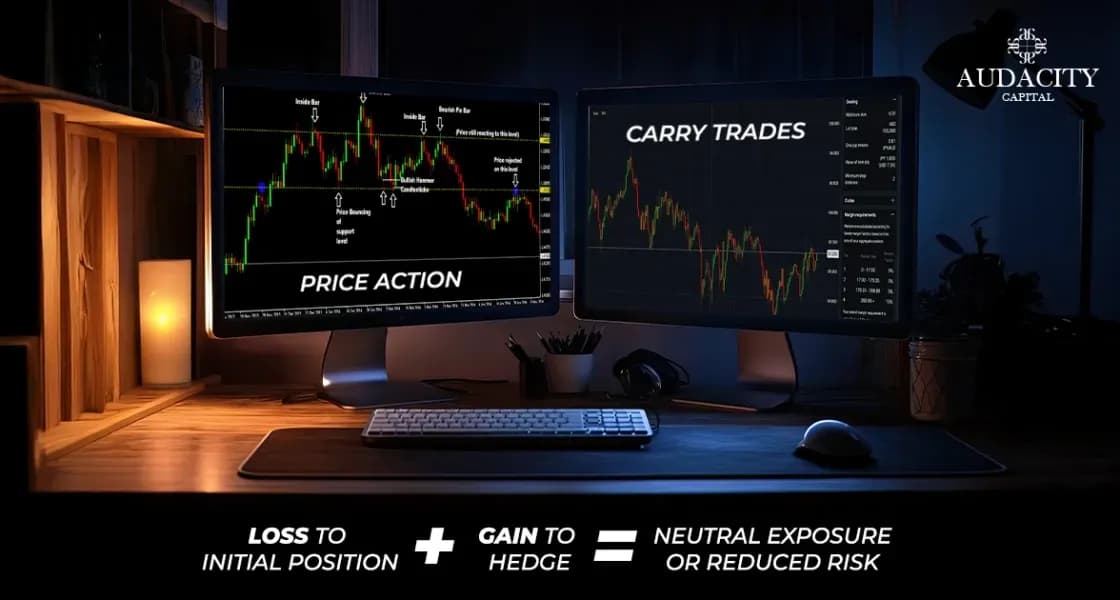
Ready to take your trading skills to the next level? In this guide, we will take you through several advanced trading strategies for professional traders. Our goal is to make it easier for you to navigate the tough trading terrain so that you can attain consistent trading profits.
To get you started, you should note that these advanced trading strategies include but are not limited to learning how to select the currency pairs and setting your position sizing. While at it, you must also understand the concept of identifying the right entry and exit points.
By the end of this guide, you’ll learn how to fine-tune your everyday trading tactics, including the importance of looking at the bigger picture. This is as opposed to fixating on daily wins and losses.
If you’re to make consistent trading profits, you must be disciplined and must possess a strong understanding of market behaviour. Join us below as we explore the mindset and tactics employed by an advanced-level funded trader.
Characteristics Of Advanced Trading Strategies
An advanced trading strategy allows you to take what you have already learned to the next level. Put simply, advanced forex strategies enable you to build upon your existing trading rules. Here, we are talking about the rules you set up when you created your trading plan.
While a basic beginner strategy might be easier to comprehend and deploy, advanced trading systems require more complex data to enter and exit a trade position. One of the reasons you may want to move to such a system is if you want to challenge yourself. You may also want to do so if you’re interested in challenging yourself.
However, you should note that creating such a strategy will typically involve using additional patterns and indicators to confirm entry and exit points. And this is not forgetting the need to open multiple positions. Your advanced trading strategies may even include trading using financial instruments that some in the trading world consider too complicated, e.g., options.
Going Beyond Basics: Combining Technical And Fundamental Analysis
Combining the strengths of both technical and fundamental analysis can prove to be a game-changer. From experience, you’re likely to attain better success by starting your analysis with a look at the company’s industry position and overall financial health. Fundamental analysis makes this possible by assessing the company-specific influences such as industry competition, valuation, and earnings.
Use these factors to shortlist possible stocks, and then use technical analysis to perform a deep dive on the same. Technical analysis will help you to identify market sentiment, ideal entry and exit points, and probable short-term price movements. Essentially, fundamental analysis will guide you on which stocks to buy, while technical analysis will provide guidance on when to complete the purchase.
Incorporating Risk Management And Position Sizing
Risk is a normal part of currency trading. After all, the only way to win big is by taking risks. Nonetheless, it’s impossible to completely predict the happenings and movements of the forex market. Therefore, with every trade, you may end up taking a big win or loss owing to the unpredictable nature of the currency markets.
But you shouldn’t take this to mean that you can’t control your exposure. In fact, taking the time to understand risk management and what it entails will ensure that your capital remains safe. One of the advanced forex strategies that can help you with this is position sizing.
Position Sizing
It refers to the dollar amount that you put into each trade. An experienced trader normally puts into place measures to ensure that they won’t risk more than 2% of their available capital. Nevertheless, some are open to risking more depending on their appetite for risk. To help you establish the position sizing that will work with your trading style, you should consider the following factors:
- Establish the dollar amount you’re comfortable risking
- Establish the number of pips you’d be willing to risk per trade
- Split your account risk with the corresponding trade risk to get your position sizing
Popular Advanced Trading Strategies
While there’s no questioning the value that comes with using advanced trading strategies, deploying them in modern trading systems isn’t without its challenges. For starters, the sheer volume of data that must be analysed from both fundamental and technical analysis can be overwhelming.
On the other hand, their successful deployment can prove beneficial, especially when it comes to gaining a holistic view of each stock’s potential. Below is a look at four advanced trading techniques with clear explanations and examples for your consideration .
1. Price Action Trading
Price Action Trading refers to the practice of making all your trade-related decisions from a “naked” or stripped-down price chart. This means that you should only have a few lagging indicators for use in helping you identify dynamic support and resistance levels . Global financial markets generate price movements of each market over varying time periods; this is the data you’ll find displayed on the price charts.
These charts reflect the actions and beliefs of all participants trading in the said market during a given period and are often portrayed on the price chart as “price action.”
Price Action In Forex
Price Action Trading works the same way across all markets, even currency trading. However, there are some nuances that you should be aware of. Currency pairs trade around the clock, but some pairs are unlikely to move when their markets are closed, even when there’s a signal drop in a price action.
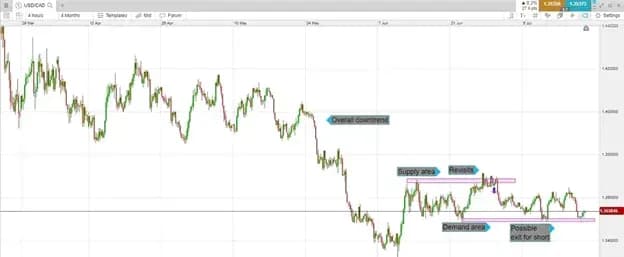
The Chart Above Shows an Example of a Price Action Strategy for A Swing Trader <b>. Source: CMC Markets .
2. Algorithmic And Quantitative Strategies
These advanced trading strategies operate based on predetermined parameters, allowing you to automate some of your trading sessions.
What Is An Algorithmic Strategy?
Algorithmic trading also called algo-trading, black-box trading, or automated trading involves using a computer program having a defined set of instructions to execute a trade. In theory, such a trade is likely to produce profits at a speed and rate that no human trader can.
Often, the defined set of instructions is based on price, quantity, timing, or a mathematical model . Apart from providing unmatched profit opportunities for you, algorithmic trading renders currency markets more liquid by eliminating the impact of emotions on your trades.
How It Works
Suppose you choose to implement the following trading criteria:
- Acquire 100 shares of a stock when its 10-day moving average goes above its 100-day moving average.
- Offload the shares of the said stock when the 10-day moving average drops below the 100-day moving average.
Using the instructions above, the algorithm will continuously monitor the prevailing stock prices, and execute the set orders when the stock meets the defined conditions. As such, it means that you no longer have to put in the orders manually or even monitor the live prices.
Its benefits include:
- Low Latency
- Best Execution
- Low Transaction Costs
- No Human Error
What Is A Quantitative Strategy?
Quantitative trading refers to a type of market strategy that depends on statistical and mathematical models to identify and execute positions. The models it relies on are driven by quantitative analysis, hence its name. Some traders call it ‘quant’ or ‘quant trading.’
Quantitative analysis can break down complex behavioural patterns into numerical values by placing emphasis on research and measurement. It does this by overlooking qualitative analysis which tends to evaluate trade opportunities based on factors such as brand strength.
Unlike algorithmic trading, quant trading needs a lot of computational power explaining why it’s traditionally used by hedge funds and large institutional trades. However, emerging technologies have helped individual traders to get involved in it as well.
Its benefits include:
- Ability to analyse many markets across unlimited data points
- It assists in alleviating human biases that may affect trading
3. Carry Trade Strategy
A carry trade strategy enables you to benefit from the difference arising in the interest rate differential between two currency pairs. Often, the strategy can either be positive or negative depending on the currency pair that you have chosen to trade.
Positive carry trade = acquiring the pair at a high interest rate/borrowing at a lower rate
Negative carry trade = purchasing at a lower rate/borrowing at a much higher rate
A carry trade strategy typically works best when traders and investors are open to taking on risk. What this means is that the prevailing economic conditions don’t need to be good. However, the general outlook should be positive.
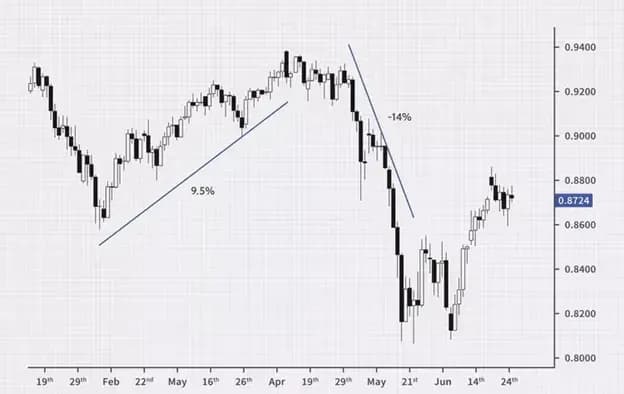
Image Showing a Carry Trade Strategy in Action. Source: Investopedia
4. Hedging Techniques
Advanced traders use hedging techniques to mitigate risk. You get to use it to hedge your profit or losses from all active trades. But you should note that while these techniques allow you to limit your potential losses, implementing them means you won’t normally turn a profit.
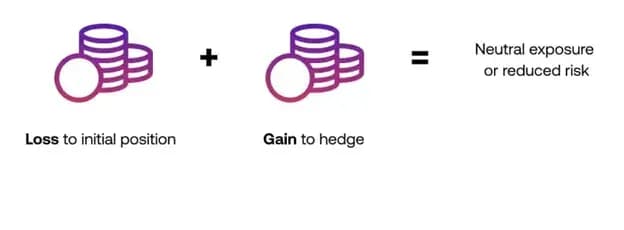
The hedging technique requires that you select two positively correlated currency pairs, e.g., the EUR/USD and GBP/USD. Once selected, you’ll need to take positions on both pairs. However, any position(s) you take must be in the opposite direction.
For instance, if you take a short position on the EUR/USD pair at the top of a fresh price range, but suspect that the pair may break upward, you could opt to hedge your USD exposure by executing a long position on the GBP/USD pair. What this means is that if the USD were to fall, the hedge placed on the GBP/USD pair would assist in offsetting the loss experienced in the short position. On the same breadth, if the EUR were to fall against the USD, the long position taken on the GBP/USD pair would have taken a loss, but it would luckily be mitigated by the profit received from the EUR/USD position.
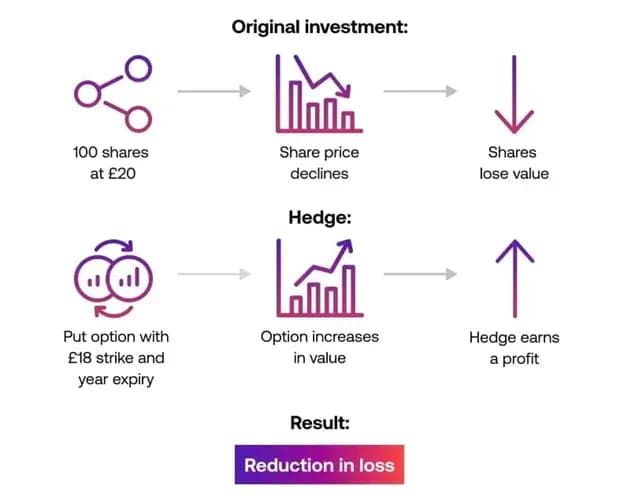
The Chart Above Provides A Good Example of a Hedge Position . Source: City Index .
The Importance Of Backtesting And Optimization
In the highly exciting world of currency trading, continued profitability hinges on your ability as a trader to make informed decisions. While comprehending global economic events, technical indicators, and market trends is crucial, other vital components can significantly impact your strategy: one of which is backtesting. In trading, backtesting refers to a process that enables you to evaluate the efficiency of your trading strategy using historical data before deploying it in a live trading session. The idea behind using backtesting trading strategies is simple, by applying your predefined trading rules to historical market data, you get a chance to see how your current strategy would have coped under numerous market conditions.
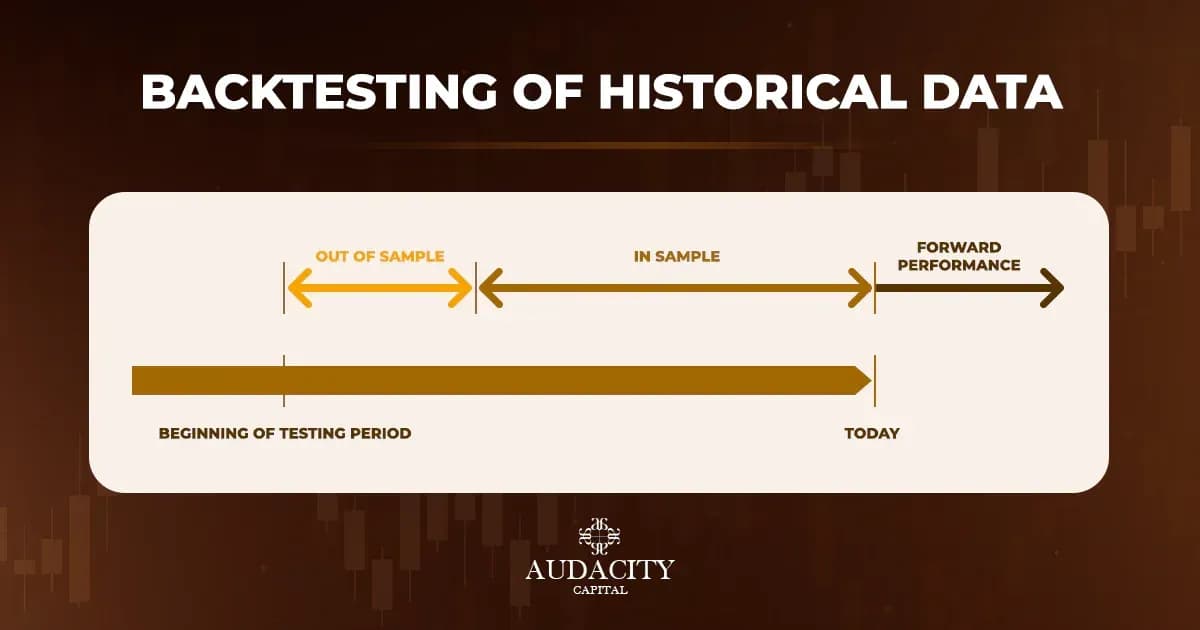
Simple Flowchart Showing How Backtesting of Historical Data Works
Building Confidence With Historical Data
Confidence is a crucial factor in any form of trading. Backtesting provides you with confidence that your chosen strategy has a solid foundation as it has been tested under varied conditions. You need this level of confidence if you’re to successfully execute trades in a live market. Being confident helps you stick to your strategies even when faced with periods of momentary losses.
Example
If you have backtested your strategy over multiple years of historical data, including under changing market conditions such as bear markets, periods of high volatility, and bull markets, you’re more likely to continue using the same strategy when trading. This is because the strategy in review has already been tested and found to work over the long term.
Optimizing For Current Market Conditions
Backtesting does much more than help you build confidence, it also allows you to fine-tune and enhance your strategy. When you experiment with different trade settings and parameters, you get to identify the most efficient combinations; these are combinations that are bound to yield the best results. The process of optimizing strategies helps you improve your profitability and the consistency of your strategies.
Example
If using the Bollinger Bands strategy, you may find it necessary to backtest the various configurations of your bandwidth and time periods. The goal here will be to try and find the settings that are most likely to generate the highest returns without exposing you to too much risk.
Common Mistakes In Advanced Strategies
Trading often seems like a simple undertaking, but the reality is that the world of trading can be full of surprises. One of these surprises comes in the form of trading strategy mistakes. While making mistakes is a part of the trading journey, the truth is that many traders are still making the same mistakes they have been making for years. Examples of these include reliance on automation, emotional bias, and over-optimization. Others include:
The Danger Of Overfitting
Overfitting is a common but undesirable mistake that arises due to overreliance on machine learning and automation in general. It occurs when the learning model gives accurate predictions for all its training data but fails to do so for new data sets. Whenever a trader uses machine learning models to make a trade prediction, they first take time to train it using a known data set. The model then learns to use this existing information to predict what will happen in the future using new data sets. An overfitted model will, therefore, provide inaccurate predictions, and will continue to perform poorly when exposed to new data.
Ignoring Changing Market Conditions
Market conditions are ever-changing, making it necessary for you as a trader to learn how to adapt. Adapting will include altering your trading strategy accordingly to ensure that you don’t miss out on emerging opportunities or find yourself faced with ongoing losses. Being adaptable calls for you to remain flexible, and to learn ways in which you can adjust your strategy, even as you continuously work on yourself as a trader.
Integrating Advanced Strategies Into Your Plan
Consult with any trader or investor who is consistently profitable, and they will undoubtedly tell you that you only have two real choices in this world: create a good trading routine and stick to it, or be prepared to fail.
Granted, it takes time, ongoing research, and effort to create an approach that will work for you. And while you aren’t assured of outright success, knowing how to create a plan, and understanding the importance of integrating trading strategies into your routine will prevent you from making common mistakes.
The following steps should help you get started with the integration process:
- Goal Definition: Determine your time horizon, risk tolerance , and financial objectives.
- Select Your Trading Style: Popular styles include day, swing, and position trading.
- Develop a Strategy: Do you want to use fundamental analysis, technical analysis, or both?
- Set Realistic Expectations: Don’t be tempted to go after quick profits
- Market Analysis: This may include analysing charts and monitoring economic indicators
- Develop Rules for Your Risk Management: Make sure you know how much to risk per trade
- Trade Management Plan: Set guidelines on when to take partial profits or exit trades
- Maintain Trading Discipline: Avoid the temptation to abandon your routine
- Monitor Your Trades: Keep a detailed journal of your trade activities
Testing Strategies On Demo Accounts
Demo accounts have become an irreplaceable tool in the trading world. They allow beginner traders an opportunity to explore the currency markets and fine-tune their trading strategies. Using a demo account, you can conduct a risk-free practice using virtual capital in a simulated market. Mind you this is using real-time price data allowing you to know whether your strategies will work in a live environment or not.
Gradual Implementation In Live Trading
So, you have spent the last few months trading on a demo account and working on your trading routine and now think that it’s time that you traded on a live account. But how do you know that you’re TRULY ready to go live?
The following are five signs to be on the lookout for:
- You’re consistently profitable
- You don’t engage in emotional trading when a trade starts to go against you
- You have a set of clearly defined risk management rules that you never ignore
- You’re comfortable with your broker and their trading platform
- You have learned not to take your losses too hard

<b> Disclaime r: Even if you can check off all the five items in this list, this doesn’t guarantee success in a live account. Psychological factors will at some point come into play, which is why you should try to grow your psychological capital before risking any real money.
Conclusion & Next Steps
Putting your advanced forex strategies into practice comes with challenges of its own. Having a good strategy won’t matter much if you lack the discipline to adhere to it. It’s crucial that you stick to your predefined rules for your trading, especially if you intend to use a short-term strategy. This is one of those cases where rules aren’t meant to be broken.
As a trader, you’ll also need to make sure that your strategy is fitting for the psychological mindset that comes with live trading. Often, this tends to be quite different from the one you’ll have when trading on a demo account. You may want to rethink it if you find it to be too complicated when trading in practice than during simulation.
To summarize, consider starting with basic rules, a simple strategy, and an easy-to-navigate platform. As you advance in your trading acumen and improve your skills, consider backtesting one of the discussed strategies or even exploring algorithmic trading systems.

Kriptoya disiplinli risk uygulamaya hazır mısınız? Audacity Capital'in yeni kripto enstrümanlarını keşfedin ve ticaret stratejinizi getirin.
Daha Fazla BilgiBülten
Yeniliklerden haberdar olmak için bültenimize katılın.
Sosyal Topluluğumuza Katılın

Bugün Yolculuğunuza Başlayın Ücretsiz Denememizle
Becerilerinizi ve başarılarınızı sertifikalar aracılığıyla gururla sergileyin ve potansiyel yatırımcılardan ve akranlarınızdan sıkı çalışmanız ve özveriniz için takdir alın.
Ücretsiz Denemeİlgili Makaleler

Gold Hits Record Highs Then Crashes: The Full Fundamental Breakdown
Gold hit record highs before falling sharply. Why is gold crashing and will gold crash further? Discover the real reasons behind the gold price crash with insights from Audacity Capital.


From Strategy To Structure: How Professional Traders Turn Market Knowledge Into Consistent Profitability

How to Trade Gold (XAUUSD): The Complete Guide
Learn how to trade Gold (XAUUSD) like a professional trader with Audacity Capital. Discover proven strategies, risk management techniques, session timing, and expert tips for consistent gold trading success.

The Support And Resistance Bounce Strategy A Simple Forex Method That Actually Makes Sense