


How Many Trading Days in a Year?



Quick AnswerHow many trading days are there in a year? For U.S. stocks, there are typically around 250–252 trading days per year. In 2026, the NYSE has 251 trading days for U.S. cash equities. The number changes from year to year because weekends and market holidays fall on different dates. |
|---|
There are usually around 250 trading days in a calendar year for the U.S. stock market, although the exact number changes depending on weekends, market holidays and the specific exchange or asset class.
For example, the NYSE's 2026 calendar estimates 251 trading days for U.S. cash equities and U.S. equity options. Its interest-rate markets have 257 trading days in 2026.
This means there is no single number that applies to every financial market. Stock exchanges, futures markets, forex markets and other financial instruments can follow different trading calendars.
How Many Trading Days Are There in 2026?
The NYSE's 2026 estimated trading calendar shows 251 trading days for U.S. cash equities and U.S. equity options.
Month | Trading Days in 2026 |
|---|---|
January | 20 |
February | 19 |
March | 22 |
April | 21 |
May | 20 |
June | 21 |
July | 22 |
August | 21 |
September | 21 |
October | 22 |
November | 20 |
December | 22 |
Total | 251 |
These figures are based on the NYSE's estimated 2026 trading-day calendar.
Why Are There Fewer Than 365 Trading Days?
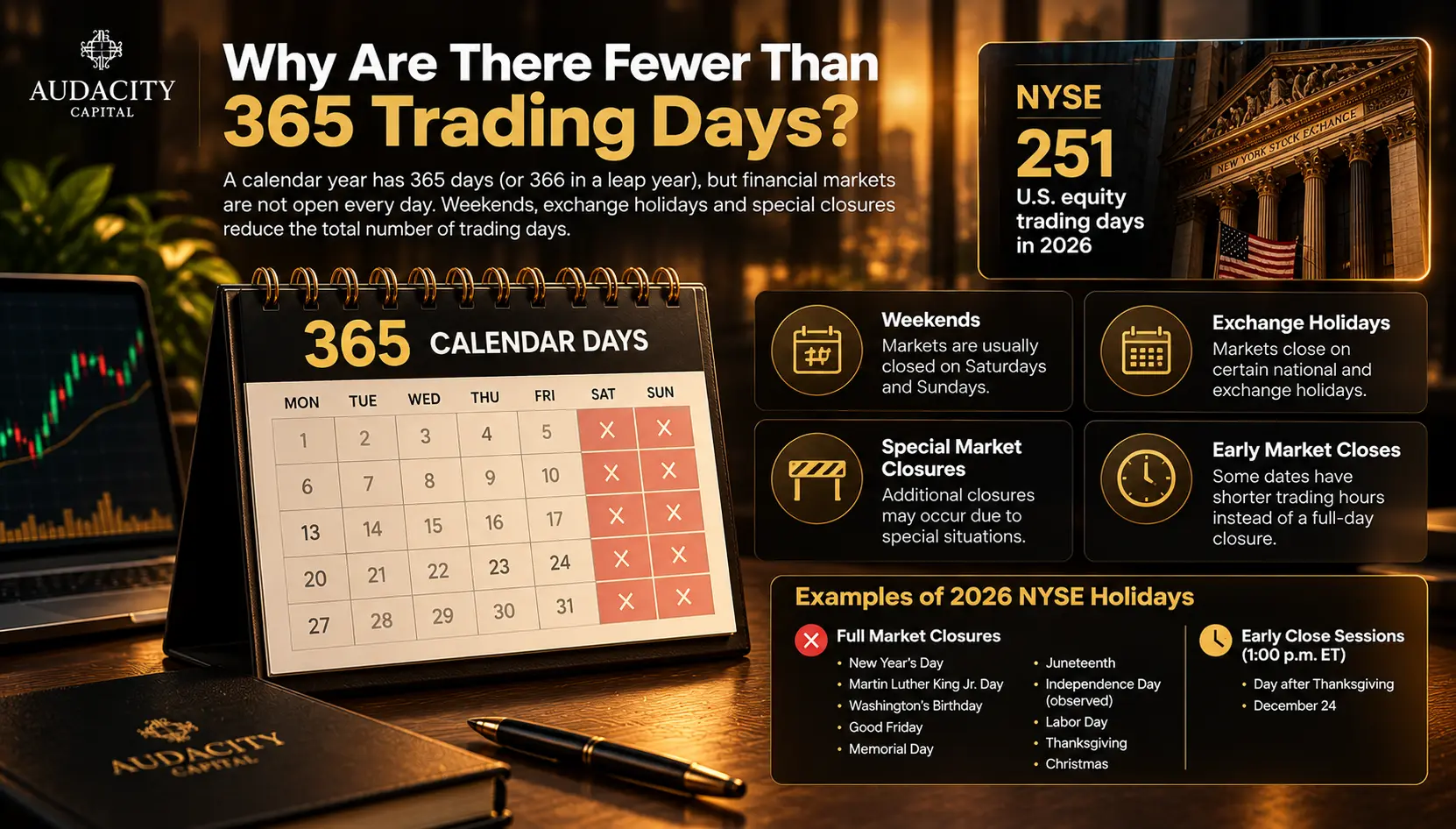
A calendar year has 365 days, or 366 in a leap year. Financial markets are not normally open every day.
The main reasons are:
- Saturdays and Sundays
- Exchange holidays
- National holidays observed by the exchange
- Special market closures
- Early-close sessions on certain dates
For example, the NYSE is closed for holidays including New Year's Day, Martin Luther King Jr. Day, Washington's Birthday, Good Friday, Memorial Day, Juneteenth, Independence Day, Labor Day, Thanksgiving and Christmas in 2026.
Some holidays can also result in an early market close rather than a full-day closure. For example, the NYSE's 2026 calendar lists an early close on the day after Thanksgiving and on December 24.
How Many Trading Days Are There in an Average Year?
For U.S. stock markets, the number is generally around 250–252 trading days per year.
The exact number depends on how the calendar falls and which holidays are observed by the exchange.
For example:
- 2026: 251 NYSE equity trading days
- 2027: 251
- 2028: 251
The NYSE's published estimates show 251 trading days for U.S. cash equities in each of those three years.
This demonstrates why using “about 252 trading days” as a general estimate is useful, but using the official exchange calendar is better when calculating exact annual trading activity.
How Many Trading Days Are There in a Month?
The number of trading days varies by month.
In the NYSE's 2026 calendar, monthly U.S. equity trading days range from 19 to 22 days. February has 19 trading days, while March, July, October and December each have 22.
This matters when traders calculate:
- Average daily returns
- Monthly trading performance
- Trading frequency
- Annualized returns
- Number of potential trading sessions
- Trading costs
For example, a trader who averages two trades per trading day would theoretically have around 502 trading opportunities in a 251-day year. Actual trade frequency will depend on the strategy and market conditions.
Are There 252 Trading Days Every Year?
No.
252 trading days is commonly used as an approximation, but the actual number changes from year to year.
The exact figure depends on:
- How many weekdays occur during the year
- When exchange holidays fall
- Whether holidays are observed on weekdays
- Which exchange or asset class is being considered
For this reason, traders and analysts should use the relevant exchange's official calendar when an exact number is required.
How Many Trading Days Are There in the Stock Market?
The answer depends on the stock market and exchange.
For the NYSE U.S. cash equity market, there are 251 scheduled trading days in 2026. The regular core trading session runs from 9:30 a.m. to 4:00 p.m. ET.
Other stock exchanges can have different:
- Trading holidays
- Weekend schedules
- Early-close dates
- Market sessions
- Number of annual trading days
Therefore, you shouldn't automatically apply the NYSE's trading-day count to every stock market.
Are Forex Markets Open Every Day?
Forex is different from the stock market.
The global forex market generally operates 24 hours a day during the trading week, rather than following a single centralized stock-exchange calendar.
However, forex trading is not simply equivalent to having 365 full trading days. The market typically operates across the week and closes over the weekend, while liquidity and trading conditions vary between sessions.
Forex traders should therefore use the trading schedule of their broker or trading platform when determining available trading sessions.
This distinction is particularly important when comparing stock market trading days with forex trading days.
How Many Trading Days Are There for Futures?
Futures markets can have different trading calendars depending on the exchange and contract.
Unlike a simple U.S. stock-market calculation, futures may have:
- Different trading hours
- Holiday schedules
- Overnight sessions
- Early closes
- Contract-specific trading calendars
For example, the NYSE's own 2026 estimates distinguish between U.S. cash equities and interest-rate markets, with 251 and 257 trading days respectively.
Therefore, futures traders should check the calendar published by the relevant futures exchange rather than using 252 days automatically.
Why Trading Days Matter for Traders
Knowing the number of trading days in a year can help traders and investors calculate performance and activity.
1. Annualizing returns
Trading performance can sometimes be annualized using the number of trading days in a year.
2. Estimating trading frequency
A trader can estimate the number of trades they might make based on their average trades per session.
3. Calculating daily averages
Annual trading results can be compared with the number of sessions available.
4. Planning trading goals
Traders can break an annual objective into monthly, weekly or daily targets.
However, traders should avoid treating every trading day as an equal opportunity. Market volatility, liquidity and trading conditions can vary significantly between sessions.
Trading Days vs Calendar Days
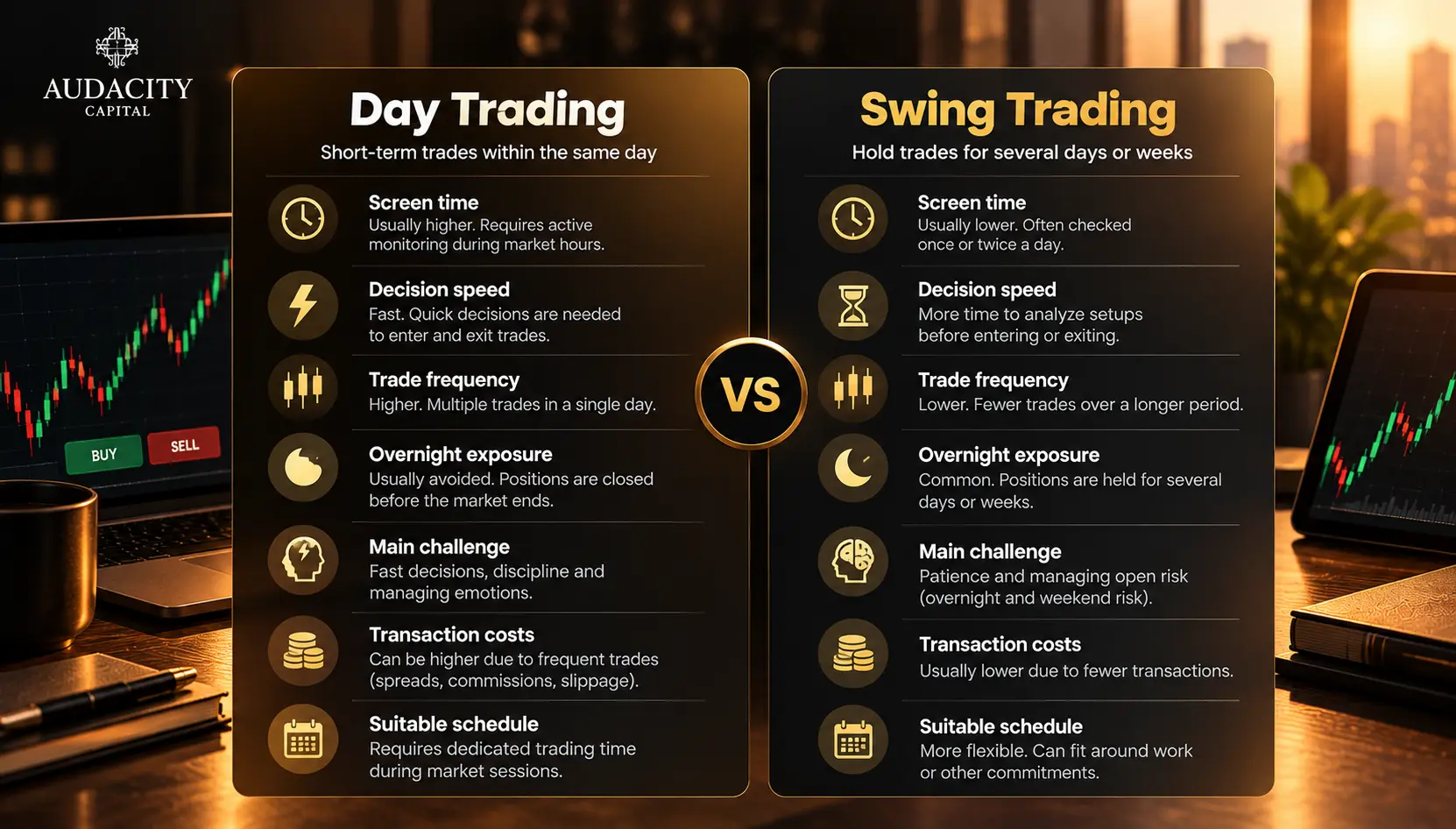
These terms are not interchangeable.
Term | Meaning |
|---|---|
Calendar days | Every day of the year, including weekends and holidays |
Business days | Generally weekdays excluding applicable holidays |
Trading days | Days when a particular financial market is scheduled to operate |
Trading sessions | Specific periods during which a market is open |
For example, a calendar year can have 365 days, but the NYSE has 251 scheduled U.S. equity trading days in 2026.
How Many Trading Days Are There in 2026?
For U.S. cash equities traded on the NYSE, there are 251 trading days in 2026.
The monthly distribution is:
January: 20
February: 19
March: 22
April: 21
May: 20
June: 21
July: 22
August: 21
September: 21
October: 22
November: 20
December: 22
Total: 251 trading days.
Frequently Asked Questions
There are usually around 250–252 trading days in a year for U.S. stock markets. In 2026, the NYSE has 251 scheduled trading days for U.S. cash equities.
No. The number changes depending on weekends and exchange holidays. Around 252 is a useful approximation, but the exact number should be taken from the relevant exchange calendar.
The NYSE has 251 trading days for U.S. cash equities in 2026.
Forex does not follow the same centralized trading calendar as U.S. stock exchanges. The global forex market generally operates during the trading week, with availability and session schedules determined by the market and broker.
There are typically around 19–22 U.S. stock-market trading days per month, although the exact number varies depending on weekends and holidays. In 2026, NYSE monthly totals range from 19 to 22.
For U.S. stocks, there are normally five trading days per week, Monday through Friday, excluding market holidays.
Weekends and exchange holidays are not regular trading days for the U.S. stock market. Some holidays also result in early closures rather than full-day trading sessions

Kriptoya disiplinli risk uygulamaya hazır mısınız? Audacity Capital'in yeni kripto enstrümanlarını keşfedin ve ticaret stratejinizi getirin.
Daha Fazla BilgiBülten
Yeniliklerden haberdar olmak için bültenimize katılın.
Sosyal Topluluğumuza Katılın

Bugün Yolculuğunuza Başlayın Ücretsiz Denememizle
Becerilerinizi ve başarılarınızı sertifikalar aracılığıyla gururla sergileyin ve potansiyel yatırımcılardan ve akranlarınızdan sıkı çalışmanız ve özveriniz için takdir alın.
Ücretsiz Denemeİlgili Makaleler
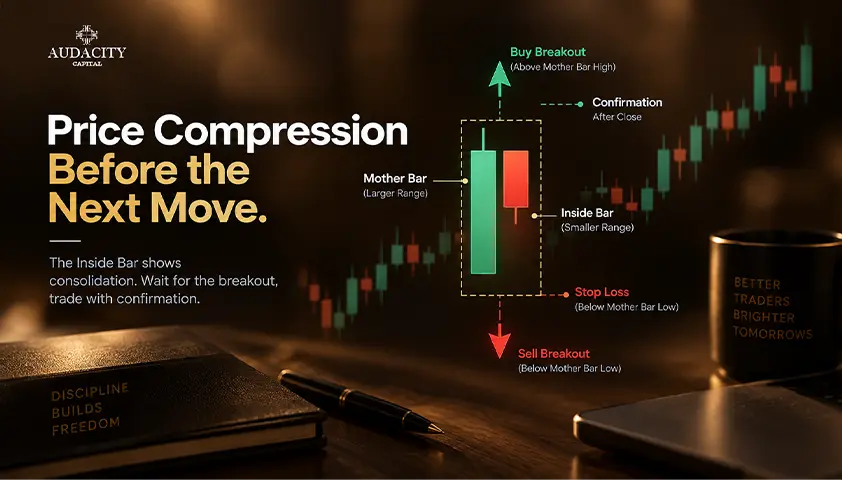
Inside Bar Pattern: Meaning, Examples and Trading Rules
Learn how to identify the inside bar pattern, compare entry and stop rules, and assess false breakouts before testing a trading strategy.


GTC in Trading: What Good Till Cancelled Orders Mean and How to Use Them Properly
Learn what GTC means in trading, how Good Till Cancelled orders work, when to use them, and the risks of leaving pending orders active.
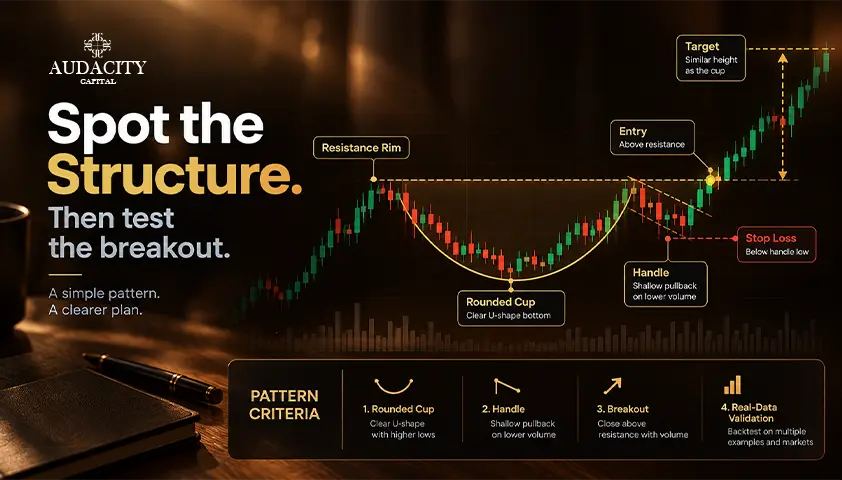
Cup and Handle Pattern: Criteria, Entry and Real Data
The cup and handle pattern explained: the criteria sources disagree on, how to trade it, and what the performance data actually says.

Spinning Top Candlestick Pattern: Meaning, Formation & How to Trade
Learn what the spinning top candlestick pattern means, how it forms, bullish and bearish setups, confirmation signals, trading strategies, examples, and risks.