



Forex Risk Management Strategies: Protecting Your Capital In Forex Trading



Anxiety, excitement, elation, and disappointment – these are just but four examples of the emotions that you’ll go through when trading! And what’s worse, all this may happen within a few minutes.
So, do you have a plan for protecting your account when the market turns against you?
Well, welcome to the world of currency trading. This is a world where there will be lows, there will be highs, and some days you’ll be uncertain. But with the right information, you’ll do more than okay.
One of the abilities you’ll need to master is risk management in forex because while the goal is to turn a profit, learning how to remain cool under stress is equally important. You’ve to learn how to protect your capital, even when faced with unfavorable market conditions.
Effective use of Take Profit and Stop Loss Orders as part of your capital protection plan is just the beginning.
Why Risk Management Is Crucial In Forex Trading
Trading discipline allows you to implement a set of predetermined rules and measures to make sure that any negative impact arising from a bad trade is manageable. Developing an effective strategy will require planning. And as every good trader knows, it’s always best to have a plan in place before you start trading if you’re to achieve long-term trading success.
The Psychological Impact Of Poor Risk Management
Beginner FX traders always start out with the belief that they’ll make it big just by using the right combination of technical indicators. For some, it works out. For others, it takes them a while to realize that following rules isn’t easy. And this is where the psychological aspect comes into play. Many traders tend to forget that managing trading risks involves much more than applying technical analysis.
It involves the psychological aspects of emotion control and, much more importantly, reasonable decision-making. Understanding this is vital to continued profit making. Failure to control your emotions when trading can lead to numerous mistakes, such as:
- Loss Aversion
- Overconfidence Bias
- Herding Bias
Understanding the psychological impact of poor risk management on your trading success will make it easier for you to make more rational decisions. Through it, you also get to learn how to manage your trading capital better.
The Link Between Risk Management And Long-term Success
The only way to achieve long-term trading success is to have a good risk management plan in place. This means having a step-by-step plan for managing risk. It basically calls for you to lay out elements such as your risk approach and strategies you’ll use to manage it.
Some of the benefits you stand to gain from having a good risk management approach include:
- Avoid costly mistakes
- Protect your available capital
- Make better trading decisions
- Secure financing
For all this to happen, you must realize that risk management is a process. It’s a process that involves recognizing the risk you face, assessing it, trying to control it, and using all the tools at your disposal to monitor it. At the end of the day, this is an ongoing process that you need to embed into your trading daily trading routine. As you do so, make sure to have a ready writing pad with you for use in scenario planning. Writing down potential trade scenarios allows creative thinking, and the information noted down can support any decisions you make later.
Core Principles Of Risk Management
In FX trading, the phrase ‘risk per trade’ means that your return on any investment may be lower than what you had anticipated. Reasons for this could include that you closed a trade below your profit target or that you lost all the capital you invested in the position.
The reality is that there’s not a single trader who will get all their decisions right. Therefore, it’s important that you develop a detailed plan for managing risk within all your trading sessions. This is particularly important when using leverage, as it may boost your profits in the same way it does your losses. Below are some tips to help you get started with position sizing.
Never Risk More Than You Can Afford To Lose
When it comes to forex trading tips, never risk more than you can afford to lose easily tops the list. You need to make sure that the capital in your trading account is expendable. This is the first thing you need to do before you use any real cash. If the capital isn’t expendable, keep saving until you’re sure it is.
The money in your trading account should never be allocated for mortgage or college tuition. You shouldn’t allow yourself to think that you’re simply borrowing money from some of your other obligations. Losing money is always traumatic. Now, imagine if the money you’ve just lost is money you shouldn’t have risked.
The 1% Or 2% Rule: Limiting Risk Per Trade
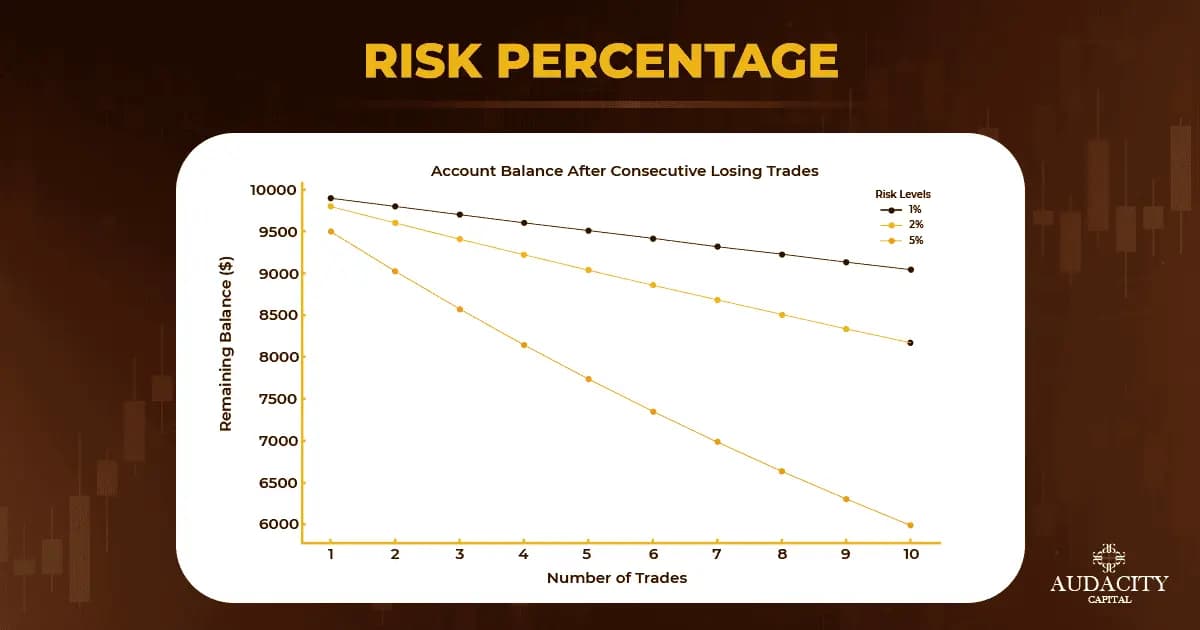
How much should you risk on any one trade? This is one question that continues to stump many traders. For seasoned traders, the trick is to make sure that you limit your risk to a maximum of 2% per trade. If you’re just beginning, you may want to start with 1%.
Consistency In Position Sizing
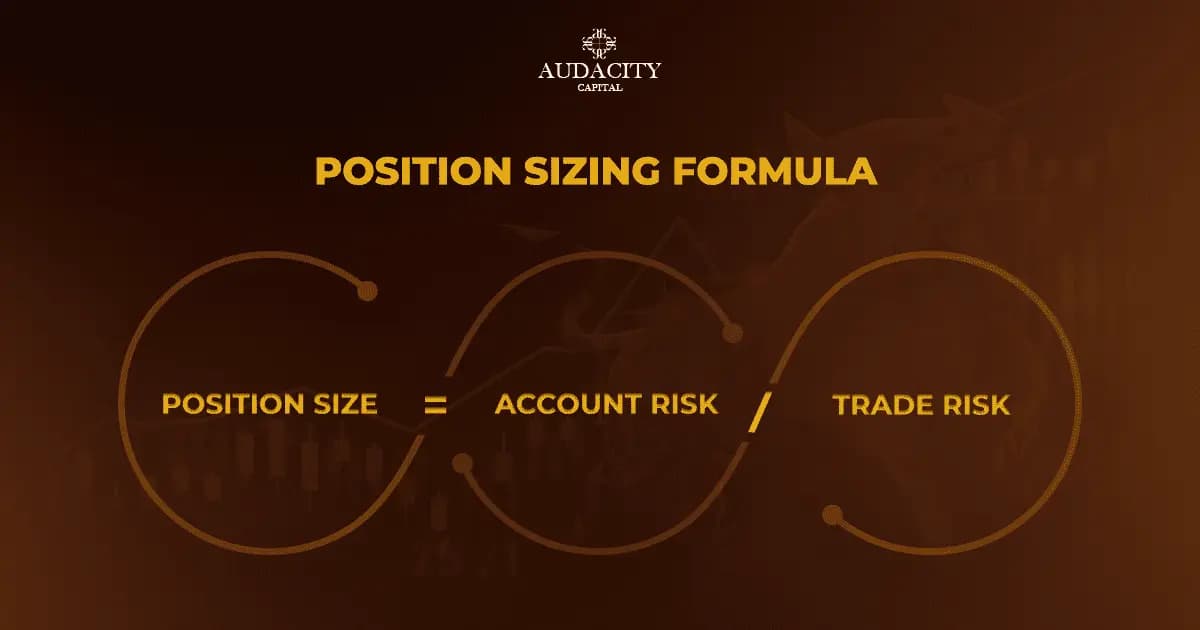
Position sizing is all about determining how much capital you can allocate to any one trade. It’s what makes it an essential aspect of risk management. As a trader, you need to learn position sizing as it makes it easier for you to find a balance between risk and reward. With time, you also get to learn how to build a diversified portfolio – a portfolio that allows you to allocate your available capital to different financial instruments, including other asset classes.
As with other aspects of trading, you’ll need to practice consistently and exercise patience during the learning phase for it to work for you. Keeping a trading journal will enable you to track your trades and position sizes. You can even use the journal to review your past mistakes and successes and chart a better way forward.
Practical Risk Management Strategies
Imagine waking up one morning to find that a major news announcement or political event has caused a currency pair you had invested in heavily to tumble overnight. These are some of the scenarios that you can expect in the volatile forex market. This is a world where global events, including presidential announcements and currency devaluations, can impact currency markets within seconds. As an investor or FX trader specializing in international transactions, the question becomes how well you can efficiently manage such risks and safeguard your investment. This is where well-thought-out stop-loss strategies and other risk management techniques come into play.
Setting Effective Stop-loss Orders
Stop-loss strategies, also known as ‘stop closing orders,’ are orders you place to lock or limit loss in the remaining profit on an open position. It’s one of the tools you need to learn to help you manage risk on your trades.
A typical stop-loss order contains instructions to close out an open position by buying or selling a financial instrument – depending on whether you took a short or long position – at the market when it reaches the predetermined price. This is what traders call the stop price.
Chart Showing How to Set a Stop-Loss Order: Source
Using the chart above, imagine that a seasoned trader has purchased an option on a stock and has placed a stop-loss order 5% below their purchasing price. If the stock were to fall by, say, 5%, thus triggering the stop-loss, it means that they’ll have sold the asset at the best available price. However, if the trader had shorted the asset, it would mean that the asset would have closed at an offsetting purchase when the said asset started to trade at the set price.
Calculating Position Sizes For Maximum Safety
Using correct position sizing requires you to weigh three different factors to determine how to proceed. These are:
- Account Risk: This is normally represented as a percentage of your available capital. As established earlier, many traders choose to risk no more than 2% of their trading capital on a single trade.
- Trade Risk: Once you’ve determined your account risk, the next step is to place your stop-loss order. If you’re trading stocks, your trade risk will be the distance in dollars or pounds between your intended entry price and stop-loss price.
- Proper Position Size: To work out your correct position size, you’ll need to divide the account risk with the trade risk.
As such:
Position size = account risk/ trade risk
Diversification: Why You Should Avoid Overexposure
When deploying diversification as a strategy for managing trading risks, it all comes down to reducing your exposure to risk. Simply put, you need to invest in different companies across different industries, sectors, and even countries.
Many traders agree that while diversification doesn’t provide a guarantee against loss, it’s a strategy you need to adopt to attain long-term success. Today, there are many studies that demonstrate the importance of diversification. The one thing all these studies have in common is that they’ve proven that by spreading your investments across various industries or sectors with low correlation to one another, you get to reduce price volatility.
The reason for this is that different sectors and industries don’t move up and down at the same rate. What this means is that if you mix things up in your investment portfolio, you’ll be less likely to experience major financial losses. This is because if some sectors were to experience tough times, there’s a probability that others will be thriving. As a trader, this means you’re likely to have a more consistent portfolio performance, as shown in the image below.
Common Risk Management Mistakes To Avoid
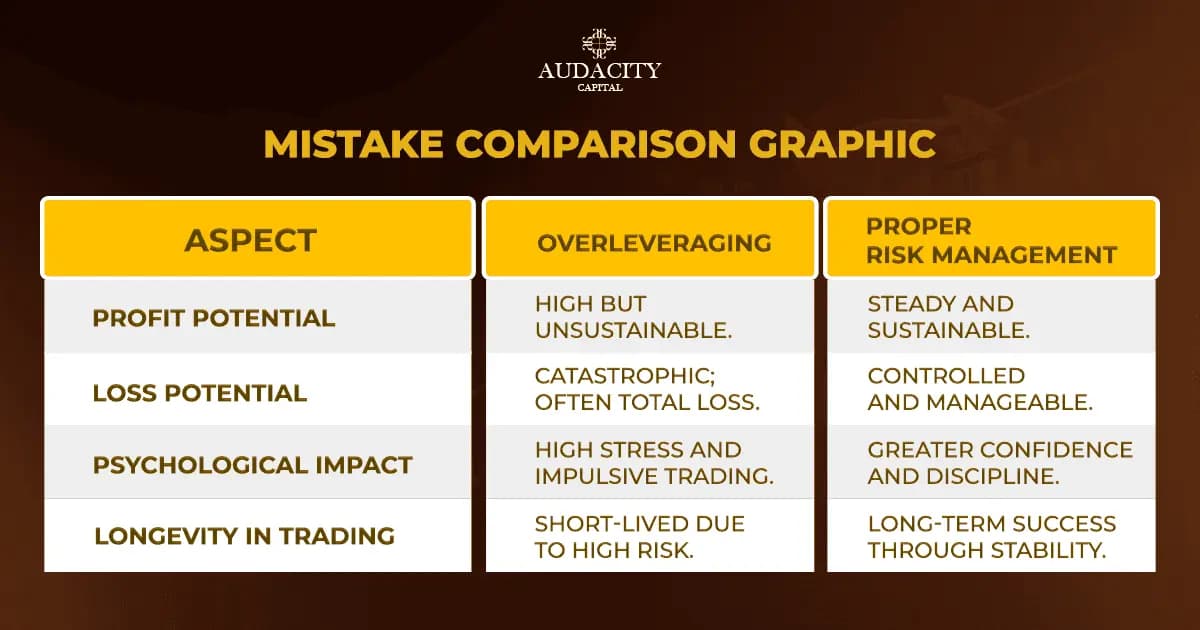
While most traders are well-versed in risk management, the truth is that many are still making several mistakes. But truth be told, many of these forex trading mistakes are easy to overcome if you know them. Below is a look at three of the most common ones.
Source: Risk Management and Why It’s Important
Overleveraging: The Fastest Way To Lose Capital
Leverage in FX trading is essentially a loan from an FX broker to you to help open a trade position. To get it, you need to pay a deposit, which is referred to as a margin. Using it, you get to gain market exposure equal to the full value of the position you’d have opened. However, while leverage can help increase your gains, it can also amplify your losses.
Using leverage to trade often seems like an attractive prospect for those who don’t understand the downsides of overleveraging in trading. It’s not uncommon for traders who have limited knowledge of how it works to soon realize that their losses have wiped out their available capital. To ensure this doesn’t happen to you, make sure to get up to speed with how leverage works and when and how to use it.
Moving Or Ignoring Stop-loss Orders
The temptation to let losing trades continue running in the hope that the market will turn over can prove to be a costly mistake. Moreover, moving or ignoring stop-loss orders can wipe out any profits that you may have made in other trades. This is particularly true when it comes to short-term trading, where trading strategies rely on quick market movements to make a profit.
Trading Without A Risk-reward Plan
Once you’ve set your destination, you need to settle on a route. Jumping into a trade without a well-defined plan is not very different from taking a trip without a map. While you might have the tools you need to trade at your disposal, the lack of a coherent strategy will make your tools meaningless. No matter your level, you need to undertake market analysis and, more importantly, make it a part of your trading plan. You should use it to pull information from diverse sources and use the data to set your stop-loss orders.
Building A Risk Management Plan
The key to controlling the different types of risks you’ll encounter when trading is to create a risk management plan. A good plan should include how to find opportunities, position sizing, and an exit strategy for your trades.
Assessing Your Risk Tolerance
Developing trading discipline calls for you to know your risk tolerance. Every trader has their own risk tolerance levels. Normally, trading instructors recommend that you risk anywhere between 1% and 2% of the value of your trading account. In reality, it’s upon you to decide how much you wish to risk based on the amount/value that makes you comfortable.
As you become comfortable with the trading system, you may decide to up the percentages, but make sure not to go too high as it may work against you.
Creating A Plan You Can Stick To
Developing a good risk management plan may seem daunting at first, but with the right information, it shouldn’t be so hard for you. Below are five tips to help you get started.
- Trade with the dominant trend
- Create a detailed strategy for opening and exiting positions
- Remember to watch your downside risk, and don’t be afraid to make hard decisions
- Trade with reason, never with your emotions
- Resist the urge to trade around upcoming or scheduled news events
Click here to download a more comprehensive guide on how to create a risk management plan. As you create your plan, remember to always calculate your risk tolerance before opening any position. This will include learning how to apply the 1% rule in all your trades to help minimize your losses.
Conclusion & Next Steps
Implementing stop-loss strategies is one of the best decisions you can make as a trader. These, coupled with position sizing and diversification, help you define your comfort zone and limit your maximum loss. All these are tactics aimed at maximizing your risk management in forex.
But even as you use the tips mentioned in this guide as a way to protect your capital, you must remember that trading is a marathon, not a sprint. As a result, any techniques you employ will not only assist with capital protection but also ensure your longevity in the markets.
In summary, the best way to protect your capital is to create a risk management checklist. Alternatively, you can try the strategies listed in this guide in a demo account to help you build the confidence you need to trade on a LIVE account.

Become a Funded Trader
Trade Now with Audacity Capital
Kriptoya disiplinli risk uygulamaya hazır mısınız? Audacity Capital'in yeni kripto enstrümanlarını keşfedin ve ticaret stratejinizi getirin.
Daha Fazla BilgiBülten
Yeniliklerden haberdar olmak için bültenimize katılın.
Sosyal Topluluğumuza Katılın

Bugün Yolculuğunuza Başlayın Ücretsiz Denememizle
Becerilerinizi ve başarılarınızı sertifikalar aracılığıyla gururla sergileyin ve potansiyel yatırımcılardan ve akranlarınızdan sıkı çalışmanız ve özveriniz için takdir alın.
Ücretsiz Denemeİlgili Makaleler
How Do Professional Traders Manage Their Risk While Trading?
Discover the importance of risk management in trading. Learn how to mitigate losses and increase your chances of success in the forex market.


Struggling To Face Losses In Forex Trading? Here’s How To Bounce Back
Struggling with losses in forex trading? Discover how to bounce back and align your mental approach with your goals to achieve profitability.

What Are The Risks Of Forex Trading For Beginners?
Understand the risks of forex trading for beginners. Learn about the potential pitfalls and challenges involved in the forex market.
Stop Loss Orders To Reduce Risk
Earn more profit by using stop loss orders techniques to reduce risk in forex trading. One of the best strategy to keep more profit.