



Forex Risk Management Strategies: A Practical Guide for Traders


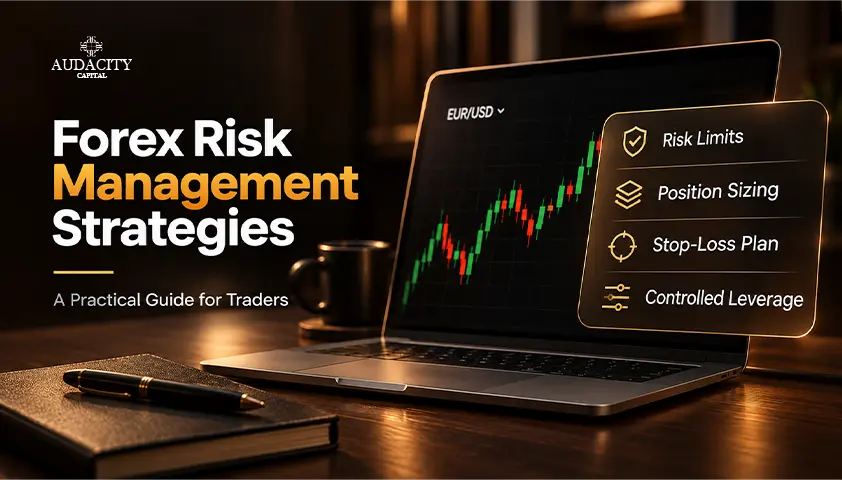
Forex risk management strategies exist because forex trading involves risk. Traders have some control over how much they can willingly lose on a trade. Having even one reliable risk management forex strategy can help traders set those limits before entering the market. Or having a few of them combined can reduce the damage done by unexpected price movement, poor trades, and a series of losses.
Good forex risk management is about protecting trading capital so that you still have some room to trade again.
What Is Forex Risk Management?
Forex risk management is the process before you start a trade, where you decide how much risk to take. The management begins before the order opens and not once the market has already started to move with or against you.
As part of forex trading risk management strategies, traders can choose position size, set a maximum loss, and set a stop loss in case the original trading plan fails. In this, leverage also plays an important role because profits and losses grow faster in a larger position.
The core of forex risk management involves:
- Deciding the amount you can lose in a trade.
- Selecting a position size that fits that amount.
- Placing a stop-loss at a sensible market level.
- Making sure leverage is within the limits of your trading plan.
- Checking the amount of exposure the account can handle.
But having risk management doesn't mean avoiding losses because losses are part of trading. Instead, it simply aims to stop one trade or a short run of bad trades from becoming irreversible damage. A risk management forex strategy is there to offer a set of rules to follow before emotions take over.
Why Is Risk Management Important in Forex Trading?
As a trader, you can have a good view of the market and can still lose more than intended, and that is why risk management is important in forex trading. The direction of your trade is only one part of the result because the amount placed behind that decision matters considerably more.
For example: XYZ trader made multiple profitable trades and, as a result, became more confident. Now the next trade is much larger, and the market is moving suddenly into the opposite direction. Here, just one single loss can remove a huge part of the earlier gain.
Leverage makes this effect even stronger because it lets traders control a position larger than the money placed as margin.
In situations like these, forex trading risk management strategies give an account more room to handle normal losing trades. It also helps a trader avoid making another poor decision simply because the previous trade went badly.
Eventually, the purpose is account survival. A trader who controls losses has time to review mistakes, adjust a strategy, and continue trading when the next valid opportunity appears.
7 Best Forex Risk Management Strategies Every Trader Should Know
You manage forex trading risks long before the trade opens. As a trader, first decide how much money you can afford to lose and then build the position around that limit. Here are some simple but best forex risk management strategies, but they become useful only when you follow them consistently.
1. Risk a Fixed Amount Per Trade
Pick an amount: the maximum loss before entering the trade. You can either set a fixed monetary amount or a small percentage of your account. Remember, there is no single figure that fits every trader.
It is important to keep the risks consistent. You cannot keep one trade risk at $50 and another risk at $500, or your trading plan will have no stable risk level. Having a fixed limit also makes it easier to accept a loss without changing the plan halfway.
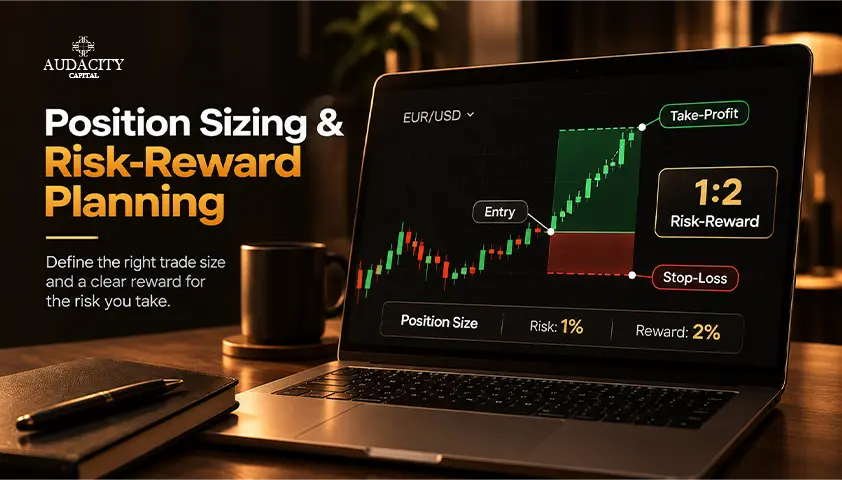
2. Use Position Sizing
Position size tells you how much of the currency you are actually trading. Now, position size should ideally come from the amount you can willingly lose and the distance between your entry and stop-loss.
A wider stop normally means a smaller position if you want to keep the same dollar risk.
A closer stop may allow a larger position, provided the trade still makes sense.
Therefore, the position size should be based on your risk limit and not on how much your broker allows you to trade. It is recommended to calculate lot size from account balance, acceptable risk, and stop distance.
3. Set a Stop-Loss Before You Enter
There's a lot that has to happen before the trade, and stop-loss is also a part of it. It gives the trade a point at which you accept that the original idea has failed. So decide your stop-loss before entering because the decision becomes harder once money is already being lost.
But stop-loss should have a reason behind it, as it must sit beyond a price level that would invalidate the setup.
NOTE: Stop-loss does not always guarantee an exact exit price during fast or difficult market conditions, and therefore the position still needs to be sized properly.
4. Control Your Leverage
With leverage, you can control a larger market position even with less capital. Leverage also makes losses grow faster when the market is moving against you. The important point is very simple - having access to high leverage does not mean you need to use it.
Always choose exposure that fits your account and the amount you have already defined to risk.
NOTE: High leverage can magnify losses, leading to a margin close-out when available funds are no longer enough.
5. Use a Risk-Reward Rule
Apart from knowing how much you are risking, it is also important to know what return would make the trade worth taking - that's your risk-reward ratio.
For example, if the planned loss is $100 and the possible gain is $200, the trade has a 1:2 risk-reward relationship.
However, it doesn't make the trade profitable by itself, and having a good risk-reward ratio cannot rescue a strategy that loses too often. So, use it as part of your decision and not as a guarantee that a trade is good.
6. Avoid Increasing Position Size After a Loss
When you lose a trade, it creates temptation to create a larger next trade. Many people who trade think like: win more on the next position and recover the money quickly. But this can quickly become dangerous.
If your next large trade also goes downhill, your account will take a considerable hit while you are already under pressure. Therefore, increasing size after a loss is one mistake that turns into a much bigger risk. Instead, return to the original trading plan and let the next setup stand on its own.
7. Set a Maximum Daily or Weekly Loss
A daily or weekly loss limit gives the trader a point at which trading stops, and it is very useful after several losses or when emotions start affecting decisions.
Once you reach the planned loss limit for the day, you will automatically close the platform and review the trades later. But the limit depends on the account and trading plan. The only important part is deciding it before the session begins and respecting it when the limit is reached.
How to Build a Forex Risk Management Plan?
Any risk management forex strategy above will only become more useful when you put it into one routine. You don’t need a complicated system, but a plan that answers what happens before, during, and after a trade.
Before entering a trade
- Set the maximum losing amount.
- Choose the position size from that amount.
- Set the stop-loss.
- Check whether the market is moving normally or showing unusual volatility.
- Make sure the trade fits your wider plan.
While the trade is open
Watch the trade and don’t change rules just because the price is moving against your plan. As long as the original reason for the trade remains valid, follow the plan. If it fails, accept the planned exit.
After the trade
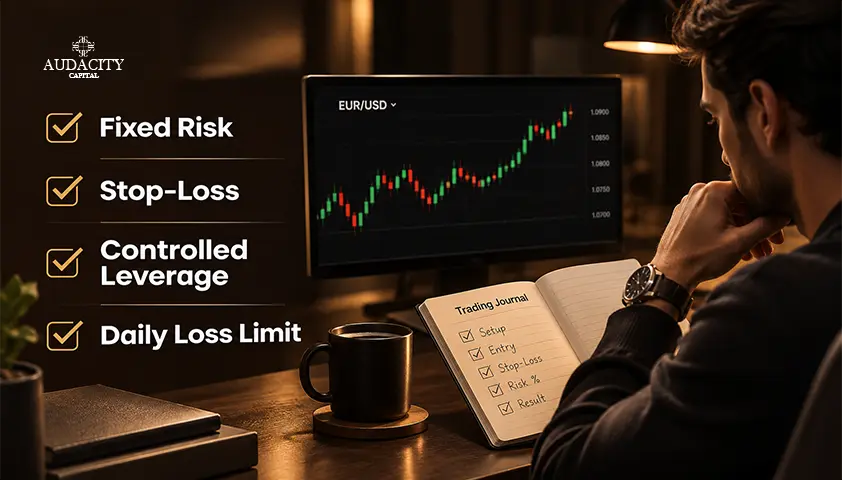
Write down what happened. A simple trading journal can record:
- Currency pair
- Entry and exit
- Position size
- Planned risk
- Actual result
- Reason for entering
- Any rule that was broken
This record over time will show where the risk is actually coming from. A trader may discover that the problem is not the strategy itself, but oversized positions, repeated trades after losses or ignoring the original exit rule.
Risk management works best when it becomes part of the trading routine. The CFTC also recommends developing a risk management plan and deciding how much risk capital to use before trading.

Become a Funded Trader
Trade Now with Audacity CapitalConclusion
Forex risk management is not about finding a way to avoid every losing trade. Losses will happen. The important part is controlling how much damage one trade can cause. The best forex risk management strategies, such as sensible position sizing, planned exits, and controlled leverage, give traders a way to keep that damage within limits. A trading strategy decides when to enter, but the amount risked on each trade often decides how long a trader can stay in the market.
FAQs
The 1% rule in forex means you should not risk more than 1% of the trading account on one trade. It is not a universal requirement, but many traders use it as a personal guideline.
Your risk capacity on one forex trade depends on your trading plan, account, and risk tolerance. There is no fixed amount that suits every trader. Also, the important part is knowing the amount before the trade starts.
There is no completely safe way to trade forex. Market prices can move against you, and leverage can increase the effect of those moves. A defined risk limit, suitable position size, and clear exit plan can help control avoidable exposure.
Yes, you can, but it depends greatly on the product and broker. Some forex products use leverage as part of their structure, while other ways of gaining currency exposure may work differently. Do check out the product terms before trading.
Yes, you should. While a stop-loss does not guarantee an exact exit price in every market condition, it does help define where a trade will be closed if the original idea fails.
After losing a forex trade, stick to the plan and review what happened. Avoid increasing the next position, changing the plan instantly, or chasing another trade in the name of recovery.

Pronto ad applicare un rischio disciplinato alle criptovalute? Esplora i nuovi strumenti crypto di Audacity Capital e porta la tua strategia di trading.
Scopri di PiùNewsletter
Iscriviti alla newsletter per restare aggiornato.
Unisciti Alla Nostra Community Social

Inizia Il Tuo Viaggio Oggi Con La Nostra Prova Gratuita
Mostra con orgoglio le tue abilità e i tuoi risultati attraverso certificati e ottieni riconoscimenti per il tuo duro lavoro e dedizione da potenziali investitori e colleghi.
Prova GratuitaArticoli Correlati
How to Trade During a Recession: Strategies and Tips for Traders.
Funded Forex Trader : how to Trade During a Recession. Start trading with a funded account now!


Struggling To Face Losses In Forex Trading? Here’s How To Bounce Back
Learn how to recover from losses in forex trading with proven strategies, mindset tips, and a step-by-step plan to rebuild confidence and trade consistently.
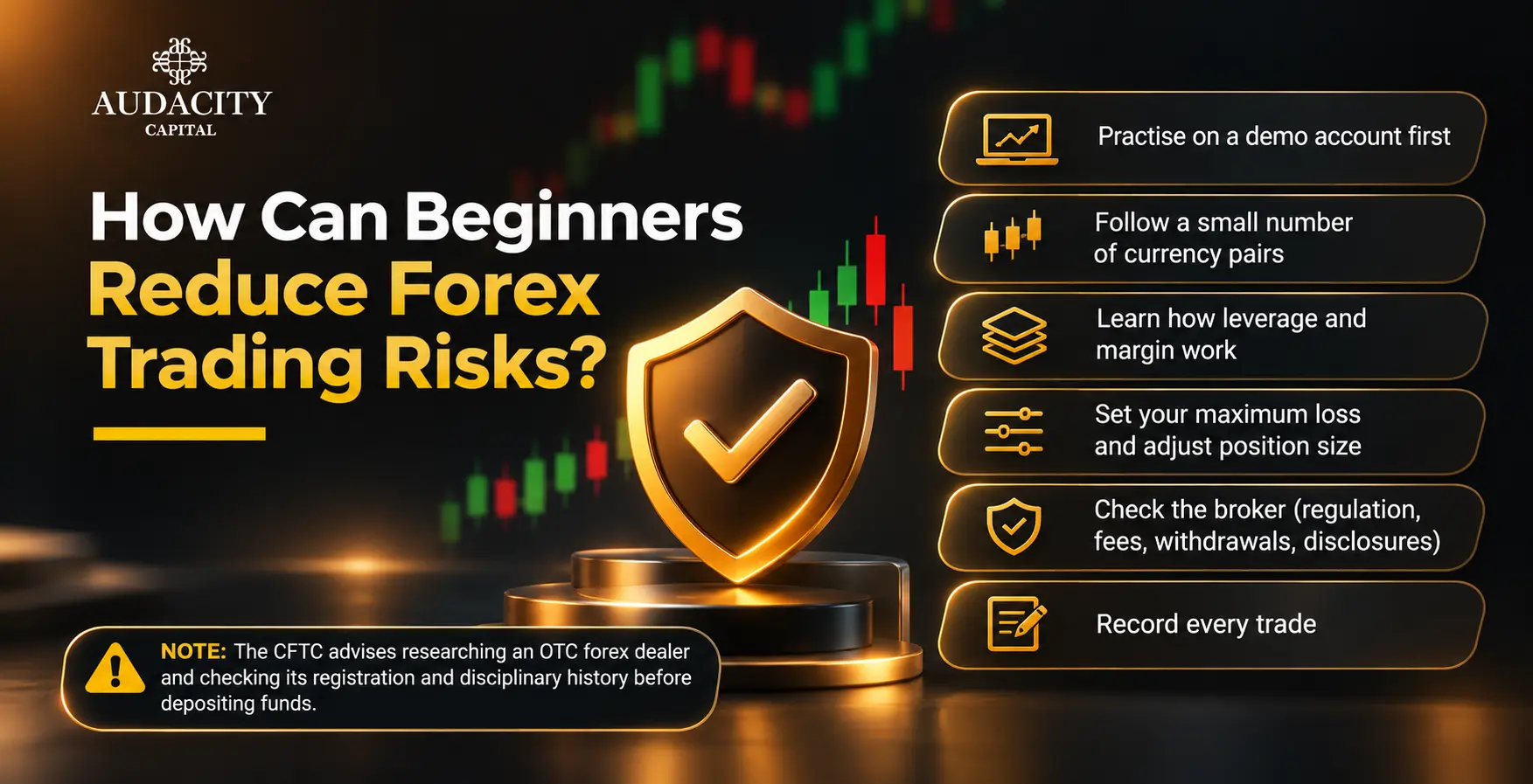
What Are The Risks Of Forex Trading For Beginners?
Explore 7 forex trading risks, including leverage, volatility, trading costs and scams. Learn how to manage risk and protect your trading account.

Why Every Trader Sees The Chart Differently ?
Unlock the secrets of trader chart interpretation. Understand why different traders see the same chart differently and how it affects trading.