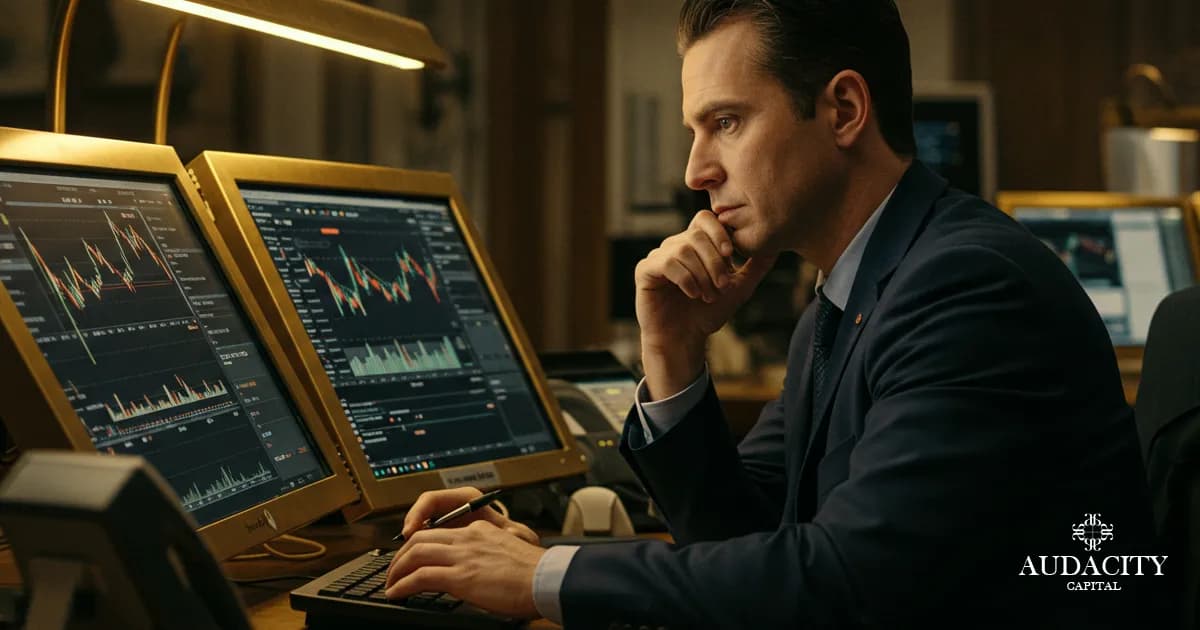



Introduction To The Psychology Of Day Trading.



The psychology of day trading is a crucial factor in determining the success or failure of a day trader. Unlike other types of investments, day trading mainly relies on quick reactions and rapid decision-making to maximize returns. The intense nature of the market puts a lot of pressure on traders, which is why it is essential for day traders to develop a resilient trading mindset to succeed.
Without consistency and discipline, even a well-put strategy will crumble under greed and fear. Day traders are required to master emotional control to remain focused on their trading style. Emotions like panic, greed, and over-excitement can cause poor decisions in the market, resulting in significant losses. By controlling your emotions and building a strong mindset, you can easily make consistent profits in the market.
In this blog, we will share a few tips on how to control your emotions and maintain discipline in your trading career. Keep reading to gain more insight.
How To Control Emotions And Stay Disciplined In Day Trading
Emotional control in day trading can significantly impact your success in a positive way. It will help you stay away from impulsive decisions that can wipe out your trading account. A composed demeanor is crucial for remaining consistent in the financial market.
Although it can be hard to master emotional control, many traders have done it through practice and are making a good amount of profit every month. If you are struggling with trading psychology, here are ways you can control your emotions and stay disciplined:
Have A Clear Trading Plan
Most beginner traders fail because they do not have a clear trading plan. They do not know which time frames to use, when to enter the market, and what time they should take trades.
Without a clear plan of how you should enter the market, you can easily drown in fear and take the wrong trades. Ensure you have a set of rules that will help you spot potential entries. If those conditions are not met, do not take a trade. This is one of the best ways to avoid taking emotional trades.
Assess Your Mental State
The three main emotions day traders experience are fear, greed, and excitement. These emotions can cloud your judgment, preventing you from taking the best trades. Therefore, before opening any position, assess your feelings and mental state. If you feel anxious, frustrated, or overconfident, take a step back to check in with your mental state.
Managing emotions in trading means being aware of yourself all the time. A good break from day trading will help bring more clarity, allowing you to understand the market even better.
Assess Your Mental State
The three main emotions day traders experience are fear, greed, and excitement. These emotions can cloud your judgment, preventing you from taking the best trades. Therefore, before opening any position, assess your feelings and mental state.
If you feel anxious, frustrated, or overconfident, take a step back to check in with your mental state. Managing emotions in trading means being aware of yourself all the time. A good break from day trading will help bring more clarity, allowing you to understand the market even better.
Reduce Your Trade Size
The first rule of trading is to protect your capital. The best way to do this is to pick the right trade size. Even if you see a perfect setup, do not be tempted to increase your trade size to milk more profits. Keeping your trade size where it should be is one way to build mental discipline. Your lot size should be in relation to the amount of capital you have in your account.
For example, if you only have $100 in your account and use a standard lot size, it means that in one trade, you might lose all your money if the trade goes against you. By sticking to the correct lot size, traders can improve their long-term success. Use a lot size calculator to find out what trade size is best for your account.
Wait For The Right Setups
A very common pitfall in day trading is giving in to FOMO. FOMO means the Fear of Missing Out, and it is something that a lot of traders struggle with. Traders may spot a perfect entry opportunity, but since they are not patient enough to buy or sell at the best market price, they make hasty decisions and end up being stopped out even when the price is planning to move in their direction.
Recognizing FOMO earlier can help you put measures in place to prevent early or late entries in the market. One way to combat this psychological problem is only to take trades when the price hits your point of interest (POI). If the price violates your POI or does not touch it, you should wait for another setup.
Accept That Losses Are Part Of Trading
Some traders have a hard time accepting losses, and most times, they may revenge trade to recover the losses. Most times, this does not always go well. Many traders end up losing more than what they would have lost if they had just accepted the loss.
Developing emotional resilience can help you bounce back from the losses you have experienced. It may not be easy to accept it, but if you remain optimistic even after losing, you are more likely to recover from the loss. Accepting that losses are part of the game allows day traders to focus on long-term goals rather than feeling disappointed and frustrated due to one bad trade. Being resilient will help you maintain a positive attitude, which is crucial in day trading.
Recognize Cognitive Biases
Day traders should also be aware of cognitive biases to improve their emotional control. Cognitive bias is a systematic error in thinking that affects judgment and the decisions you make. In trading, cognitive bias distorts the perception of price, leading to poor decision-making that may cause significant losses.
Cognitive biases normally stem from the brain’s attempt in trying to simplify information. When trading, your brain may try to take a shortcut in processing complicated price movements. In doing so, you are most likely to open low-quality trades. Other common biases that may affect your trading decisions include;
Overconfidence: When traders feel too confident in their abilities they may ignore certain signs like upcoming news events. Sometimes, they may also take too much risk.
The pain of Losses: When traders fail to accept losses, their brains may make them think that the price will eventually reverse. Instead of cutting losses, traders may continue to hold on to those positions until their account balance is depleted.
Fixating on Specific Data: Traders may also miss out on potential entries or hold on to losing trades because of fixating solely on one piece of information. Many traders tend to seek information that supports their beliefs and ignore what the market is communicating to them. This bias can reinforce old strategies that do not work or make you overlook important signals in the market.
In most cases, it is the market that tells you what to do, but if you make assumptions about how price should move, you are most likely to miss or lose many trades simply because you do not want to pay attention to what price is doing.
Journal Your Trades And Emotions
Another way to combat emotional trading is to journal every trade you take plus the feelings you are experiencing at the time. Your emotions not only affect your profit and loss. It also affects your financial decision-making. This is why understanding behavioral finance is important in trading.
Behavioral finance acknowledges that human behavior is driven by social influences and emotions. For example, many traders tend to follow the crowd. They assume that if there are many buyers in the market, they should buy assets. Sometimes, fundamentals do not support that, which explains why the market does not always move as it should.
Traders need to know that emotions like fear and greed can also affect their risk management, which is why it is always essential to include these emotions in your journal and work on them gradually.
Take A Break And Do Not Give Up
After experiencing losses in the market, traders usually feel like quitting. Too much emotions in trading can be overwhelming, especially if you do not know how to handle them. This is why it is important to practice emotional intelligence to avoid breaking down. Be aware of your emotions, express and learn how to control them when things are not going your way.
Meditation and mindfulness can help improve your emotional control, allowing you to stay disciplined and focused. Also, set realistic goals for yourself. Avoid focusing on short-term goals because if you do not meet them, you will feel like giving up. Discipline, consistency, and working on your overall psychology are what you need to see growth in your trading career.
The Bottom Line
Improving your psychology is one of the most important things to do in day trading. It can significantly increase your success rate, allowing you to make thousands of dollars every month. Mastering emotional control and developing a strong mindset is crucial for navigating the markets.
Emotions like anxiety, fear, greed, excitement, and FOMO can lead to irrational decisions that may make you blow your account. Even with a good strategy, it can be hard to make a profit if you do not maintain discipline or practice emotional intelligence.
By taking your time to understand the psychological challenges present in day trading you will be setting yourself up for success. It can help you manage risk, improve your trading skills, and, most importantly, prevent stress and depression.

¿Listo para aplicar un riesgo disciplinado a las criptomonedas? Explore los nuevos instrumentos de cripto de Audacity Capital y traiga su estrategia de trading.
Aprender másBoletín
Únase a nuestro boletín para mantenerse al día.
Únete a Nuestra Comunidad Social

Comienza Tu Viaje Hoy Con Nuestra Prueba Gratuita
Muestra con orgullo tus habilidades y logros a través de certificados y obtén reconocimiento por tu arduo trabajo y dedicación de posibles inversores y compañeros.
Prueba Gratuita