



Gold Hits Record Highs Then Crashes: The Full Fundamental Breakdown



Key Takeaways for Traders
- Gold is Primarily a Macro Asset
It responds to real yields, monetary policy expectations, liquidity, and geopolitical risk more than short-term chart patterns. - Real Yields Drive the Core Trend
If real yields are falling, gold tends to rise. If real yields rise sharply, gold often corrects. - Expectations Move Markets Before Policy Changes
Gold moves on what markets believe central banks will do, not just what they actually do. - Positioning Extremes Create Violent Corrections
When speculative positioning becomes crowded, reversals can be aggressive. - Intermarket Analysis is Essential
Monitoring the dollar, bond yields, inflation expectations, and equity risk sentiment gives gold traders an edge.
Gold recently surged to an all-time high before experiencing a sharp and aggressive correction. Moves of this magnitude are never random. They are the result of layered macroeconomic forces, positioning imbalances, liquidity conditions, and shifts in global expectations.
For traders, the question is not just what happened but why it happened and what changes going forward.
Let us break it down.
The Rally: Why Gold Exploded Higher

1.Real Interest Rates Collapsed
Gold is highly sensitive to real yields, which are nominal bond yields minus inflation.
When real yields fall:
• The opportunity cost of holding gold decreases.
• Bonds become less attractive.
• Capital rotates into hard assets
As markets priced in slowing growth and future rate cuts, real yields declined sharply, providing fuel for gold’s rally.
2. Federal Reserve Policy Expectations
Markets aggressively repriced the outlook for the Federal Reserve.
Anticipation of rate cuts:
• Weakened the U.S. dollar
• Lowered forward yield expectations
• Increased liquidity expectations
Gold often rises not when cuts happen, but when the market begins expecting them.
3. Central Bank Accumulation
Central banks, particularly in emerging markets, have been increasing gold reserves to:
• Diversify away from U.S. dollar exposure
• Hedge geopolitical risks
• Strengthen balance sheet resilience
This structural demand created a strong underlying bid in the market.
4. Geopolitical Risk Premium
Periods of geopolitical instability increase demand for safe haven assets.
War risks, trade disputes, and sovereign debt concerns all add a risk premium to gold prices. When uncertainty rises faster than clarity, gold tends to benefit.
5. Dollar Weakness
Gold is priced in dollars. A weaker dollar:
• Makes gold cheaper for foreign buyers
• Boosts global demand
• Attracts speculative inflows
Dollar softness amplified the rally.
6. Speculative and Systematic Positioning
Momentum trading, ETF inflows, and systematic fund positioning accelerated the move.
Once price momentum built up, trend-following systems added exposure, creating a reflexive rally driven by both fundamentals and positioning.
The Correction: Why Gold Fell Sharply

Parabolic moves eventually meet resistance.
Here is what changed.
1. Real Yields Rebounded
Stronger economic data pushed bond yields higher. As real yields rose, the opportunity cost of holding gold increased, reducing its appeal.
2. Rate Cut Expectations Were Delayed
Markets began pricing a higher-for-longer scenario.
When easing expectations fade, gold loses a major liquidity driver.
3. Dollar Strength Returned
As yields climbed, the dollar strengthened, creating headwinds for gold.
4. Overcrowded Positioning Unwound
At the peak:
• Long positioning was extended.
• Technical indicators were overbought.
• Volatility was compressed
When momentum stalled, profit taking cascaded into forced liquidation, accelerating the downside move.
5. Risk Appetite Improved
As equity markets stabilized, capital rotated away from defensive assets into growth assets, reducing demand for gold.
Gold’s recent rally and sharp correction did not surprise me. What stood out was how clearly the move reflected changing macro expectations rather than random volatility.
Gold rarely moves in isolation. It responds to liquidity. It responds to policy shifts. It responds to positioning imbalances. When real yields began compressing and markets aggressively priced in rate cuts, the upside was structurally supported. The momentum was logical.
But once positioning became crowded and yields started repricing higher, the correction became increasingly probable. Markets often overshoot in both directions, especially when driven by expectation rather than confirmed policy action.
What this move reinforced for me is simple:
Technical structure matters, but macro structure governs.
Traders who focus only on price patterns often react late. The traders who stay ahead are those who understand:
• The direction of real yields
• The trajectory of central bank policy
• Intermarket relationships
• Liquidity conditions
• Shifts in risk sentiment
Gold is one of the clearest macro barometers in global markets. It rewards traders who think in regimes rather than isolated setups. Check our Recent article about How to trade Gold(XAUUSD)
Markets will always move. The real edge comes from understanding why.


Funded Trader Program
Start Funded TradingFrequently Asked Questions
Gold does not pay yield. When interest rates, and especially real yields, rise, investors can earn more from bonds and savings instruments, making gold less attractive. When real yields fall, gold becomes more competitive.
Yes, but not perfectly in the short term. Over long periods, gold tends to preserve purchasing power. However, in shorter cycles, gold is often more sensitive to real interest rates than inflation alone.
Central banks buy gold to:
• Diversify reserve assets
• Reduce reliance on the U.S. dollar
• Hedge geopolitical risk
• Strengthen long-term financial stability
Their demand tends to provide structural support to prices.
There is generally an inverse correlation between gold and the dollar. A stronger dollar makes gold more expensive globally, reducing demand. However, extreme risk-off environments can cause both to rise simultaneously.
Not necessarily. The longer-term direction depends on:
• The path of real yields
• Federal Reserve policy trajectory
• Inflation dynamics
• Global liquidity conditions
• Geopolitical developments
Corrections within macro bull markets are common, but they must be evaluated within the broader economic regime.
Professional traders track:
• U.S. 10-year real yield
• Dollar Index DXY
• Inflation data including CPI and PCE
• Federal Reserve commentary
• ETF flow data
• Futures positioning reports
These indicators often provide early warning of regime shifts.

क्या आप क्रिप्टो पर अनुशासित जोखिम लागू करने के लिए तैयार हैं? Audacity Capital के नए क्रिप्टो उपकरणों का पता लगाएं और अपनी ट्रेडिंग रणनीति लाएं।
और जानेंन्यूज़लेटर
हमारे न्यूज़लेटर से जुड़ें।
हमारे सामाजिक समुदाय में शामिल हों

आज ही अपनी यात्रा शुरू करें हमारे नि:शुल्क परीक्षण के साथ
प्रमाणपत्रों के माध्यम से अपने कौशल और उपलब्धियों को गर्व से प्रदर्शित करें और संभावित निवेशकों और साथियों से अपनी कड़ी मेहनत और समर्पण के लिए पहचान प्राप्त करें।
नि:शुल्क परीक्षणसंबंधित लेख
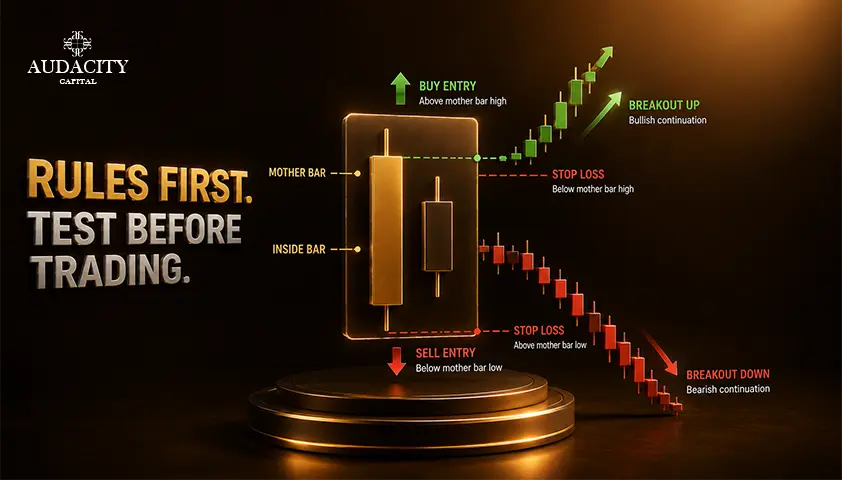
Inside Bar Trading Strategy: Rules, Entries and Backtest Guide
Learn a rule-based inside bar trading strategy. Get the pattern definition, three entry models, stop and target logic, and a backtest framework for your market.


Martingale Strategy in Trading
How the martingale trading strategy works, what the doubling arithmetic actually costs, why position sizing cannot create an edge, and where it is banned.
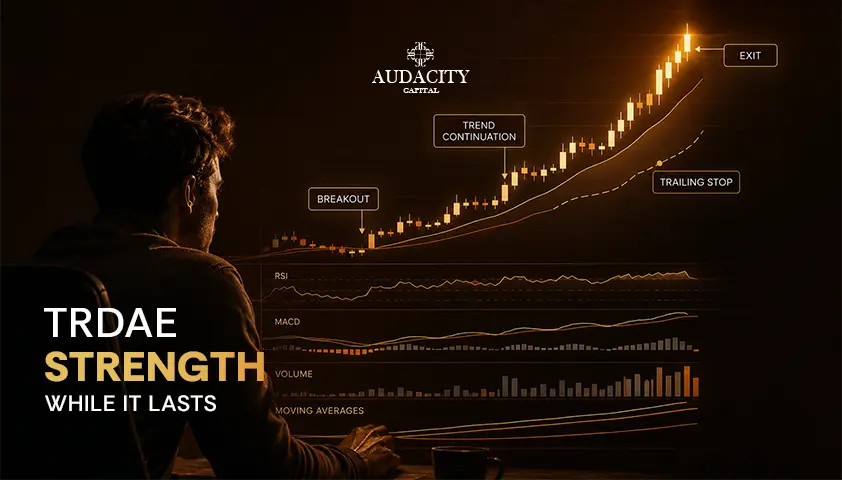
Momentum Trading Strategy: A Comprehensive Guide
Master the core principles of a momentum trading strategy. Learn how to use key indicators, manage sharp-reversal risks, and master exit timing.
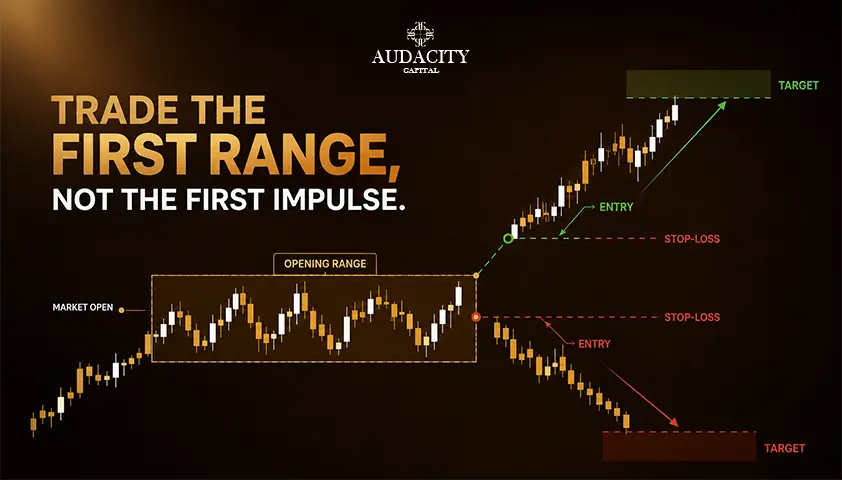
Opening Range Breakout Strategy: Rules, Setups and Examples
Learn how the opening range breakout strategy works, including ORB rules, 5, 15 and 30-minute setups, entry signals, stop losses and risk management.