



News Trading: How To Capitalize On Market Movements


Did you know that a single news event can move the forex market by hundreds of pips? One of the many advantages that comes with trading currency pairs is that the FX market operates 24 hours a day, five days a week. Since market movements are significantly impacted by news, financial data happens to be the most essential catalyst for short-term trades and investments.
This holds true for the currency market which not only responds to the economic numbers from the U.S. but also to emerging news and events from elsewhere around the world. As a short-term trader, this means you need to have a news trading strategy, if you’re to make the most of these movements.
Join us below as we introduce you to the concept of news trading, and guide you on the type of news events to be on the lookout for. We will also take you through the strategies to consider, how to manage your risk, and the benefits of trading news, such as the ability to capitalize on market movements.
What Is News Trading?
Economic news trading refers to a technique that relies on breaking news about currencies, equities, and other markets as the basis for a transaction plan. The news in question can include anything from economic reports to unexpected geopolitical events and company announcements such as earnings and stock splits.
Apart from traditional news sources, today’s social media platforms are also increasingly influencing trading strategies. In the recent past, for example, we have seen some Reddit forums empowering retail investors to go head-on with the big firms on Wall Street. On the same breadth, we have also seen Elon Musk wipe millions of his company value with one tweet.
The Basics Of News Trading
You must understand that there’s no one single strategy for news trading. From the moment the news goes public, one of two things will happen: the markets will either experience a muted reaction as the investors try to digest the events, or the prices will spike in a single direction. With this in mind, you must have a strategy to help you invest rationally.
Most traders use two approaches to try and overcome market volatility:
- Directional Bias: This is where you expect the market to move in a given direction after the news has become public.
- Non-Directional Bias: It disregards the directional bias and operates on the fact that a news report will always create a shift in the markets.
Why News Creates Market Opportunities
News and upcoming events influence the money markets in diverse ways. If the news is positive, it’s likely to lead to a bullish market, and when the reverse happens, you can expect to experience a bearish market. For example, if a news report points to high GDP growth and low unemployment rates, traders and investors will become optimistic about the money markets. This will, in turn, lead to a higher demand for securities and stocks.
Types Of News Events That Impact Markets
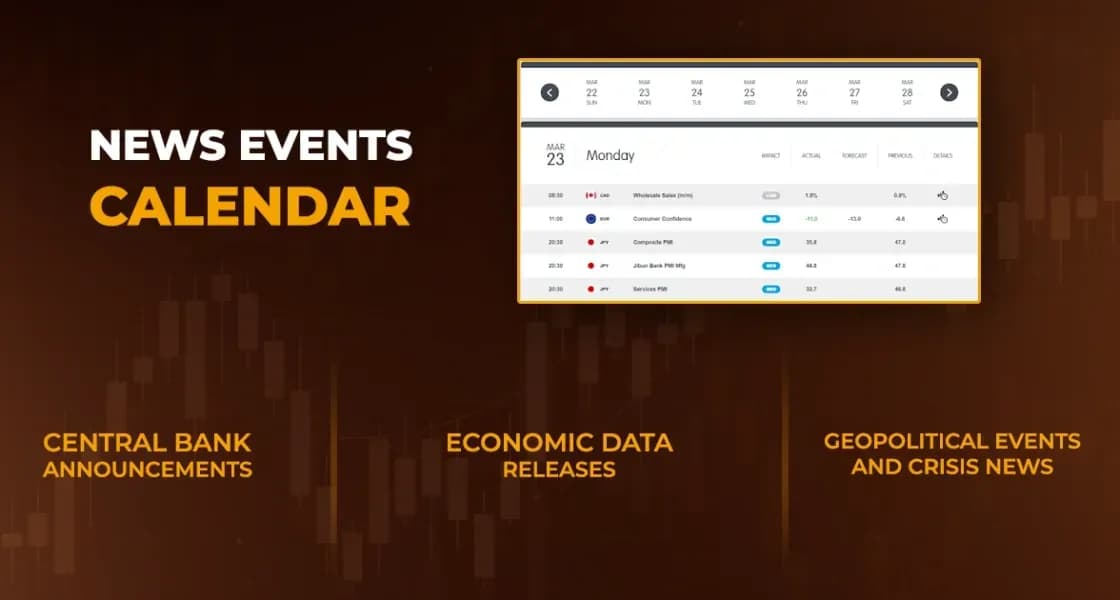
If you’re to get involved in news trading, you must first understand the timing of all major releases. Secondly, you’ll want to know which of these data is more likely to impact market movements. In most cases, the announcements that are likely to lead to price movements are those related to central bank announcements, economic data releases, geopolitical events, and crisis news.
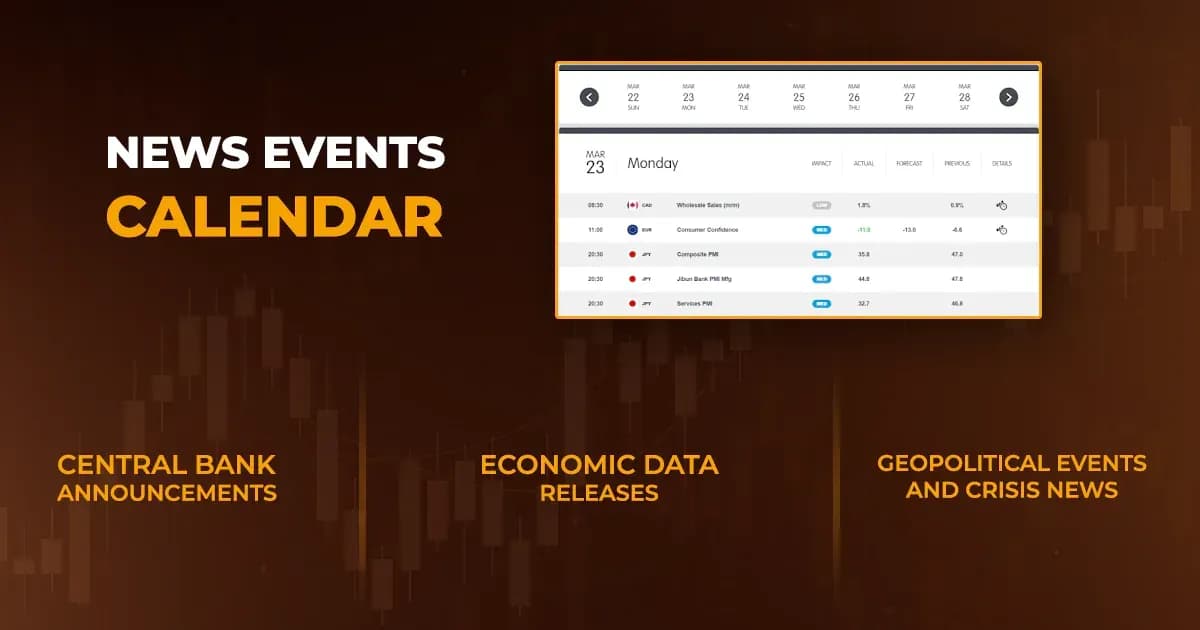
A Calendar-Style Infographic Highlighting Major News Events and Their Typical Market Impact. Source: Babypips
The relative importance of each of these releases varies depending on their broad economic environment. Since the COVID-19 pandemic, investors worldwide have resorted to paying close attention to central bank interest rate decisions. In the years before the pandemic hit, most traders appeared to focus more on employment figures and GDP growth.
Central Bank Announcements (E.g., Interest Rate Changes)
The US Federal Reserve plays a central role in influencing market volatility via its monetary policies. Any announcements regarding inflation targeting, interest rates, or other fiscal tools can significantly impact market movements. For example, an unexpected change in its policy stance is likely to affect market volatility as traders buy or sell certain stocks.
Economic Data Releases (E.g., Non-farm Payrolls, Cpi, Gdp)
Fiscal data such as industrial production data, inflation figures, interest rate decisions, and GDP growth rates by the US Federal Reserve are some of the central drivers of market volatility. These four indicators are used by investors to determine the overall health of the U.S. economy. As such, they play a crucial role in influencing market expectations, including investor sentiment. When the economic data releases are positive, the markets tend to go on a bullish run. Negative releases, on the other hand, often contribute to a bearish trend.
Geopolitical Events And Crisis News
Geopolitical events such as international trade negotiations, border tensions, policy changes, and elections play a vital role in driving investor actions. Government policies and political stability directly affect trader confidence and overall market sentiment. Any uncertainty that arises around policy changes or election results can lead to enhanced market activity. Often, this arises because of investors trying to anticipate the potential impact of these policies on trade relations.
Strategies For Trading The News
Investors can use numerous news trading strategies to take advantage of the market’s reactions to central bank news and geopolitical events. Traders who have specialised in forex currencies often use a variety of tactics to benefit from market movements. Some of the most commonly used strategies for news trading are:
Pre-news Positioning: Anticipating Market Reactions
The pre-news positioning strategy operates on the premise that economic data releases may cause a breakout in a given consolidation pattern. Therefore, if the release were to generate enough momentum, there’s a likelihood that it could propel a currency pair’s price past decisive support/resistance levels. This would ultimately result in a noticeable directional shift. Experienced news traders have long used this strategy to help them capitalise on the momentum that is bound to follow a news event.
How It Works
- Before the News Event: Identify a currency pair that has been trading with a consolidation pattern.
- Placing Your Order: The best move would be to place your orders a little beyond the identified pattern to allow for its automatic execution once the release goes public.
Straddle Strategy: Capturing Breakouts In Both Directions
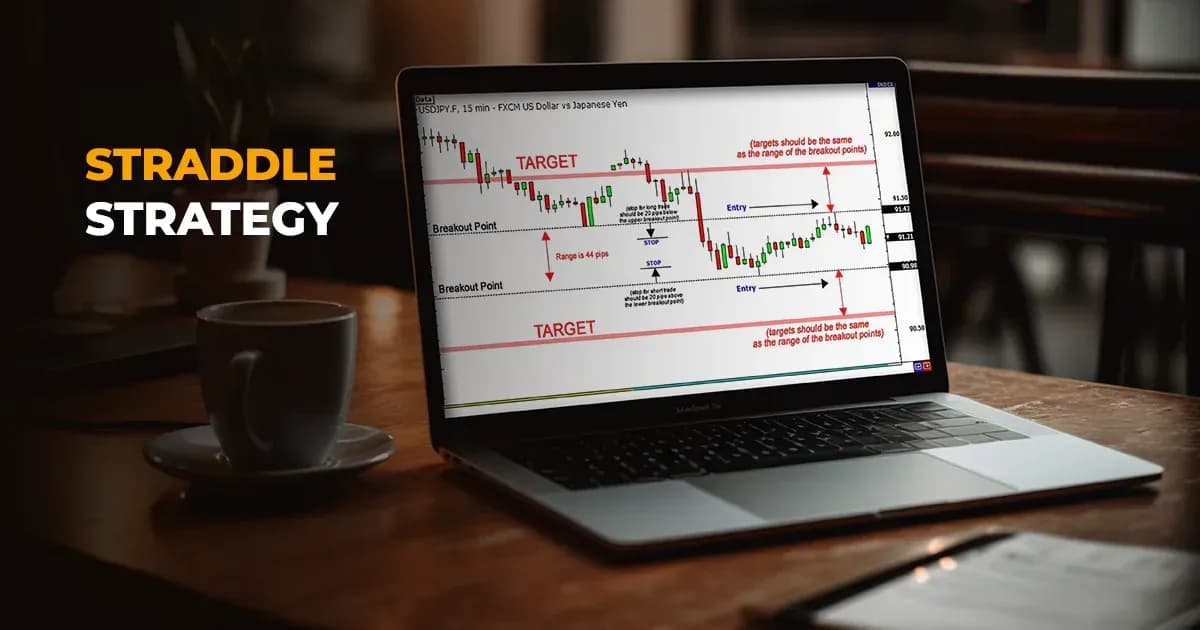
As the name suggests, the essence of the straddle strategy is to place both a buy and sell order. You’ll need to place this order shortly before the expected news release. Doing so will allow you to capitalise on market movements that may happen in any direction once the expected report or release has happened. What happens is that if the release exceeds your expectations, your buy order will be automatically executed. If the opposite happens, the sell order gets triggered. The straddle strategy can benefit a trader who is anticipating significant market volatility, but who is determined to establish the direction the market will take in the coming days.
How It Works
- Pre-News Setup: You’ll need to place a purchase order above the prevailing market price and a sell order below the same price. To help you minimise risk, make sure to implement stop-loss levels.
- Post-News Reaction: As soon as the news gets released, the market will most certainly move sharply in a given direction. The order that has been triggered will help in capturing this movement, while the opposite will be promptly cancelled.
Below is a chart showing the straddle strategy in action:
Post-news Trading: Waiting For Market Stabilization
The post-news trading strategy means waiting for the news to be released and then going against the initial market response to the report. For traders using this strategy, the reasoning is that the market movements occasioned by the release are exaggerated. They, therefore, expect that these movements will be followed by a reversal. This means that the asset’s prices are likely to return to their original levels before the news release. The ability to master the post-news trading strategy requires that you have the skill to recognize market overreactions. You also need to have a strong grasp of market sentiment.
How It Works:
- Initial Response: Once the expected news event has happened, it’s recommended that you await to notice a significant market movement in any one direction.
- Critical Moment to Place Your Order: Observe closely to identify when the asset’s prices seem to be changing direction or steadying, and then place an order in the opposite direction.
- How to Benefit from Market Correction: Whenever the market begins to pull back, the prices soon begin to return to the initial prices. This movement enables you to turn a profit on your trade.
Managing Risks In News Trading
Risk management in news trading involves balancing opportunities for gains keeping in mind the losses that may arise from your investment choices. It’s a technique that can help increase your gains and limit your potential losses. While essential, risk management is one of the most overlooked aspects of successful trading.
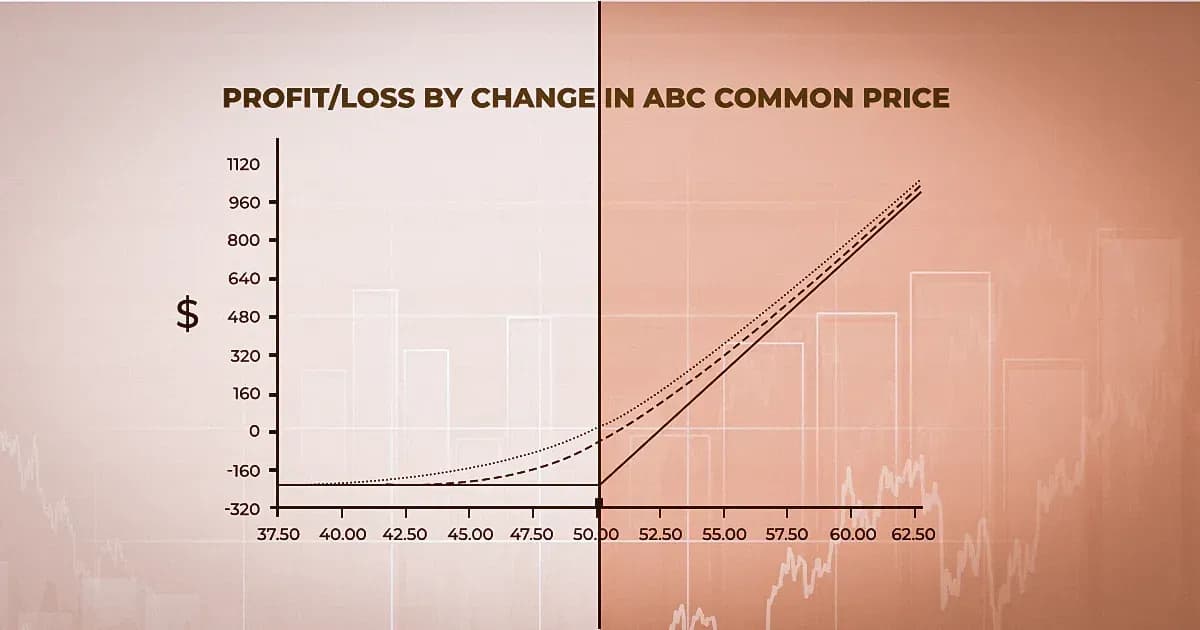
Image of A Chart Comparing Outcomes with And Without Risk Management During A News Event. Source: Investopedia
Below are some of the techniques you can use to protect your investments from the high risks associated with news trading.
Volatility And Slippage: Dealing With Unpredictable Movements
It’s crucial to know that your stops could be filled at a shoddier price than the level you had set in your order. The difference that arises between the execution price and the stoppage level is what we call slippage. When it comes to slippage, it means there’s a risk that the stop-loss level may fail to limit your losses by a certain amount.
One of the leading reasons for slippage and volatility is when there’s a price gap because of a major news event. This is commonly seen in shares as the markets tend to close overnight. The fact that it’s not unheard of for shares to open at a higher level than their closing price means there’s always a probability of slippage occurring on stop-loss orders.
Please note that slippage may also occur when there’s insufficient volume to fill the stop-loss order at the designated level.
Using Stop-losses To Limit Risk
Successful forex trading involves knowing how to balance risk and reward. Profitable traders understand the importance of using stop-loss strategies to limit their exposure. As part of your trading strategy, you should make it a point to place a stop-loss order every time you enter a new trade. This will help you exit your position as soon as it becomes unfavourable.
For example, you can set a sell-stop order if your opening trade was a buy order and you’re looking to ‘long’ the market. For this kind of order, you’ll need to set it at a level that’s lower than its current price. What will happen is that the stop price you have nominated will become a market order to sell once the market begins falling.
Avoiding Overexposure: Managing Leverage
Avoiding overexposure and learning how to manage your leverage is another risk management technique you ought to master. This is because all experienced traders know that leverage is a double-edged sword . It’s a tool that can work for you, i.e., amplify your losses, or against you, i.e., amplify your losses. Traders are advised to use it sensibly and in moderation to help in managing their risk. Ideally, you should strive to make sure that you never use more than 5% of your available capital on any one trade.
Tools And Resources For News Trading
Access to the right tools and resources for news trading is crucial for attaining profitability in the world of trading. In the same way that skilled craftsmen depend on their tools to produce masterpieces, traders need to arm themselves with the news trading tools they need to navigate the fast-paced money markets. Some of these tools and resources include:
Economic Calendars For Forex Traders
Wouldn’t you just love it if you could take a peek at your weekly calendar and know what date the Fed will make an interest rate announcement? You can do this and more using an economic calendar.
Screenshot of an Economic Calendar. Source: FXS
The best calendars let you look at the different months in a year and can even let you sort the announcement dates by currency. Moreover, you could also assign your local time zone to ensure that you don’t miss out on the next event.
Fortunately, many economic news are scheduled months in advance. So, all you need to do is find an economic calendar that meets your needs and get started.
News Feeds And Alerts
All the major financial news websites such as Reuters, CNBC, and Bloomberg have live newsfeeds that traders use to stay updated on trends. The best thing about them is that they have expert opinions, market updates, and real-time updates to help you make informed decisions. You can also set up alerts to get notified whenever there’s a news report from any part of the world. Their news reports cover everything from stocks to currencies, securities, and commodities.
Platforms With Real-time Data (E.g., Metatrader 4 Plugins)
Many trading platforms such as Audacity Capital provide news and analysis tools that can simplify the decision-making process for you. These platforms gather real-time news from various reputable sources including MarketWatch, Dow Jones, and CNBC. They also include customizable news alerts to enable you to keep up with what’s happening in predefined markets.
Conclusion & Next Steps
Trading news releases comes with many benefits, including but not limited to triggering unexpected market reactions and indicating the trends that are changing. But as advantageous as it is, it also has its risks. Some of these include the need to have expert fundamental analysis tools and the risk of carrying a position for a prolonged duration.
With this in mind, you must have a good news trading strategy in place if you’re to remain profitable. To make sure that the strategy will work, consider using a demo account to practice. Try trading with different strategies, such as pre-news positioning, straddle strategy, and post-news trading until you find one that works well for you.
Once this is achieved, start monitoring the next major economic announcements to test your strategies and build confidence. While at it, be sure to monitor the market movements.

Готовы применить дисциплинированный риск к криптовалютам? Изучите новые криптоинструменты Audacity Capital и примените свою торговую стратегию.
Узнать большеРассылка
Подпишитесь на нашу рассылку.
Присоединяйтесь к нашему сообществу

Начните свое путешествие сегодня с нашей бесплатной пробной версией
С гордостью демонстрируйте свои навыки и достижения с помощью сертификатов и получайте признание за свой тяжелый труд и преданность делу от потенциальных инвесторов и коллег.
Бесплатная пробная версияПохожие статьи

How to Trade Gold (XAUUSD): The Complete Guide
Learn how to trade Gold (XAUUSD) like a professional trader with Audacity Capital. Discover proven strategies, risk management techniques, session timing, and expert tips for consistent gold trading success.


Supply And Demand Zones: A Complete Guide For Serious Traders
Learn how to trade supply and demand zones with proven strategies, real examples, and smart risk management tips to improve consistency with Audacity Capital.
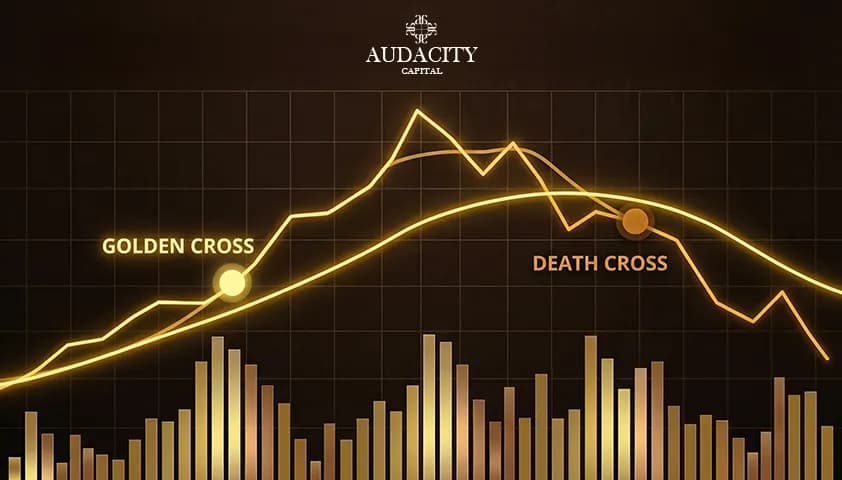
The Golden Cross And Death Cross A Simple Yet Powerful Forex Strategy Explained

Gold Hits Record Highs Then Crashes: The Full Fundamental Breakdown
Gold hit record highs before falling sharply. Why is gold crashing and will gold crash further? Discover the real reasons behind the gold price crash with insights from Audacity Capital.