


How to Trade Gold (XAUUSD): The Complete Guide



How to trade gold is a common question among beginners looking to understand the gold market. The amount of money you need depends on the trading method you choose, the instrument you trade, and your broker's minimum capital and margin requirements. Gold is one of the world's most actively traded precious metals, offering several ways to gain exposure to its price movements.
This guide explains how to trade gold (XAU/USD), including forex and CFD trading, gold futures, and gold exchange-traded funds (ETFs). You'll learn how each method works, how much capital you may need, what influences gold prices, and how to place trades using platforms such as MetaTrader 5 (MT5). We'll also cover popular gold trading strategies and practical risk management techniques to help you make more informed trading decisions.
Note: Gold prices and market figures mentioned in this article are based on data available as of 22 October 2026. Prices and trading conditions may have changed since then.
What Does It Mean to Trade Gold?
Trading gold is speculation on the gold price, and you never touch a physical gold bar. XAUUSD is the financial ticker symbol for one troy ounce of gold priced in US dollars. It would be expected that trading XAUUSD (gold versus USD) puts real gold in your hands, but it doesn’t. What you hold is a contract or CFD that lets you bet on price movements.

Several routes lead into the gold market:
- Forex (XAUUSD): Traders buy and sell gold as a currency pair against USD. It is very popular since gold is liquid and FX platforms carry it.
- Gold futures: Exchanges such as COMEX and MCX have standard gold futures where delivery happens later. You need margin and there is an expiry date.
- Gold ETFs and stocks: Funds like GLD track gold price. Mining stocks give you another way to invest in gold. Both trade in stock markets and usually move slower than XAUUSD.
- Gold CFDs: Where allowed, brokers offer contracts for difference, so you trade the spot gold price and no delivery ever happens.
When we look at all four, we are looking at instruments (forex, futures, ETFs and CFDs) that let you profit from price changes in the metal. A gold bar in your hand isn’t needed, yet you do need to understand how gold is priced and traded. Gold is often viewed as a safe haven in uncertain times, and it reacts to inflation and currency moves along with global events.
How to Trade Gold in Forex (XAUUSD)?
Forex is a popular way to trade gold, and the steps are close to currency trading. If you are looking for a how to trade gold xauusd for beginners guide, this is where most people start. Here is how to trade xauusd step by step.
- Start with a regulated FX broker that offers XAUUSD. If you are researching how to trade XAUUSD in the US, check which products your broker actually offers. OANDA US does not offer CFDs or precious metals to US residents, and FOREX.com US states that gold trading is not currently available on its platform. US traders looking for gold-price exposure can research exchange-listed gold futures or gold ETFs through an eligible provider.
- Next, add XAUUSD (gold vs USD) to your Market Watch. You will usually find it in the instrument list under “Metals” or “Commodities”. Open the chart from there.
- Then check market context. 4H and Daily timeframes are best for trend and support and resistance levels. Fundamentals also matters as gold often goes up when the USD goes down or inflation worries increase. Fed announcements, inflation data and geopolitical problems move gold, so look at news before XAUUSD trading for the day.
- After that, zoom into shorter charts (15M–1H) to time the entry and exit. Trendlines and indicators like MA and RSI help to spot entry points. For example, you can trade breakouts above resistance or bounces off support.
- Next is risk management. Fix how much you will risk on each trade before you enter. Some traders keep it 0.5% to 1% of account (but that is just an example, not a universal requirement and it does not guarantee no loss). Position size should be set as per stop loss, contract specs and your affordable loss.
For example, suppose gold is trading at approximately $4,080 per ounce and you enter a long position with a stop-loss at $4,070. The difference is $10 per ounce. If your position represents 10 ounces, the planned loss at the stop would be $100, before fees and slippage. That would equal 1% of a $10,000 account. This is an illustrative calculation, not a recommendation to trade 10 ounces. That’s also how you work out how much money do you need to trade xauusd, because the account size has to fit that risk. how much trade gold needs in capital really depends on that stop-loss distance.
- Last, watch the sessions. During the London and New York sessions, gold trading activity generally increases; this also includes the time when both markets are active. The main session of London starts at 8:00 a.m. local time (BST in summer and GMT in winter).
However, volatility and activity can differ by day. These times cannot guarantee that there will be larger price moves or that you will get any better trading opportunities.
Example: A trader has a $5,000 account with a per-trade personal risk limit of 1%/ $50. Now suppose gold is trading at $4,080 per ounce and the trader plans to enter a long position with a stop-loss at $4,070. The stop is $10 per ounce below their entry. A position representing 5 ounces would therefore have a planned loss of $50 if the stop executes at the specified price, before fees and slippage. They should confirm the instrument’s contract size and calculate the position accordingly. The same calculation can be used with a smaller position, provided the broker supports that size.
How to Trade Gold on MetaTrader 5?
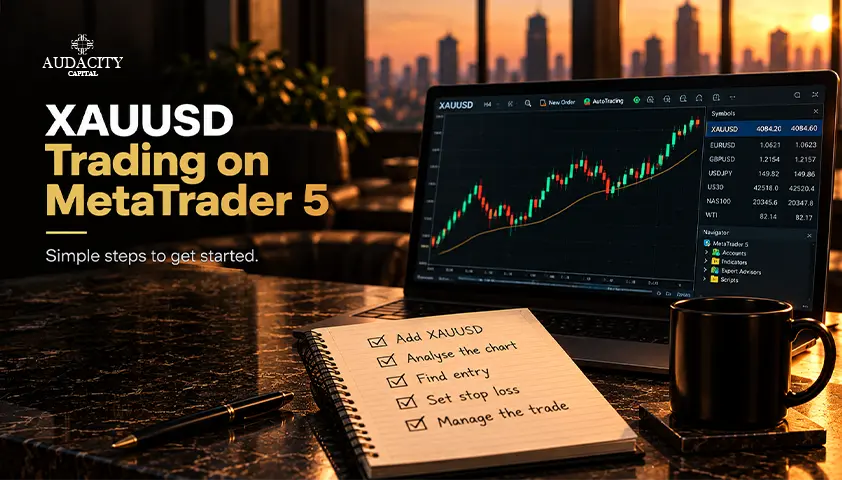
Trading gold on MetaTrader 5 is straightforward once you have an account. How to trade xauusd on mt5 comes down to five steps.
- Install MetaTrader 5 on your PC or device and launch it.
- In “Market Watch” (left panel), right-click and choose “Symbols”. Look under “Metals” or “Forex” for XAUUSD, which some brokers call “Gold”, and double-click to add it.
- Double-click XAUUSD in Market Watch to open a chart. The timeframe can be changed to 1M, 5M, 1H or whatever you want.
- Now apply your strategy. Draw support and resistance, and add indicators or EAs as needed. Moving averages or Fibonacci retracements are common examples for guiding trades.
- Click “New Order”, choose a market or pending order, and set the volume (lots), stop-loss and take-profit levels. Confirm the trade after that.
MT5 handles the calculation of pip values and margin. Some brokers define one standard XAUUSD lot as 100 troy ounces, but this varies by provider. Before you trade XAUUSD, check the contract size, minimum volume, tick value and margin in MT5. These details help you understand how much do you need to trade XAUUSD and how much each price move may cost. A smaller lot reduces exposure, but XAUUSD trading still carries risk.
How to Day Trade Gold?
Day trading gold means opening and closing positions within a single day, usually in and out of trades in minutes or hours. How to Trade Gold this way takes a few habits, so here are the main ones.
- Watch the right sessions first. The most volatile periods are the London session, when European markets open, and the US session in New York. Many traders focus on gold during those times because the moves are bigger.
- News events come next. Economic releases like US inflation data, FOMC announcements and geopolitical news often create big swings in the gold price. Use an economic calendar and be ready before and around those times.
- Then there are the short timeframes. Day traders often use 5-minute to 1-hour charts and look for intraday patterns, like a breakout from a tight range. On the 15M chart you might see gold forming a double bottom, which is a buy signal, and on the 5M chart you look for the precise entry.
- Keep the stops tight. Gold can experience sharp price movements during busy sessions and major economic announcements, so set stop-loss orders to limit losses. For example, a $15 adverse move in a position representing 1 ounce would create a $15 loss before fees and slippage. A position representing 10 ounces would lose $150 over the same move. The actual impact depends on position size and execution.”
- Avoid impulsive trades too. Successful traders wait for clear signals, such as a breakout or a pullback to support, because gold “punishes” random entries. Stick to the plan and the risk rules even when the move looks fast.
In practice, a day trader might place a few trades during London and New York hours. If gold trends down on news in the morning, they might short at a rally (sell high) with a tight stop above a recent swing high. That is xauusd trading at its simplest, and you can trade xauusd the same way on a demo first. How much trade gold needs for this style depends on the stop distance, since a tight stop keeps the risk per lot smaller.
How to Trade Gold in the Stock Market?
If you want to learn how to trade gold in the stock market, gold ETFs and mining stocks are the places to look. SPDR Gold Shares (GLD) is built to follow the price of gold, minus the trust’s expenses. Every share is a small fractional interest in the gold the trust holds, and that amount slowly changes over time because of those expenses. So read the prospectus and the fund’s latest holdings first, and check the expense ratio too.
Don’t expect these to move like XAUUSD or gold futures, because they don’t. An ETF’s price reflects how the fund is built and how the market is trading that day. Mining stocks add company performance and the wider stock market on top, which is why a miner can fall on a day when gold rises.
When you work out how much trade gold takes, look at the price of the instrument and what trading it costs you. After that, think about what you can afford to lose. For how to trade gold futures, check the contract size (100 oz for GC, 10 oz for MGC) and the margin, which is roughly 5% of the contract value at today’s prices. Then work out what a bad move would cost before you trade.
How to Trade Gold Futures?
When we look at how to trade gold futures, we are looking at standardized contracts on commodity exchanges such as CME COMEX and MCX, and each contract covers a set amount of gold. A standard COMEX contract (GC) is 100 troy ounces. The smaller Micro Gold contract (MGC) is 10 ounces. One tick is $0.10 per ounce, which makes it $10 on GC and $1 on MGC.
There is a smaller one again. CME’s 1-Ounce Gold futures (1OZ) cover just one troy ounce, and the minimum price move is $0.25 per ounce, so a tick is worth $0.25 per contract. It trades around the clock except during scheduled maintenance windows. Margin and trading conditions still differ by broker, so ask yours before using it.
It would be expected that margin is a fixed number, but it depends on the contract and market conditions, and on the broker too. December gold futures were around $4,100 an ounce on 22 October 2026. At that price one GC contract of 100 ounces is worth about $410,000, and one MGC contract of 10 ounces about $41,000. Those are the values of the underlying exposure, not the cost of opening a trade. The latest exchange margin schedule and your broker’s current requirements give the real number, and they can change. That’s why how much trade gold futures need in margin has to be checked every time.
Expiry matters too. A futures contract ends on a set date, so you close the position before then or roll it to the next contract, which spot gold and ETFs don’t need. CME and MCX are both regulated exchanges, and prices on them are very transparent. You go long when you expect gold to rise and short when you expect a fall.
The process is simple. Open an account with a futures broker, read the contract specifications (tick size, margin) on the exchange’s site, and place orders like you would in stocks, with market orders, stops and limits. Every point move is a fixed dollar amount, $100 for a 1-point move in a 100-oz contract.
US residents have two routes, exchange-listed gold futures for leveraged exposure and gold ETFs without a futures contract. Neither behaves exactly like a broker’s XAUUSD quote, so compare contract size, costs, margin and trading hours first. If you want to trade xauusd style exposure in the US, that comparison comes first.
Example: At about $4,100 an ounce, one GC contract covers 100 ounces, which is about $410,000 of exposure. A $1 move changes its value by $100, before fees and slippage, so a $50 fall costs $5,000 on one long contract. The margin is a separate number, and your broker has to confirm it before you enter the trade.
Futures are useful for leverage, but they carry high risk when mismanaged. Know the required margin, and have a plan for a margin call if the market moves against you.
How Much Money Do You Need to Trade Gold?
A common beginner question is “how much do you need to trade xauusd?” Some brokers allow gold trading with a few hundred dollars, but that leaves very little margin for error. There isn’t one balance that fits every gold trader, and the points below decide the amount.
The instrument, the broker’s requirements and the position size all change the capital needed. Trading costs and the possible loss on each trade matter as well.
Gold was trading around $4,080 per ounce in the spot market on 22 October 2026. The price alone doesn’t tell you the capital needed, so work out the potential loss first and then check the margin and costs for the specific product.
Here is a hypothetical example. A trader has $2,000 and sets a personal 1% risk limit, which is $20 per trade. If the broker’s specifications confirm a 0.01-lot position is one ounce of gold, a $20-per-ounce stop distance gives a planned loss of $20 before fees and slippage. A 10-ounce position reaches the same $20 with a $2-per-ounce stop, and this would then leave little room for normal price movement. The 1% is one trader’s personal rule, and nobody has to follow it.
A $50 loss at the stop equals 1% of a $5,000 account. That is only a maths example. It isn’t a recommendation to risk $50, and $5,000 isn’t a minimum balance for gold.
Spreads and commissions count too. If they take $5 on entry and exit together, that is 0.25% of a $2,000 account.
Margin is a separate matter. The money needed to open a position isn’t the same as the amount you can afford to lose, and it doesn’t cap the loss either. US traders need to check the margin and contract requirements of the specific exchange-listed futures product and the broker they plan to use. For Micro Gold futures (MGC), margin depends on the broker and current market conditions, so an older margin table might not apply anymore. Check the current exchange schedule and the broker’s own requirements before placing an order. Meeting the margin requirement doesn’t mean the account has room to absorb losses.
There is no universal minimum for every form of gold trading, so how much money do you need to trade xauusd depends on the route you take. For US readers, the calculation differs between gold futures and an exchange-traded fund, so check each product’s current costs and requirements and work out the potential loss on a position.
Keep a reserve for fees and adverse price movements too. If the smallest futures contract still puts too much of the account at risk, use a simulator and don’t force the trade. That is also how much trade gold gets answered in the end, from your own loss limit first. Even if a broker lets you start with $100, you’d have almost no buffer. Begin small, risk a small percent, and scale up only when the results are consistent.
How to Become a Gold Trader?
Clicking buy and sell is the easy part of how to trade gold, because becoming proficient asks for more. These are the habits successful gold traders share, and any how to trade gold xauusd for beginners guide agrees with most of them.
- Market structure comes first. When we look at gold charts, we are looking at patterns like double bottoms at strong support and breakouts from consolidation.
- Next are fundamentals, as everything from inflation data, US dollar strength, central bank actions, and geopolitical crises moves gold. In fact, when real interest rates fall, gold often jumps. A trading journal that ties each trade to the news behind it makes those links easy to see.
- Plan every trade before entry. Use support and resistance or volatility to pick the stop-loss and, at the same time, decide the position size as well. Discipline in trading means you should know the worst-case loss on each trade and stick to it.
- Emotions ruin gold trades. Fear causes early exits, and greed makes people chase losses, so if a setup fails, cut the loss. After a win, don’t assume the next trade can’t lose. A demo or small live account is the safer start while you learn, and position size only goes up once the edge is proven. Betting big to recover losses is a trap that often ends in an account blowup.
- Practice does the rest. Paper trade or use a simulator for months, and learn how to trade xauusd on mt5 there before any real money. Study how gold reacted to past Fed meetings. Ask for feedback, use stop-losses, and review every trade, win or loss. Understand the drivers (inflation, sentiment, supply and demand) and pick the right vehicle. That kind of xauusd trading builds the confidence of a true gold trader over time.
Scaling Your Gold Trading with Funded Capital
Once you have a consistent strategy and a track record, trading larger capital becomes something to think about. Funded trader programs from proprietary trading firms are one way in. A funded program may allow eligible traders to access a bigger allocation without putting up the full value of each position themselves. But program fees, evaluation rules, account restrictions, and payout conditions still count, and funding does not guarantee profit.
To make them work, you trade a demo or small funded account with strict rules and prove your skill. The firm gives you real money to trade if you hit the profit target without breaking the drawdown limit. Some prop trading programs say they give larger accounts after traders pass evaluation. The available allocation, fees, drawdown limits, supported instruments and payout terms vary by firm and program, so check the current rules before applying.
That’s why traders look at them. You can trade gold and other instruments with more capital, so profits scale and so do losses. Gold swings a lot, so funded firms value traders who handle that. Funded programs have their own risk rules, which may include daily loss limits, maximum drawdown limits and restrictions on position size. Those rules push discipline, but read the current program terms instead of assuming that a personal risk rule, such as 1% per trade, matches the firm’s requirements.
Audacity Capital is one prop firm with funded accounts. It reviews your trading plan and consistency, and traders who pass can trade xauusd in larger positions on Audacity’s capital and keep a share of the profits.
One tip. Keep trading conservatively even then, because funded programs remove access when you pass their risk limits. Careful risk management on bigger positions is the point, and it matches treating xauusd trading as a profession where the firm’s capital gets protected like your own.
Read about 10 Gold Trading Strategies That Actually Work

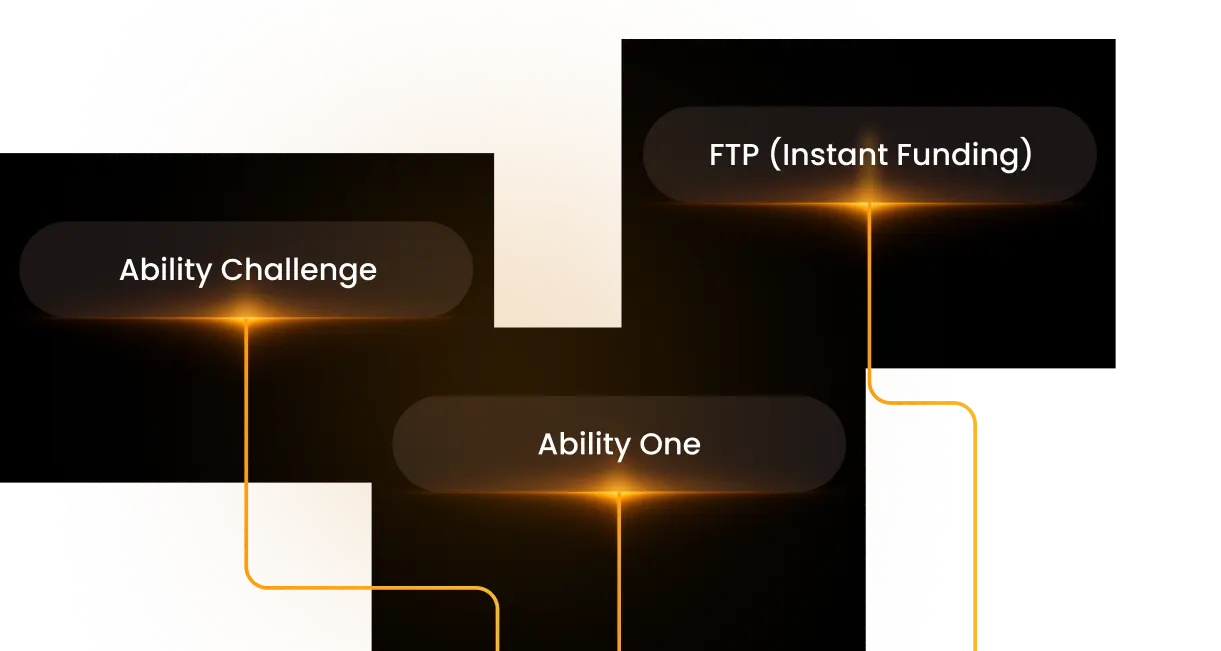
Funded Trader Program
Get Funded NowFinal Thoughts
Opportunity and risk come together in gold (XAUUSD) trading. It’s highly liquid and open around the clock, so many trading styles work, but volatility needs respect. That’s why a plan and risk controls have to be in place before the first trade. Decide your criteria, technical setups or fundamentals, and don’t trade more than your plan allows.
More money doesn’t replace skill. Learn price action and risk management first, then, as confidence grows, consider funded accounts to trade gold with larger capital. Use stops, limit your position sizes and stick to what you know. Discipline matters more than anything else in a how to trade gold xauusd for beginners guide.
If you want to keep learning, Audacity Capital covers risk management and trading psychology, and helps you solidify the foundation before scaling up. The gold market is volatile but rich in opportunity, and patience and professionalism get rewarded. Learning how to trade gold is closer to running a business than placing bets, so trade intelligently.
FAQ
Beginners start learning what moves gold (inflation, the US dollar, geopolitics) and practising on a demo account. Choose a small account or micro lots, risk only 0.5–1% per trade and always set a stop-loss. Simple setups like support and resistance work fine early on.
Find XAUUSD in your platform’s instrument list, add it to the watchlist and open the chart. It trades like any currency pair and is quoted as the dollar price of one ounce of gold. Read the trend on the daily or 4H chart, then use shorter charts for the entry.
To trade gold online safely, pick a broker regulated in your country and check its registration on the regulator’s own site. Practise on a demo first, use a stop-loss on every trade and keep the risk per trade small. Turn on two-factor login, and don’t send money to anyone promising guaranteed profits or signals.
Not as a CFD. US rules don’t permit retail spot gold CFDs, so US traders use CME gold futures (GC and the smaller MGC), options on futures or ETFs like GLD.
Whilst there’s no single best way, it depends on where you live and how much capital you have. Outside the US, most retail traders use XAUUSD through a forex broker with micro lots. In the US, micro gold futures or ETFs fill that role. The best way to trade xauusd is the one that fits your account size, your risk limit and your free time, so start on a demo and scale up only once the results are consistent.
- Start with a demo and a trading journal, and write down why you entered each trade.
- Check the economic calendar for Fed announcements and inflation data before opening a position, since those events move gold fast.
- Use a stop-loss every time and risk a small percent of the account.
- Skip impulsive trades, and trade when London and New York are open, since gold is most active then.
There’s no official minimum, because each broker sets its own. Many educators suggest 1,000–2,000, and with gold near $4,200 an ounce, $2,000 is the safer end. That’s because 0.01 lot (1 oz) moves $1 for every $1 in gold, so a $20 stop risks $20, which is 1% of $2,000. In the US, one MGC futures contract needs roughly $2,100 in margin alone.
Gold is most active during London and New York sessions. Liquidity is highest when London opens at 8:00 AM GMT and during New York overlap, that is when moves get bigger. Major news like US inflation data or FOMC announcements adds swings too. Just avoid the thin overnight hours and don’t open positions seconds before big releases.

Готовы применить дисциплинированный риск к криптовалютам? Изучите новые криптоинструменты Audacity Capital и примените свою торговую стратегию.
Узнать большеРассылка
Подпишитесь на нашу рассылку.
Присоединяйтесь к нашему сообществу

Начните свое путешествие сегодня с нашей бесплатной пробной версией
С гордостью демонстрируйте свои навыки и достижения с помощью сертификатов и получайте признание за свой тяжелый труд и преданность делу от потенциальных инвесторов и коллег.
Бесплатная пробная версияПохожие статьи

Martingale Strategy in Trading
How the martingale trading strategy works, what the doubling arithmetic actually costs, why position sizing cannot create an edge, and where it is banned.

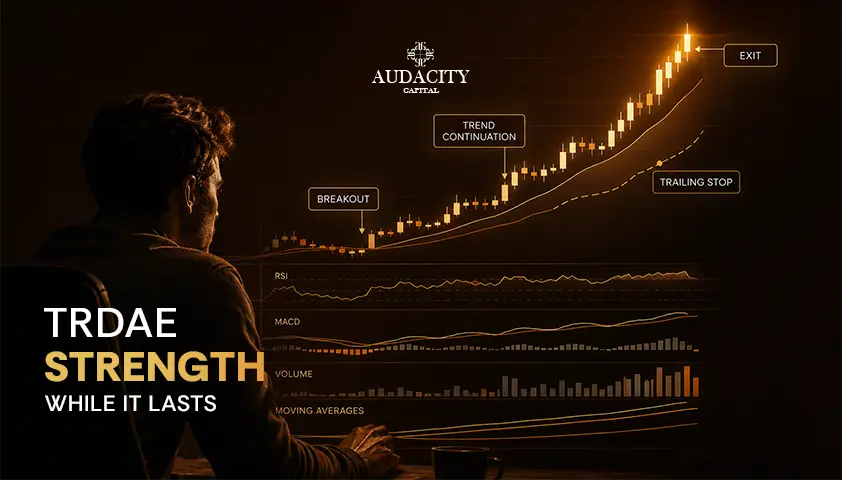
Momentum Trading Strategy: A Comprehensive Guide
Master the core principles of a momentum trading strategy. Learn how to use key indicators, manage sharp-reversal risks, and master exit timing.
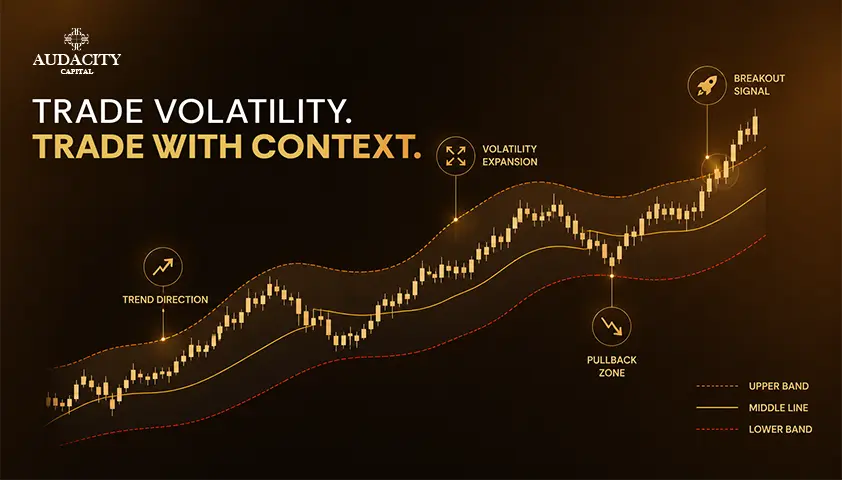
Keltner Channel Trading Strategy: How to Read Volatility With Context
Discover how Keltner Channels measure market volatility, spot trend pullbacks, and confirm breakouts. Includes setup rules, settings, and testing methods.
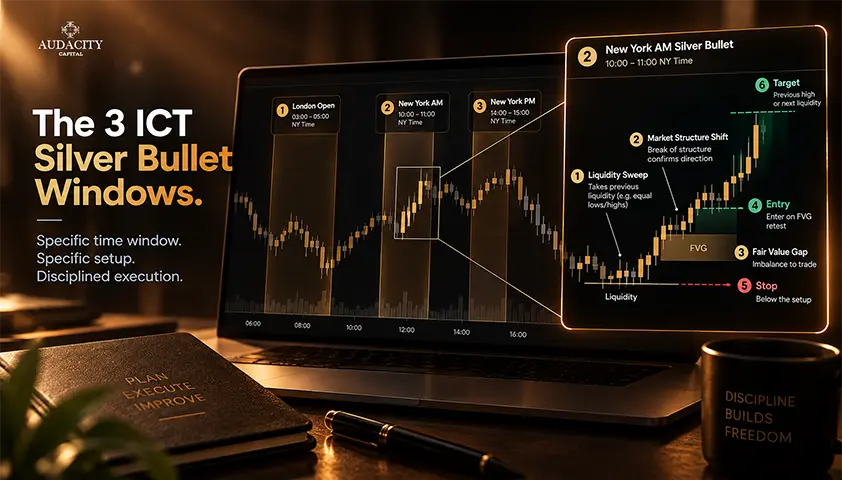
ICT Silver Bullet Strategy: Windows, Setup and Execution Rules
The ICT Silver Bullet windows, the setup step most guides skip, entry and stop rules, and what the published win rates rest on.