



Price Action Trading Vs Technical Analysis (Indicators) : Which Is Better ?



Anyone who has tried their hand at forex trading understands just how tricky it can be to begin. For a beginner trader, finding the right strategy to guide your trades will be key to making consistent profits in forex trading.
Today, the forex market is not only the largest in the world but also the most liquid. The average trade volume in this market currently stands at around $6.6 trillion, which is close to double that of the New York Stock Exchange.
Based on these statistics, learning how to trade forex can be a rewarding endeavour for anyone willing to take a risk. But while this is the case, the question of which is better between technical analysis and price action is one that will need answering before trading can start.
Quick Answer: Technical Analysis vs Price Action
Technical analysis and price action are both methods used to analyze forex markets. Technical analysis uses indicators and formulas, while price action focuses on raw price movements. Neither is inherently better—the best approach depends on your trading style, experience, and ability to manage risk.
Key Takeaways
- Both technical analysis and price action rely on historical price data
- Indicators help simplify decision-making using formulas
- Price action focuses on interpreting raw market movements
- Neither method guarantees success without proper risk management
- Consistency and discipline matter more than the strategy itself
What Is Technical Analysis?
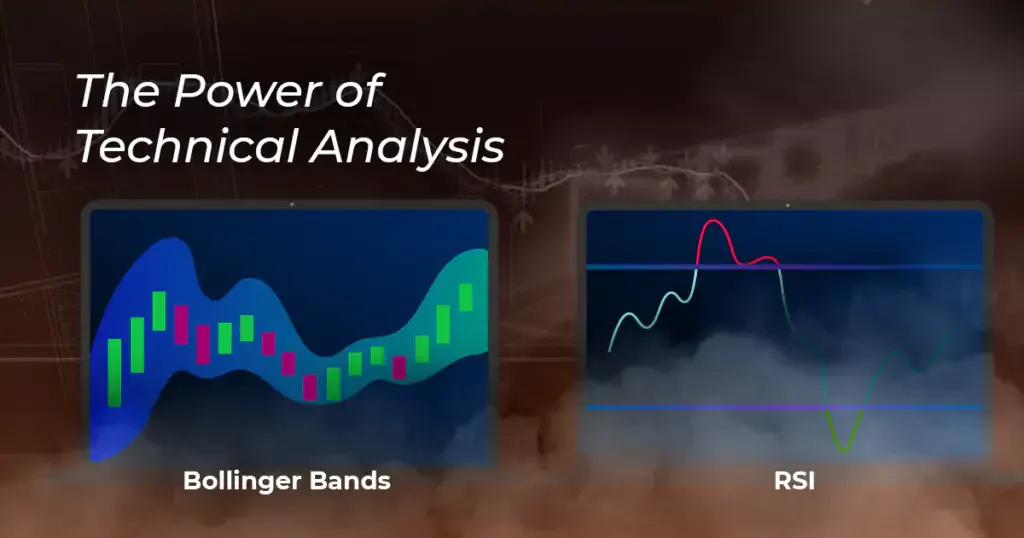
Technical analysis is used to evaluate statistical trends in daily trading activity. Its analysis typically focuses on price movements and volumes. Traders use technical analysis to identify viable trading and investment opportunities.
What Is Price Action?
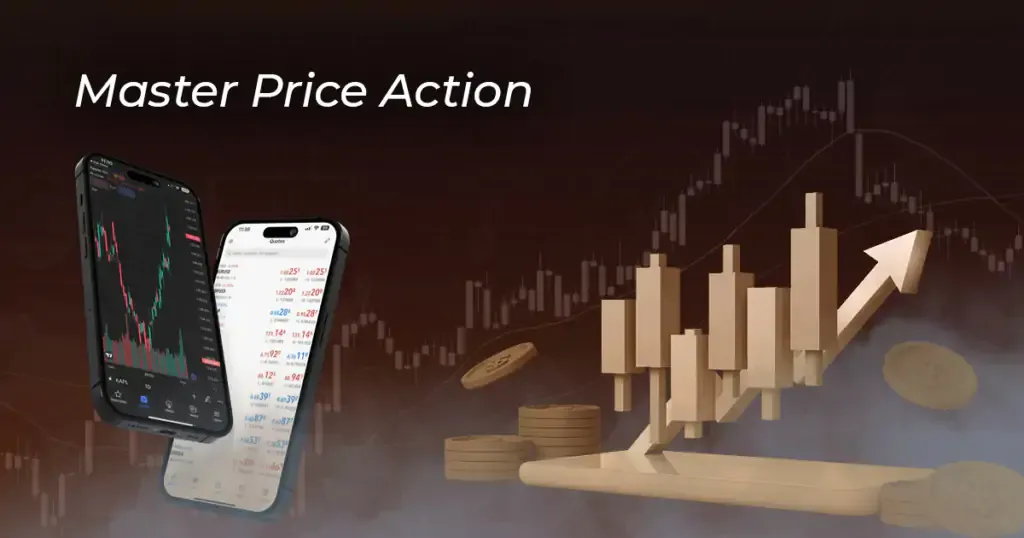
Price action is the movement of a security’s price, which is plotted over time. When trading on a proprietary trading firm, it forms the basis for all technical analyses of a commodity, stock, or other asset chart.
Technical Analysis Vs Price Action
Quick summary:
- Both technical analysis and price action rely on past pricing information; the difference lies in how the trader processes the information.
- Neither of the two methods is intrinsically better for beginner traders; the key to using them successfully lies in using the selected tools correctly.
- Personal preferences, including how the forex trader uses their tools, are more significant than the debate on which is better between technical analysis and price action.
Join us below as we investigate the popularly held beliefs on technical analysis and price action, allowing you to get started on learning how to currency trading.
Technical Analysis vs Price Action (Comparison Table)
Feature | Technical Analysis | Price Action |
|---|---|---|
Approach | Indicator-based | Chart-based (raw price) |
Complexity | Structured and rule-based | Requires interpretation |
Best for | Beginners & systematic traders | Experienced & discretionary traders |
Speed | Faster signal generation | Slower but contextual |
Objectivity | High | Medium (subjective) |
See also What are Lots in Forex Trading?
Price Action Is Better Than Technical Analysis (Indicators)
Traders using price action to analyse trades swear that this technique is better than technical analysis. However, both methods are quite similar. For starters, they both use pricing information obtained from bar charts and candlesticks to interpret price movements.
Indicators (technical analysis) simply apply a formula to this same information. This means they don’t change what you get to see; they just use different methods to process the available information.
Therefore, when a trader interprets price action, they’re practically doing the same thing psychologically.
Price Action Is Simpler And Recommended For Beginner Traders
When trading in the funded trader program, it’s not often that one trading method is better than the next one; it all comes down to how you use the tools at your disposal. Seasoned traders often state that this is like trying to compare a screwdriver and a hammer.
Both tools will work well for your intended objective, provided you use them correctly. On the same breadth, none of these tools will help you if you don’t know their purpose or even how to use them.
If you’re new to price action, you’re likely to feel lost without guidance or experience. It’s challenging to trade candlesticks, especially when you consider factors such as size, the often-overlooked momentum and volatility in bodies, and comparisons to previous price action.
Therefore, you shouldn’t choose price action because it appears simple; if you’re unfamiliar with its many nuances, you’re likely to end up misinterpreting the charts.
Price Action Is Leading As Indicators Continue Lagging
Any trader who claims that indicators are lagging is a trader who doesn’t understand their actual purpose. Indicators rely on historical insights (determined by your pre-set settings) and display a result after they have applied a formula. Consequently, indicators show outcomes from previous price actions.
See also How to Learn the Direction of Upcoming Forex News?
Likewise, a funded account forex trader analysing pure price patterns, such as Cup and Handle or Head and Shoulders, will also be looking at previous price action. This is the action that has already moved from its entry points.
Both indicators and price action use historical insights that can be considered “lagging.” If you’ve to reduce this lag, you’ll need to analyse fewer past candlesticks or adjust the time settings for your indicators.
However, you should note that the fewer details you include, the less meaningful your commodity analysis will become.
Naked Trading Is The Way To Go, As Indicator Charts Are Messy
Continuing from point number two, the notion that indicator charts are messy isn’t correct. The reality is that if you add too many moving averages or oscillators to any chart, it will become cluttered. But anyone who has used indicators understands that this isn’t how they work.
Typically, a trader will need to choose a single oscillator, e.g., Stochastic, to help them with momentum analysis. They will then choose a second indicator, such as Bollinger Bands, for chart studies.
The purpose of including indicators in your strategy is to help you make objective trading decisions, leaving little to no room for subjectivity.
Conversely, a price action trader working with a blank chart could end up feeling lost due to a lack of clear reference points. Finding yourself in such a scenario can cause you to become emotional, leading to impulsive trade actions. Additionally, you could also overcrowd your charts with trend lines, resistance/support lines, and candlestick components. This is a recipe for disaster.
When looked at closely, this argument has no merit. There are traders who prefer indicators for objective trading, while others prefer to use price action analysis.
Price Action Is The Factual Way Of Trading
Lastly, on the argument on which is better between technical analysis and price action, there are those who claim that “true traders” don’t need or use indicators. This is one argument that’s difficult to prove, as every trader trades based on their personal preferences.
See also Which Chart Is Best for Beginners in Forex Trading? Why?
Indicators can save you time when trading by allowing you to shift your attention to specific chart aspects such as momentum. Focusing on a single aspect will help you to process trading data much more quickly and with little subjectivity.
Traders need to approach this topic with an open mind and avoid letting their biases guide their actions. A good trader should ensure they have chosen their tools wisely. They should also take the time to understand the advantages and drawbacks of different trading methods.
It’s important to note that there’s no right or wrong between technical analysis and indicator trading; it all comes down to how you use your tools to make trading decisions.
Which Should You Choose as a Trader?
For most traders, the decision between technical analysis and price action shouldn’t be about choosing one over the other—it should be about understanding how they complement each other.
- Beginner traders may benefit from starting with indicators, as they provide structure and reduce subjectivity.
- Intermediate traders often transition into combining indicators with price action for better confirmation.
- Advanced traders tend to rely more on price action, supported by selective indicators for precision.
The key is consistency. Mastering one approach and applying it with discipline is far more effective than constantly switching between strategies.
How to Apply This in Real Trading
To use these methods effectively:
- Start with a simple setup (1–2 indicators max)
- Learn to read price movement without overcomplicating charts
- Backtest your strategy before using real capital
- Focus on risk management over prediction
When to Use Each Method
- Use technical analysis if you prefer structured rules and clear signals
- Use price action if you want deeper market understanding and flexibility
- Combine both methods for better confirmation and decision-making
Conclusion
The debate on which is better, technical analysis or price action, has been ongoing for a while, and there are many misconceptions surrounding the two methods. As a trader, it will be vital that you approach this topic with an open mind and that you take the time to understand the pros and cons of each method. From here, make sure to choose your trading tools wisely.
In the end, the effectiveness of each trading method depends on how you use your tools to make trading decisions. Put simply, trading performance will rest on you and how you use the tools at your disposal and not on the method itself.
Audacity Capital is a world-renowned proprietary trading firm that has been in operation for 10+ years. It has backed traders in over 100 countries and has developed a reputation for helping fund traders who show potential. Learn more about our funded forex program.
FAQ
Technical analysis uses indicators and mathematical formulas to analyze market trends, while price action focuses on interpreting raw price movements on charts without relying heavily on indicators.
Technical analysis is generally better for beginners because indicators provide structured signals and reduce subjectivity. Price action requires more experience to interpret effectively.
Yes, many traders combine both methods. Indicators can provide confirmation, while price action helps with understanding market context and timing entries more effectively.
Price action is not necessarily more accurate. Both methods rely on historical data, and their effectiveness depends on how well the trader applies them.
Professional traders use a mix of both. Some rely more on price action, while others use indicators for confirmation and efficiency.
Indicators are considered lagging because they are based on past price data. However, price action also relies on historical data, so both methods have similar limitations.
It’s best to start with one method, master it, and then combine approaches if needed. Consistency and risk management are more important than the method itself.
Yes, price action can be used without indicators, but it requires a strong understanding of market structure, trends, and trader psychology.

Handa nang maglapat ng disiplinadong panganib sa crypto? Galugarin ang mga bagong instrumento ng crypto ng Audacity Capital at dalhin ang iyong diskarte sa pangangalakal.
Matuto PaNewsletter
Sumali sa aming newsletter.
Sumali sa Aming Social Community

Simulan ang Iyong Paglalakbay Ngayon Gamit ang Aming Libreng Pagsubok
Ipagmalaki ang iyong mga kasanayan at tagumpay sa pamamagitan ng mga sertipiko at makakuha ng pagkilala para sa iyong pagsusumikap at dedikasyon mula sa mga potensyal na mamumuhunan at kasamahan.
Libreng PagsubokMga Kaugnay na Artikulo
Weekly Economic Calendar: How Smart Traders Turn Volatility Into Opportunity
Learn how to use the weekly economic calendar to trade market volatility. Discover strategies to manage risk and capitalize on high-impact news events.


What Economic Indicators Impact Forex Trading?
Learn which economic indicators impact forex trading, including inflation, GDP, interest rates, and employment data. Trade smarter.
How To Use Technical Indicators To Trade Forex?
Learn how to use technical indicators to trade forex step-by-step. Discover how to combine RSI, MACD, moving averages, and Bollinger Bands to identify trends, entry points, and improve your trading strategy.
Why Ex Military Are Good Traders?
Discover the new career opportunity for ex-military: trading. Banks and trading firms are hiring veterans for the trading floor.