


Why GDP Growth Is Important: 7 Key Reasons Explained


Gross domestic product (GDP) is one of the most widely used indicators of a country's economic performance. It measures the total value of final goods and services produced within a country's borders over a specific period.
But why is GDP growth important? GDP growth helps economists, governments, businesses, and investors understand whether an economy is expanding or contracting. It can provide insights into employment, business activity, investment, government revenue, and overall economic conditions.
GDP growth is also closely watched in financial markets. Changes in economic growth expectations can influence central bank decisions, interest rates, currency movements, and investor sentiment.
In this guide, we'll explore seven reasons why GDP growth matters, how it affects the economy, and what its limitations mean for interpreting economic performance.
What Is GDP Growth?
GDP growth refers to the percentage change in a country's gross domestic product over a specific period, usually measured quarterly or annually.
Economists often focus on real GDP growth, which adjusts for inflation. This helps distinguish an actual increase in the quantity of goods and services produced from an increase caused mainly by rising prices.
For example, suppose a country's economy produces goods and services worth $1 trillion in one year and $1.05 trillion the following year, measured at comparable prices. Its real GDP growth rate would be 5%.
GDP growth can be positive, negative, or close to zero:
- Positive GDP growth: The economy is producing more goods and services than in the previous period.
- Negative GDP growth: Economic output has declined compared with the previous period.
- Low or stagnant growth: Output is increasing slowly or showing little change.
GDP growth is an important measure of economic activity, although it does not capture every aspect of a country's economic or social well-being.
GDP Growth (Annual %) – World Bank — Link this from the GDP growth calculation or when discussing how to track growth across countries.
Why Is GDP Growth Important?
GDP growth matters because it provides information about the direction and pace of economic activity. Here are seven key reasons it receives so much attention.
1. It Indicates the Overall Health of the Economy
GDP growth is widely used to assess whether an economy is expanding or contracting.
When real GDP increases, it generally indicates that businesses and other producers are generating more goods and services. This may reflect stronger consumer demand, increased investment, higher production, or growth in exports.
By contrast, declining GDP can signal weaker economic activity. Businesses may experience lower demand, reduce production, or postpone investment.
However, GDP growth should be interpreted alongside other indicators, such as inflation, employment, consumer spending, and industrial production. One GDP figure cannot explain every factor affecting an economy.
2. It Can Support Job Creation
Economic growth and employment are closely connected.
When businesses experience stronger demand, they may increase production and hire additional workers. Expanding industries may also create opportunities for suppliers, service providers, and other businesses.
For example, an increase in construction activity can generate demand for construction workers, building materials, transportation, and related services.
However, economic growth does not automatically lead to widespread job creation. Some industries may expand through automation or productivity improvements without hiring many additional workers. The relationship between GDP growth and employment depends on the structure of the economy and the type of growth taking place.
3. It Encourages Business Investment
Businesses use economic conditions to make decisions about expansion, hiring, equipment, and new projects.
When demand is growing and economic conditions are relatively stable, companies may become more willing to invest in additional production capacity, technology, infrastructure, or new markets.
For example, a manufacturer expecting sustained demand may invest in new machinery or open another production facility.
Investment can, in turn, support future economic activity by increasing productive capacity and improving efficiency.
However, GDP growth is only one factor in investment decisions. Interest rates, business confidence, access to credit, regulation, and expectations about future demand also matter.
4. It Can Increase Government Revenue
Economic growth can influence government finances.
As economic activity expands, governments may collect more revenue through taxes on income, business profits, consumption, and other taxable activities.
Higher revenue can provide governments with greater capacity to fund public services and infrastructure, depending on tax policies, spending commitments, and overall fiscal conditions.
For example, stronger employment and business activity may increase income-tax and corporate-tax receipts.
However, government revenue does not always rise in direct proportion to GDP. Tax rates, exemptions, compliance, the composition of economic growth, and changes in fiscal policy all affect how much revenue governments collect.
5. It Can Improve Living Standards
Sustained economic growth can create opportunities for higher incomes, better employment prospects, and greater access to goods and services.
When productivity increases and economic gains are broadly shared, households may benefit from improved purchasing power and access to essential services.
For example, investment in productive industries can create jobs and increase the availability of goods and services.
But overall GDP growth does not guarantee that every household becomes better off. The distribution of income, inflation, public services, housing costs, and environmental conditions also influence living standards.
GDP per capita can provide additional context by relating economic output to population size, although it is still an average and does not show how income is distributed.
6. It Influences Monetary Policy and Interest Rate Decisions
Central banks monitor GDP growth because economic activity affects inflation, employment, and financial conditions.
Strong demand can contribute to inflationary pressure when the economy's productive capacity cannot keep up. In such circumstances, a central bank may consider tighter monetary policy, depending on its mandate and its assessment of inflation and other economic indicators.
Weak economic growth may lead policymakers to consider measures that support economic activity, particularly when inflation is subdued and other conditions allow it.
Interest-rate decisions are not based on GDP growth alone. Central banks also assess inflation, labor-market conditions, financial stability, expectations, and global economic developments.
For traders and investors, GDP releases can therefore provide useful information about the economic outlook and possible changes in monetary policy expectations.
7. It Helps Investors Assess Economic Opportunities
GDP growth can help investors evaluate the broader economic environment.
An expanding economy may support demand across sectors such as manufacturing, consumer goods, financial services, and technology. Slower growth can affect corporate earnings expectations and influence how investors assess risk.
Investors may monitor GDP alongside indicators such as:
- Inflation
- Interest rates
- Employment data
- Consumer confidence
- Business investment
- Corporate earnings
- Industrial production
For example, stronger-than-expected GDP growth may lead market participants to reassess their expectations for interest rates or company earnings.
However, financial markets respond to the difference between reported data and what investors already expected. Strong GDP growth does not necessarily cause stock prices or a country's currency to rise. Market reactions depend on expectations, policy implications, and broader conditions.
What Is the IMF? – IMF — Relevant when explaining the role of economic monitoring and policy advice.
How Does GDP Growth Affect Financial Markets?
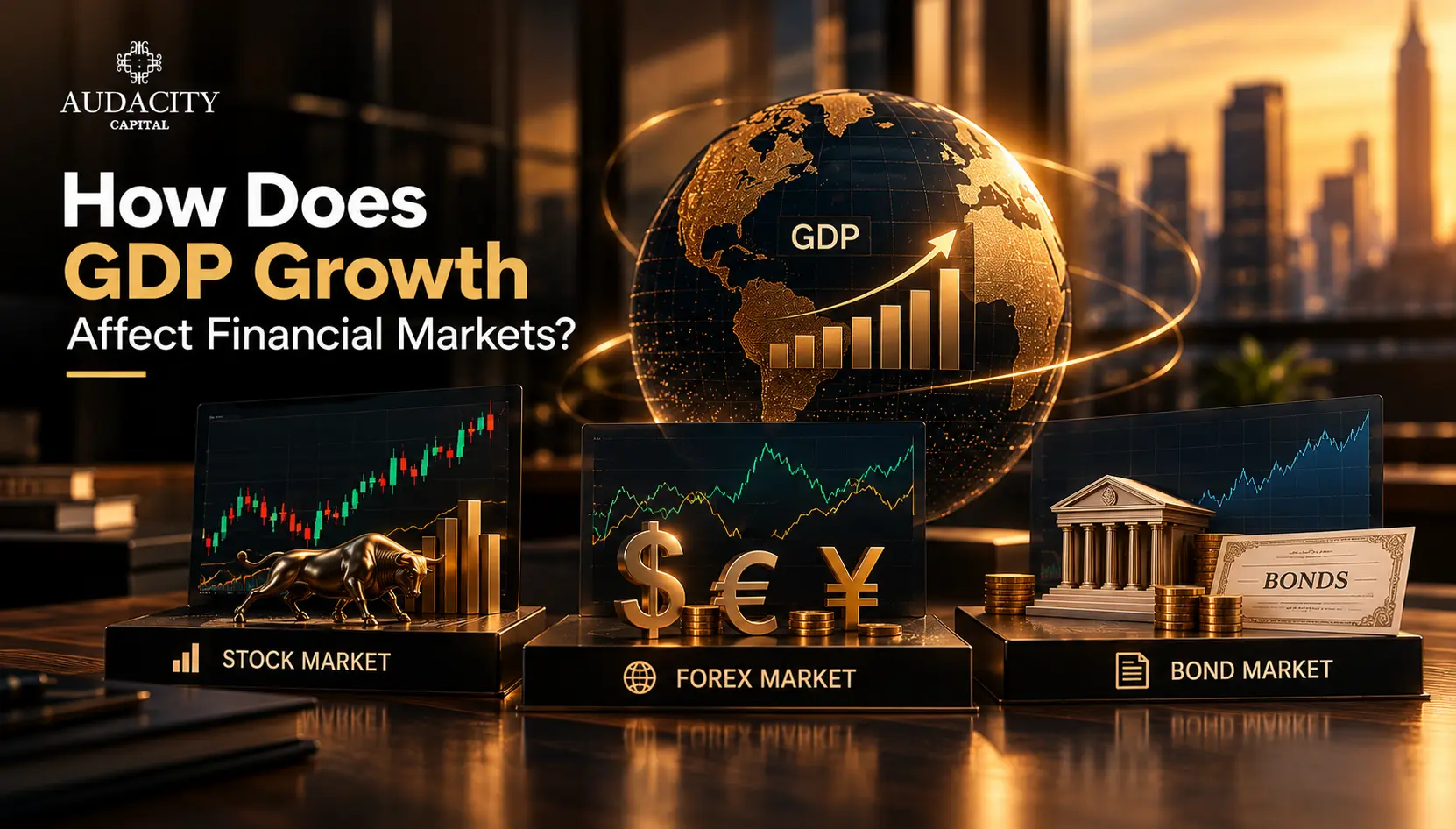
GDP growth can influence financial markets through its relationship with demand, inflation, interest rates, and investor expectations.
GDP Growth and the Stock Market
Economic expansion can support business revenue and earnings when it leads to stronger demand for goods and services.
However, stock markets are forward-looking. Prices often reflect expectations about future growth rather than only the latest GDP figures.
If GDP growth is strong but raises concerns about higher interest rates, some parts of the stock market may come under pressure. Similarly, weak growth may already be reflected in prices before an official report is released.
GDP Growth and the Forex Market
GDP data can affect currency markets by changing expectations about a country's economic outlook and monetary policy.
For example, stronger-than-expected economic growth may influence expectations about future interest rates. These expectations can affect demand for a currency.
However, exchange rates are influenced by several factors, including relative interest rates, inflation, central bank communication, geopolitical developments, and global risk sentiment.
A GDP release should therefore be considered alongside economic data from other countries rather than interpreted in isolation.
GDP Growth and Bond Markets
GDP growth can influence government bond markets through its effects on inflation expectations and interest-rate outlooks.
Stronger economic activity may contribute to expectations of tighter monetary policy if inflationary pressure is a concern. This can affect bond yields and prices.
Slower growth may have a different effect, depending on inflation and central bank expectations.
The relationship is not automatic, and bond markets can respond differently depending on the economic environment.
What Happens When GDP Growth Slows Down?
Slower GDP growth means an economy is expanding at a reduced pace compared with an earlier period. It does not necessarily mean that the economy is shrinking.
A slowdown can affect different parts of the economy in several ways:
- Businesses: Companies may experience weaker demand or delay expansion plans.
- Employment: Hiring may slow, and some industries may reduce their workforce.
- Consumers: Households may become more cautious about spending.
- Government finances: Tax revenue growth may weaken.
- Financial markets: Investors may reassess earnings expectations and economic risks.
If economic output declines over time, the economy may enter a contraction. Recession definitions differ across countries and institutions, so GDP figures are generally assessed alongside broader economic indicators.
Does Higher GDP Growth Always Mean a Better Economy?
Not necessarily.
GDP growth is useful for measuring changes in economic output, but it does not measure every factor that affects people's lives.
An economy can record strong GDP growth while facing challenges such as:
- Unequal income distribution
- High inflation
- Rising housing costs
- Environmental damage
- Weak job creation
- Limited access to healthcare or education
- Low productivity growth
For example, GDP may increase while the benefits of that growth are concentrated among a relatively small share of the population.
This is why GDP is often considered alongside other measures, including GDP per capita, employment, inflation, poverty rates, and human development indicators.
World Development Indicators: Economy – World Bank — Useful in the GDP vs. GDP per capita section.
Understanding both the strengths and limitations of GDP helps provide a more complete picture of economic performance.
GDP Growth vs. GDP Per Capita
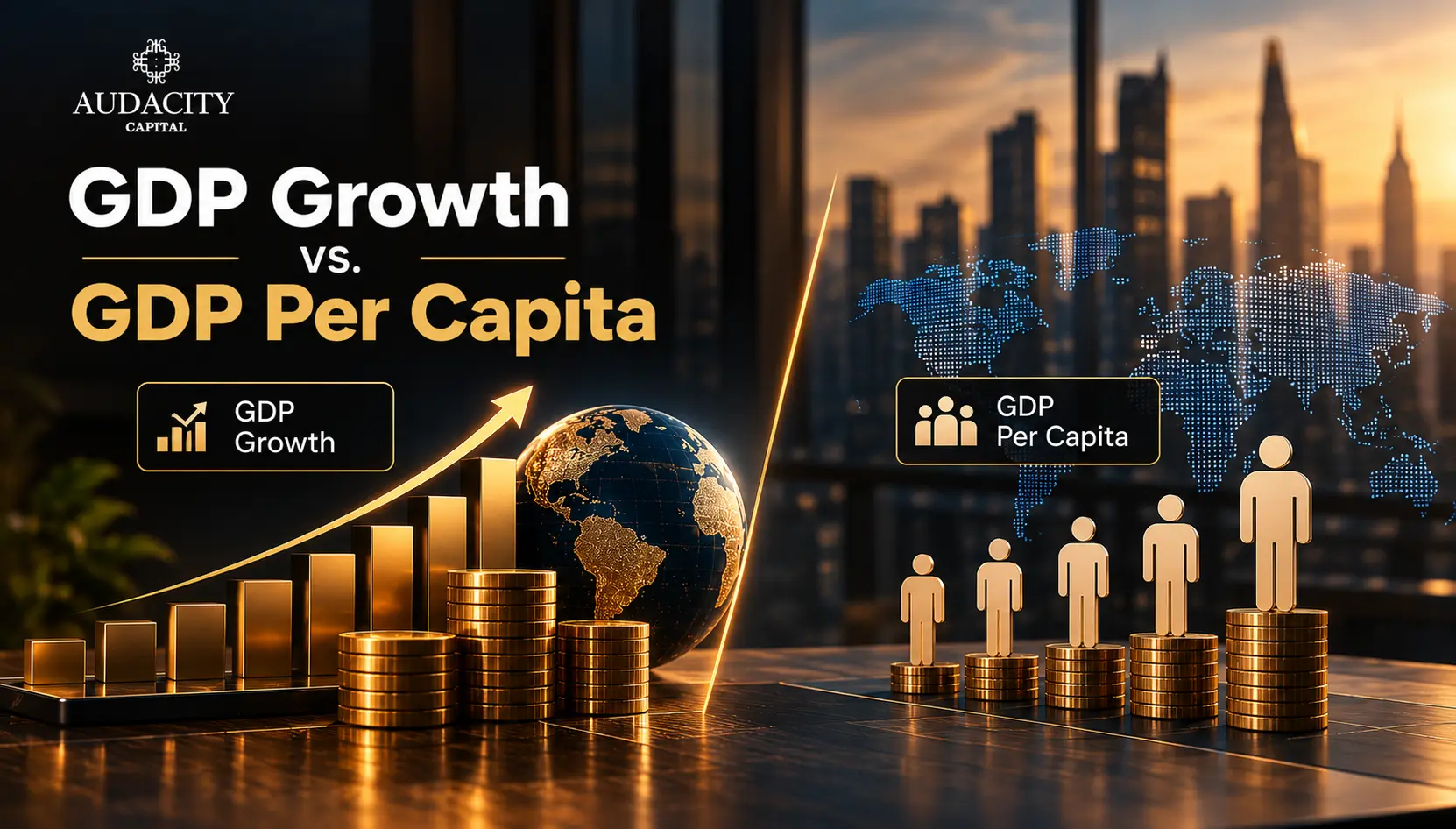
GDP growth and GDP per capita answer different questions.
Measure | What It Shows | Why It Matters |
|---|---|---|
GDP growth | How quickly total economic output is changing | Helps assess economic expansion or contraction |
GDP per capita | Economic output divided by population | Provides context about average output per person |
Real GDP growth | Change in output after adjusting for inflation | Helps measure changes in actual production |
Nominal GDP growth | Change in output measured at current prices | Reflects changes in both output and prices |
A country can experience positive GDP growth while GDP per capita grows slowly if its population is increasing at a similar or faster rate.
For this reason, looking at both total GDP growth and GDP per capita can provide a more informative view of economic conditions.
How Is GDP Growth Calculated?
GDP growth is generally calculated by comparing GDP across two periods.
The basic formula is:
GDP Growth Rate = [(Current Period GDP − Previous Period GDP) ÷ Previous Period GDP] × 100
For example, suppose a country's real GDP was $2 trillion last year and rises to $2.1 trillion this year.
GDP growth would be:
[(2.1 − 2.0) ÷ 2.0] × 100 = 5%
This means real economic output increased by 5% over the period being compared.
For meaningful comparisons over time, economists generally use real GDP, which adjusts for price changes.
Final Thoughts: Why GDP Growth Matters
GDP growth is important because it helps explain whether an economy is expanding, how economic activity is changing, and what those changes may mean for businesses, workers, governments, and financial markets.
It can provide insights into employment, investment, government revenue, monetary policy, and market expectations. However, GDP growth alone cannot determine whether economic progress is inclusive or whether living standards are improving for everyone.
For a more complete understanding of economic conditions, GDP growth should be considered alongside inflation, employment, productivity, GDP per capita, and other indicators.
For investors and traders, following GDP data can help build a broader understanding of the economic environment—but it should be one part of a wider analysis rather than a standalone trading signal.
Frequently Asked Questions
GDP growth is important because it measures changes in a country's economic output. It helps governments, businesses, economists, and investors assess economic activity, identify trends, and understand potential changes in employment, investment, and financial conditions.
GDP growth can influence business activity, hiring, investment, government revenue, and household incomes. The effects depend on the sources of growth, inflation, productivity, and how economic gains are distributed.
Real GDP growth adjusts for inflation, making it easier to determine whether the quantity of goods and services produced has increased. Nominal GDP growth includes changes in both production and prices.
Economic growth can support job creation when businesses respond to higher demand by expanding production and hiring workers. However, the relationship depends on productivity, technology, industry conditions, and the type of economic growth.
GDP growth can influence expectations about company revenue, earnings, and interest rates. However, stock-market reactions depend on how the reported figures compare with expectations and what they imply for future economic conditions.
GDP growth can influence currency values by changing expectations about economic performance and monetary policy. However, currencies are also affected by interest-rate differences, inflation, global risk sentiment, and other economic factors.
There is no single GDP growth rate that is considered good for every country. A suitable rate depends on factors such as the country's development stage, population growth, productivity, inflation, and economic structure.
Negative GDP growth means economic output has declined compared with the period used for comparison. If the decline continues, it may indicate an economic contraction. Other indicators are also needed to assess whether an economy is in recession.
Yes. GDP can increase even when some households experience falling real incomes or worsening living conditions. Income distribution, inflation, public services, and environmental factors can affect living standards independently of total economic output.

Prêt à appliquer un risque discipliné aux cryptos ? Explorez les nouveaux instruments crypto d'Audacity Capital et apportez votre stratégie de trading.
En savoir plusNewsletter
Rejoignez notre newsletter pour rester informé.
Rejoignez Notre Communauté Sociale

Commencez Votre Voyage Aujourd'hui Avec Notre Essai Gratuit
Affichez fièrement vos compétences et réalisations grâce à des certificats et obtenez la reconnaissance de votre travail acharné et de votre dévouement auprès d'investisseurs potentiels et de pairs.
Essai GratuitArticles Connexes

NQ in Trading – What is NQ in Trading?
Learn what NQ means in trading, how E-mini Nasdaq-100 futures work, their contract specifications, trading hours, strategies and risks.

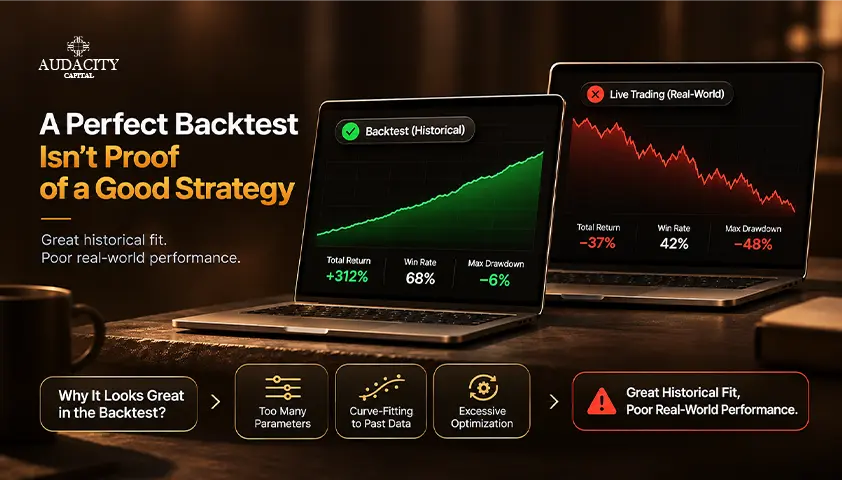
Overfitting in Trading: Signs, Causes & How to Avoid It
Learn what overfitting in trading means, why strategies become overfit, the warning signs to watch for, and how to build more robust trading systems.
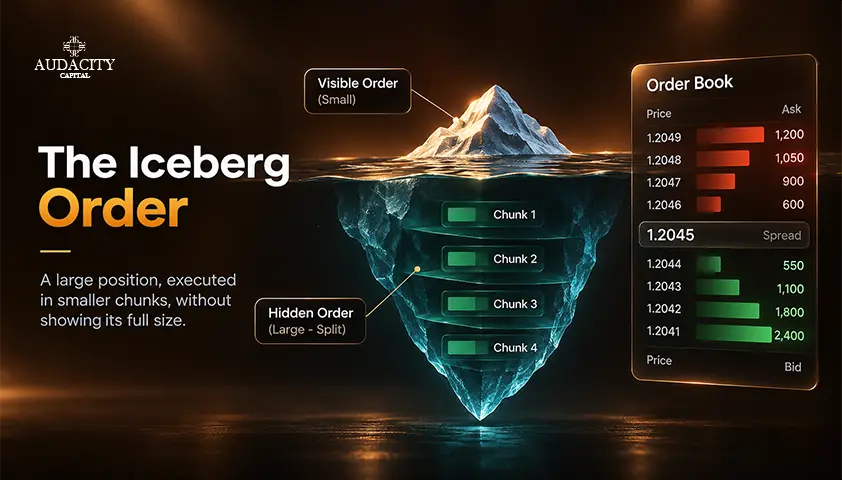
Iceberg Orders Explained: How Hidden Large Orders Work
Learn what iceberg orders are, how they work, why traders use them, how to spot possible iceberg activity, and how execution varies by platform.
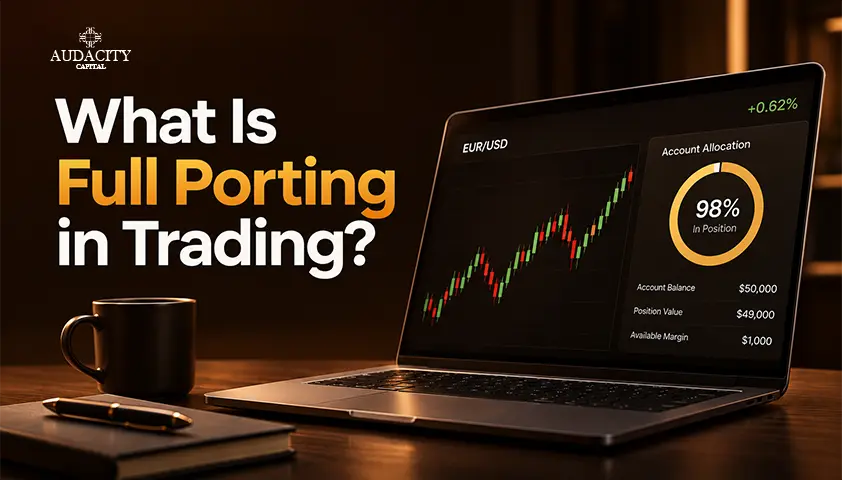
What Is Full Porting in Trading?
Learn what full porting in trading means, how traders use maximum buying power, the risks of going all-in, and how to manage trading risk.