



Best Leverage for Forex: How to Choose the Right Ratio



The best leverage for forex trading is between 1:10 and 1:30 for most retail traders. And the best leverage for beginners specifically lands at 1:10 or lower. That’s often cited by not one but many platforms.
But these numbers are just a starting point.
No single ratio is correct for every trader, since leverage alone doesn't decide how much risk actually sits in a trade.
A 1:10 cap can serve as a conservative baseline, but the number alone says little without context. Account size, position size, stop-loss distance, and risk per trade shape real exposure far more than the leverage ceiling does.
Knowing the gap between available leverage, what a broker permits, and effective leverage, what a trader is actually using, matters more than memorizing a recommended ratio. This guide covers how to choose leverage based on actual trading conditions and not generic numbers.
What Is Forex Leverage and How Does It Work?
Forex leverage is a credit mechanics that allow traders to borrow capital from their broker and control a much larger position than their account capital. But it is not ‘Free Capital,’ and we will understand it soon in the article. Let’s get into the famous numbers first:
Read more about What Is Leverage in Forex Trading?
What does 1:10 leverage mean?
A 1:10 leverage ratio means every $1 of margin can control up to $10 of position value.
For example, on a $1,000 account, a 1:10 ratio allows exposure up to $10,000. This ratio shapes both the required margin and the maximum exposure available. However, using 1:10 leverage does not automatically mean a trader is risking 10 times more than they would without it. The actual risk still depends on how large a position is opened and where the stop-loss sits. Two traders on the same 1:10 account can carry very different amounts of real risk, depending entirely on how they size their trades.
Available Leverage vs Effective Leverage
These two terms are too confusing, and their difference matters more than either one alone. Available leverage is the maximum a broker offers, the ceiling set by account type and applicable regulations. Effective leverage is the number that actually reflects risk: the total value of open positions divided by account equity.
To make this concrete, here’s a quick example:
An account holding $5,00 that opens a position worth $2,500 is running effective leverage of 5:1, regardless of whether the broker's available leverage is set at 1:30, 1:100, or higher. The account's advertised ceiling and the position a trader actually takes are two separate figures, and only the second one reflects genuine exposure. Here, the number a trader chooses to use is the real risk, and not the number on the account settings page.
What Is the Best Leverage for Beginners?
There is no single best leverage for forex ratio for every beginner. That said, 1:10 or lower comes up constantly as a conservative starting point, mainly because it limits the exposure a trader can build from a given amount of margin.
A lower ratio doesn't guarantee safety on its own, but it does narrow the range of mistakes a new trader can make while still learning.
Why lower leverage can help beginners?
- Less temptation to open oversized positions relative to account size.
- More margin stays free, giving the account room to absorb normal price swings.
- Drawdowns move slower when exposure is naturally capped.
- It pushes traders to think about position sizing instead of relying on the leverage cap to do the work.
- It gives someone new to the market room to learn without one bad trade wiping out the account.
Is 1:10 leverage good for beginners?
Yes, 1:10 is a reasonable starting point for beginners. But when finding answers to the best leverage for forex beginner question, this ratio by itself doesn't determine whether a given trade is sized appropriately. A trader on 1:10 leverage can still open a position too large for their account, and a trader on much higher leverage can still trade conservatively by choosing a small position deliberately.
What is the best leverage ratio for beginners?

Answering the best leverage ratio for beginners’ question honestly means looking past the ratio itself. These five factors matter more than any number or ratio:
- Account equity, since smaller accounts need smaller position sizes to keep leverage sensible.
- Risk per trade, commonly kept to 1% or 2% of account equity on any single position.
- Stop-loss distance, since a wider stop on a volatile pair calls for a smaller position size to keep risk constant.
- Position size itself, matched to account balance rather than the maximum the account technically allows.
- Market volatility, since a highly volatile pair demands a smaller position than a calmer, more liquid one at the same leverage setting.
Looking for the best forex leverage for beginners really means working through these five factors together.
Best Leverage for Forex Small Accounts
The question of the best leverage for small accounts is slightly misleading. A trader with a smaller balance doesn’t automatically mean eligibility to use more leverage. In reality, the important question is: How much market exposure the trader is taking relative to the money in the account.
This is where Effective leverage is useful. As explained above, effective leverage is the value of open positions divided by account equity. A broker may offer 1:30, 1:100, or more, but it's not a sign for a trader to use that amount fully.
When trading with a small account, your position size is as important as the available leverage. Depending on the trade size, the same account can have very different levels of effective leverage.
What is the best leverage for forex in a $100 account?
A $100 account means less room for large losses, and so position sizing becomes especially important. Traders may have the temptation to use the broker’s maximum leverage and open a larger position, but it is not the same as sensible exposure.
For example: Suppose a trader has a $100 account and they attempt to risk 1%, or $1, on a EUR/USD trade. With a 20-pip stop-loss, a position of roughly 500 units would put the planned loss at around $1, assuming a EUR/USD price of $1.0800 and ignoring trading costs.
That position has a notional value of about $540, giving an effective leverage of 5.4:1:
$540 ÷ $100 = 5.4:1
The important point is that the trader did not arrive at 5.4:1 by choosing a leverage setting first. That exposure came from the account size, risk limit, and stop-loss distance.
What is the best leverage for forex in a $500 account?
The same approach applies to a $500 account.
This trader wants to risk 1% of equity ($5) and uses a 30-pip stop-loss. Using the same EUR/USD example, the position size would be roughly 1,667 units. At $1.0800 per euro, that creates approximately $1,800 of notional exposure, or effective leverage of about 3.6:1.
So, a larger account does not require more leverage. It just gives traders more room to size a position while keeping the planned risk proportionate to the account.
What is the best leverage for forex in a $1,000 account?
A $1,000 account shows even more clearly why the stop-loss and position size matter.
Suppose the trader keeps risk at 1%, or $10. With a 25-pip stop, the position size would be around 4,000 units, creating approximately $4,320 of exposure at EUR/USD $1.0800. That is effective leverage of 4.32:1.
With a 50-pip stop, the position would fall to roughly 2,000 units, reducing effective leverage to 2.16:1. With a 100-pip stop, the position falls again to around 1,000 units, producing effective leverage of about 1.08:1.
The account balance has not changed, but the stop-loss has.
Best Leverage for Beginners with Small Accounts
Beginner traders with small accounts must focus on control, not on finding a particular leverage ratio. A useful process is to decide how much of the account can be lost on the trade, choose a stop-loss based on the trade setup, and then calculate the position size that fits those limits.
The broker’s maximum leverage only decides how much margin is required to open that position. This also makes micro lots, or smaller trade sizes where available, particularly useful for small balances.
Here are some illustrative calculations (do not assume them as recommended trading levels). They assume EUR/USD at $1.0800 and a 1% maximum planned loss before trading costs.
Account balance | Risk at 1% | Stop-loss | Example position | Notional exposure | Effective leverage | Illustrative margin at 1:30 |
$100 | $1 | 20 pips | 500 units | $540 | 5.40:1 | $18 |
$100 | $1 | 50 pips | 200 units | $216 | 2.16:1 | $7.20 |
$500 | $5 | 30 pips | 1,667 units | $1,800 | 3.60:1 | $60 |
$500 | $5 | 50 pips | 1,000 units | $1,080 | 2.16:1 | $36 |
$1,000 | $10 | 25 pips | 4,000 units | $4,320 | 4.32:1 | $144 |
$1,000 | $10 | 50 pips | 2,000 units | $2,160 | 2.16:1 | $72 |
$1,000 | $10 | 100 pips | 1,000 units | $1,080 | 1.08:1 | $36 |
The 1:30 margin figures are only examples. Actual margin requirements depend on the broker, product, jurisdiction, and account type. For example, UK retail CFD rules impose leverage limits that vary by underlying asset, with major FX CFDs capped at 30:1.
The broader lesson is simple:
A small account does not need high leverage; it needs position sizing that keeps the potential loss and overall exposure under control.
Best Leverage by Trading Style
No fixed leverage ratio belongs to different trading styles. The way of trading changes the way a traders normally approach the entry points, stop-losses, holding period, and market exposure. Those differences can affect the amount of effective leverage a trader uses, but the strategy name itself does not determine the correct ratio.
Trading style | Typical holding period | Stop-loss approach | Importance of leverage |
Scalping | Seconds to minutes | Often tighter | Position size, spreads and execution |
Minutes to hours | Setup-dependent | Intraday volatility and position size | |
Swing trading | Days to weeks | Often wider | Smaller position size and overnight exposure |
Position trading | Weeks to months | Often wider still | Low exposure and ability to withstand larger moves |
Leverage for scalping
Scalping involves short holding periods and relatively small price targets. A trader might need a larger position to keep the same dollar risk because the stop-loss can also be tight. That can increase effective leverage even when the account’s available leverage has not changed.
Scalper traders also need to account for spreads, commissions, and slippage. These costs can have a larger effect when traders target small price movements, so increasing position size simply to chase larger returns can quickly change the risk profile.
Leverage for day trading
Day traders normally close positions within the same trading session, but that does not make high leverage necessary.
The appropriate position size depends on the trade setup, stop-loss distance, account equity, and an amount the trader is prepared to risk. A tighter stop may allow a larger position for the same planned dollar risk, while a wider stop generally requires a smaller position.
Leverage for swing trading
Positions need enough room to handle ordinary market fluctuations, as swing trades can remain open for several days or weeks. Wider stops usually mean smaller position sizes when the trader keeps risks as a fixed percentage of account equity. Overnight financing and the possibility of gaps or sharp moves also become more relevant. For that reason, the trader may end up using less effective leverage than a short-term trader taking a similar account risk.
Leverage for position trading
Position traders hold trades for longer periods and aim to capture broader market moves. A trade may therefore need a much wider stop than a short-term setup. Keeping the same percentage risk then requires a smaller position, which usually results in lower effective leverage.
So, the main point across all four styles is the same:
Trading style can influence position size and effective leverage, but it does not create a universal “best” leverage ratio. The leverage a trader actually uses should follow the risk they have decided to take, and not the maximum leverage their broker happens to offer.
How to Choose the Right Leverage for Forex Account?
The best way to choose leverage is to start with the amount you are willing to risk. Work backwards from your risk, making it a goal.
Your actual exposures are your account equity, risk per trade, stop-loss distance, and position size. Whereas the leverage limit of a broker mainly decides how much margin you need to open that position.
Here is a practical way to work it out.
1. Decide your account equity
Start with the amount of equity available in the trading account. If an account has $1,000 in equity, that is the figure you would use when calculating a percentage-based risk limit.
2. Decide your maximum risk per trade
Next, decide how much of that equity you are prepared to lose if the trade reaches its stop-loss.
A risk limit of 1% to 2% of account equity is a common benchmark, but the appropriate level depends on the trader, strategy, and overall risk plan.
3. Set your stop-loss distance
Your stop-loss should be based on the trade setup. The distance between the entry and stop matters because it determines how large the position can be while keeping the planned monetary loss within your chosen limit.
4. Calculate position size
Once you know your risk amount and stop-loss distance, calculate the position size that fits those parameters.
Position size = Risk amount ÷ (Stop-loss distance × pip value)
5. Calculate effective leverage
Now calculate the exposure created by that position:
Effective leverage = Total position value ÷ Account equity
6. Check the broker's margin requirements
Finally, check how much margin the broker requires to open and maintain the position.
If the broker provides 1:30 available leverage, a $2,700 position would require approximately $90 in initial margin, before considering the broker's specific margin rules and any other requirements.
The $90 is collateral required to open the position. It is not the same as the $10 you planned to risk on the trade.
7. Reassess exposure during volatile markets
Don’t treat the calculation as permanent and reassess because major economic announcements, thin liquidity, and sharp market movements can increase spreads, slippage, and gap risk.
The key distinction is simple: choose your risk first, calculate your position size second, and let effective leverage follow from those decisions.
Forex Leverage Ratios Explained

Forex leverage determines how much position value can be controlled relative to the margin required. The higher the ratio, the less margin is needed to open a position of a given size. But available leverage is not the same as the leverage a trader actually uses.
Is 1:50 leverage high?
With 1:50 leverage, a broker may require roughly 2% of the position's value as margin. A $1,000 account could therefore support up to $50,000 in exposure if the full capacity were used. But a trader holding a $5,000 position has effective leverage of just 5:1, even with a 1:50 account.
Is 1:100 leverage good?
1:100 requires roughly 1% margin, giving the trader more available capacity. It does not automatically make every trade riskier. Risk increases when that additional capacity is used to create larger positions.
Is 1:400 leverage safe?
At 1:400, roughly 0.25% margin is required. Using the full capacity would create substantial exposure relative to the account. A 1% move against a fully utilised $400,000 position would equal a $4,000 loss on a $1,000 account.
The key distinction is simple: The broker sets the ceiling; the trader determines the actual exposure.
Benefits and Risks of Using Leverage in Forex Trading
Leverage can make forex trading more capital-efficient by allowing traders to control a position without depositing its full value as margin. But because gains and losses are based on the full position size, leverage can also increase the impact of market movements.
Benefits of using Leverage in Forex Trading
- Capital efficiency: Traders can open positions using only a portion of the total position value as margin.
- Capital flexibility: Less money needs to be committed to the position's full notional value.
- Flexible exposure: Traders can adjust their market exposure without depositing the entire position value upfront.
Risks of using Leverage in Forex Trading
- Larger losses: Oversized positions can turn relatively small market movements into significant account losses.
- Faster drawdowns: Higher effective leverage makes each price movement have a greater impact on account equity.
- Margin calls or forced liquidation: Falling equity can reduce available margin and trigger broker intervention under its margin rules.
- Greater volatility impact: Wider spreads, slippage and sharp price movements can have a greater effect when exposure is high.
The FCA classifies leveraged products such as CFDs as high risk and warns that leverage can magnify both potential profits and losses. Its retail CFD rules also include leverage limits, margin close-out requirements, and negative-balance protection.

Audacity's Trading Platform
Start TradingForex Leverage Limits by Region
Forex leverage limits vary by jurisdiction, product, and client classification. The maximum available to a retail trader in one market may not apply elsewhere.
UK
For UK retail clients trading CFDs, including rolling spot forex, FCA rules limit leverage between 30:1 and 2:1 depending on the underlying asset. Retail clients also receive margin close-out and negative-balance protections. Major currency-pair CFDs have a 30:1 limit.
United States
US retail forex operates under a different framework. NFA rules require minimum security deposits of 2% for specified major currency groups and 5% for other transactions, corresponding to 50:1 and 20:1 maximum exposure, respectively.
Australia
ASIC limits retail CFD leverage to 30:1 for major currency pairs and 20:1 for minor currency pairs, alongside other retail protections. The current intervention order runs through 23 May 2027.
India
India should not be reduced to a single leverage figure. The RBI states that residents may undertake forex transactions only with authorised persons and for permitted purposes, with permitted electronic transactions conducted through RBI-authorised ETPs or recognised exchanges.
Note: Always check the rules applying to your jurisdiction, product and client classification before trading.
Common Mistakes When Choosing Forex Leverage
Choosing leverage becomes easier when you avoid treating your broker's maximum ratio as a trading target.
- Choosing the maximum leverage available: A broker offering 1:500 does not mean you should use 500:1 exposure.
- Assuming higher leverage means higher profits: Leverage increases potential exposure, but it does not improve a trade or guarantee larger returns.
- Confusing margin with risk: Margin is the collateral required to open a position, while actual trade risk depends on position size and stop-loss distance.
- Ignoring position size: Two traders with the same account balance and leverage can have very different risk because their positions differ in size.
- Choosing leverage before setting a stop-loss: Decide your risk and stop-loss first, then calculate the position size.
- Increasing leverage after winning trades: Previous profits do not justify taking larger positions or accepting greater exposure.
- Ignoring margin and stop-out rules: Know when your broker can restrict or close positions as available margin falls.
The key takeaway is simple: leverage is not a substitute for risk management.
3 Simple Rules for Using Forex Leverage
If you want to keep the practical takeaway simple, remember these three rules:
Rule 1: Risk first, leverage second.
Decide how much you are willing to risk and where your stop-loss belongs before calculating position size. Let the leverage requirement follow from the trade instead of using leverage to determine the trade.
Rule 2: Don't use maximum leverage just because it's available.
A broker's leverage limit tells you the maximum exposure the account can support under its margin rules. It does not tell you how much exposure you should take.
Rule 3: Know your effective leverage before opening a position.
Calculate the total value of the position and compare it with your account equity. This shows how much exposure the trade actually creates and gives you a clearer picture than the broker's advertised leverage ratio alone.
Guides About Forex For Beginners
- Forex Trading for Beginners
- Learn More About What Is Lot Size In Forex Trading?
- Read More About The Guide About Forex Lot Size And Leverage
- Forex Trading Without Leverage
- Leverage Vs Margin In Forex Trading
FAQ
There is no single best leverage ratio for every beginner. A lower available leverage limit can reduce exposure, but the actual risk still depends on position size, stop-loss distance, and account equity.
1:10 can be a reasonable starting point for a beginner, but the ratio alone does not determine whether a trade is appropriately sized.
No fixed leverage ratio is automatically best for a $100 account. With such a small balance, position size and minimum trade sizes become especially important.
1:100 provides more available exposure than 1:10 or 1:30, but the ratio alone does not determine the risk of a trade.
Higher leverage is not inherently better. It reduces the margin required to open a position of a given size, but it does not improve the underlying trade or guarantee a higher return. If the additional capacity is used to increase position size, both potential gains and losses increase.
Higher available leverage increases the amount of exposure a trader can create, but it does not automatically increase the risk of every trade. Risk increases when the trader uses that capacity to take a larger position relative to account equity.

Pronto para aplicar risco disciplinado em cripto? Explore os novos instrumentos de cripto da Audacity Capital e traga sua estratégia de trading.
Saiba MaisNewsletter
Junte-se ao nosso boletim para ficar atualizado.
Junte-se à Nossa Comunidade Social

Comece Sua Jornada Hoje Com Nosso Teste Gratuito
Mostre com orgulho suas habilidades e conquistas através de certificados e obtenha reconhecimento pelo seu trabalho árduo e dedicação de potenciais investidores e colegas.
Teste GratuitoArtigos Relacionados
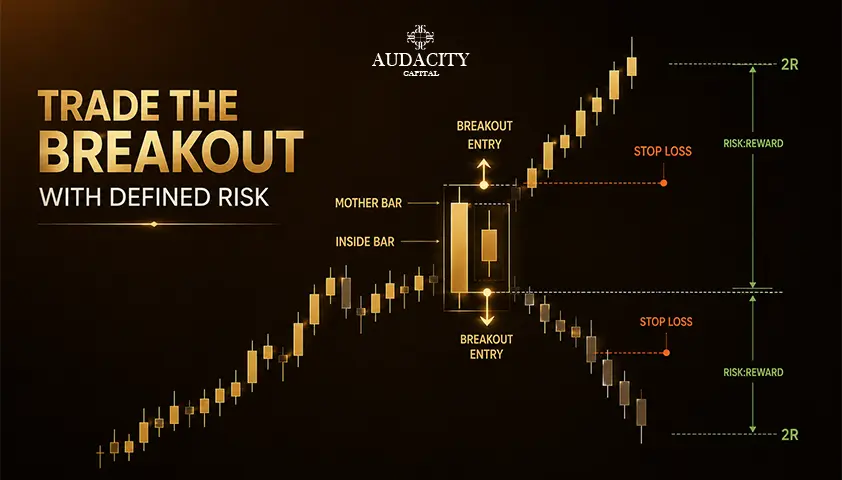
Inside Bar Trading Strategy: Rules, Entries and Risk Guide
Master the inside bar trading strategy with practical rules for pattern identification, entry triggers, stop placement, risk management, and testing.


Martingale Strategy in Trading
How the martingale trading strategy works, what the doubling arithmetic actually costs, why position sizing cannot create an edge, and where it is banned.
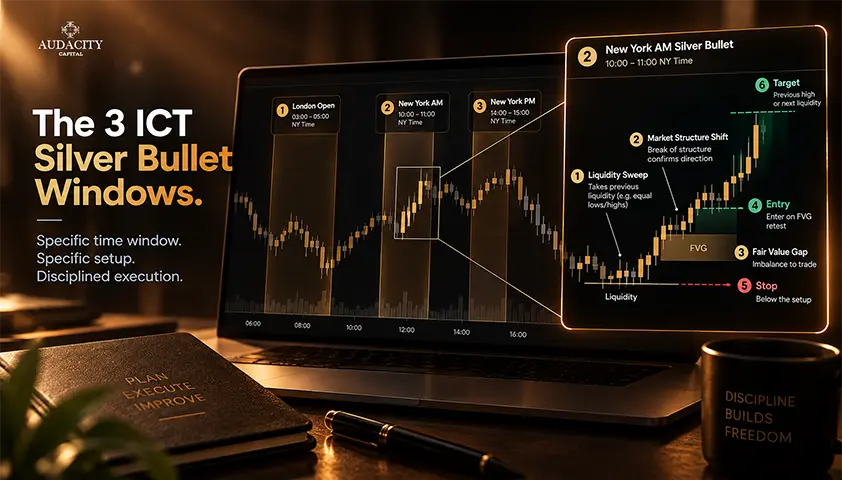
ICT Silver Bullet Strategy: Windows, Setup and Execution Rules
The ICT Silver Bullet windows, the setup step most guides skip, entry and stop rules, and what the published win rates rest on.
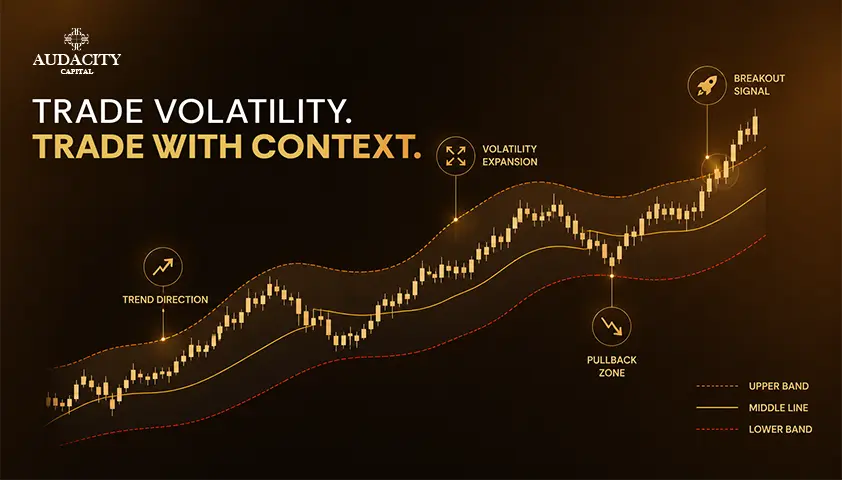
Keltner Channel Trading Strategy: How to Read Volatility With Context
Discover how Keltner Channels measure market volatility, spot trend pullbacks, and confirm breakouts. Includes setup rules, settings, and testing methods.