



10 Most Profitable Trading Strategies in 2026



What Makes a Strategy Profitable in 2026?
The markets in 2026 are not the same markets your favourite trading YouTuber taught you on in 2019.
Volatility has shifted. Liquidity patterns have evolved. Retail participation is higher than ever, and institutions have adapted accordingly. What worked mechanically five years ago now requires more nuance, discipline, and context.
But here is what has not changed: profitable strategies still follow the same core principles. They have a defined edge. They manage risk ruthlessly. And traders who use them execute with consistency, not emotion.
This is not a list of magic systems. It is a breakdown of the 10 strategies producing real results for real traders right now and what it actually takes to make each one work.
How We Selected the Most Profitable Trading Strategies in 2026
Not every trading strategy performs well in every market condition. The strategies featured in this guide were selected based on several factors that influence profitability in today's financial markets.
We evaluated each strategy using:
- Consistency across different market conditions
- Risk-to-reward potential
- Popularity among professional and funded traders
- Suitability for beginners and experienced traders
- Scalability for larger trading accounts
- Compatibility with forex, indices, commodities, and crypto markets
Rather than focusing on theoretical returns, we've highlighted strategies that experienced traders continue to use because they offer repeatable opportunities when combined with disciplined risk management.
Quick Comparison Table of the Most Profitable Trading Strategies
Strategy | Difficulty | Best Timeframe | Best Market | Risk Level | Best For |
|---|---|---|---|---|---|
Beginner | 4H–Daily | Forex, Indices | Low | Swing Traders | |
Intermediate | 15M–4H | Forex, Crypto | Medium | Momentum Traders | |
Advanced | 1M–5M | Forex, Indices | High | Full-Time Traders | |
Beginner | 4H–Daily | Forex, Stocks | Medium | Part-Time Traders | |
Advanced | 5M–1H | Forex | High | Experienced Traders | |
Intermediate | Daily–Weekly | Forex | Low | Long-Term Traders | |
Mean Reversion | Intermediate | 15M–4H | Forex, Stocks | Medium | Range Traders |
Smart Money Concepts | Advanced | Multi-Timeframe | Forex, Indices | Medium | Price Action Traders |
Advanced | Any | Multiple Markets | Medium | Systematic Traders | |
Multi-Timeframe Analysis | Beginner | Multi-Timeframe | All Markets | Low | All Traders |
The 10 Most Profitable Trading Strategies in 2026
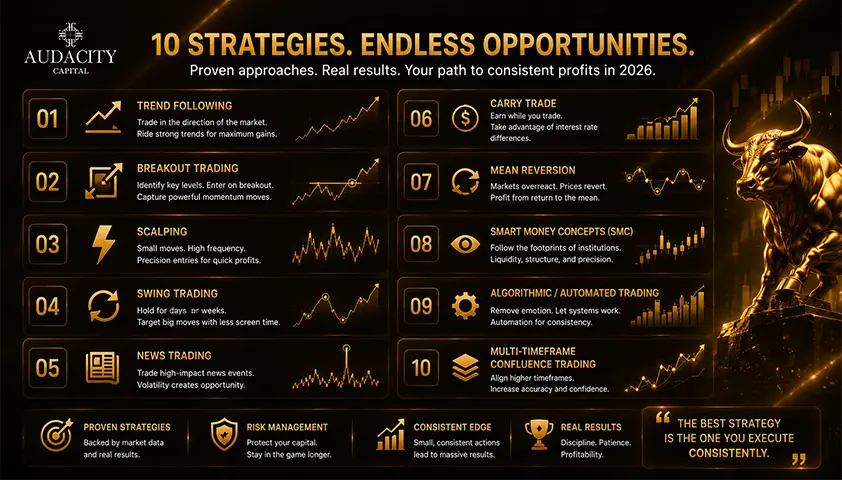
1. Trend Following
Trend following is the oldest strategy in the book, and it is still one of the most reliable. The concept is simple: identify the direction the market is moving, and trade with it. Most of the money in financial markets is made by traders and institutions who position themselves in the direction of sustained moves, not against them.
How It Works in 2026
Trend followers use a combination of moving averages (20 EMA, 50 EMA, 200 EMA), higher timeframe structure, and momentum indicators to confirm direction. The entry is typically on a pullback to a key level within the trend, not at a random point mid-move.
Best Markets: Forex majors, indices, commodities
Why It Works
Institutions move markets, and institutional flows create trends. Those trends do not reverse overnight. Retail traders who align with institutional direction consistently outperform those who fight it.
Key Risk
Trend traders get destroyed in choppy, range-bound conditions. Knowing when the market is not trending is just as important as knowing when it is.
2. Breakout Trading
Breakout trading is built on one idea: when price breaks through a key level of support or resistance with momentum and volume, it often continues in that direction. The setup is everywhere. Consolidation zones, previous highs and lows, psychological levels, session opens.
How It Works in 2026
Modern breakout traders filter false breakouts aggressively. The strategy now typically includes confirmation candle closes above or below the level, volume confirmation (especially in equities and crypto), and avoidance of breakouts heading into major news events.
Best Markets: Forex, crypto, indices, commodities
Why It Works
Markets spend a significant portion of time consolidating before making directional moves. Breakout traders capture those moves at the point of least resistance.
Key Risk
False breakouts are the number one killer in this strategy. Risk management and waiting for confirmation separates profitable breakout traders from account blowers.
3. Scalping
Scalping is not for everyone. It demands focus, speed, discipline, and a high tolerance for screen time. But for traders who can handle it, scalping remains one of the highest frequency profit strategies available. A scalper aims to capture small price movements repeatedly throughout the session.
How It Works in 2026
Top scalpers in 2026 work primarily on the 1-minute to 5-minute charts, using Level 2 data, order flow, and liquidity analysis to time entries with precision. Many combine Smart Money Concepts with scalping frameworks to target specific liquidity pools.
Best Markets: Forex, indices (especially during London and New York open sessions)
Why It Works
Intraday price inefficiencies exist constantly. There is always movement. A skilled scalper converts that movement into profit regardless of broader market direction.
Key Risk
Spreads, commissions, and slippage eat into margins fast. Scalping on the wrong broker with wide spreads is a losing game from the start.
4. Swing Trading
Swing trading is the preferred strategy of traders who want profits without living at the screen. A swing trader holds positions for anywhere from one day to several weeks, targeting larger price moves based on technical setups and macro context.
How It Works in 2026
Swing traders use the daily and 4-hour charts as their primary timeframes, looking for confluent setups at key levels. Price action, structure, Fibonacci retracements, and fundamental bias are all tools in the swing trader toolkit.
Best Markets: Forex majors and minors, indices, commodities, stocks
Why It Works
The bigger the timeframe, the cleaner the setup. Swing trading removes the noise of lower timeframes and targets the real moves in the market.
Key Risk
Holding trades overnight means exposure to news events and gap risk. Position sizing must account for this.
5. News Trading
News trading is high risk, high reward, and not for traders with weak hands. The strategy involves positioning before or immediately after major economic data releases such as NFP, CPI, interest rate decisions, and FOMC announcements.
How It Works in 2026
Some news traders take positions before data is released based on consensus forecasts and deviation expectations. Others wait for the initial volatility spike to settle, then trade the confirmed directional move that follows.
Best Markets: USD pairs (NFP, CPI, FOMC), GBP pairs (BOE decisions), EUR pairs (ECB announcements)
Why It Works
Major economic data moves billions in institutional money. That creates sharp, sustained directional moves that skilled traders can capture.
Key Risk
Spreads widen massively during news events. Slippage is real. A trader on the wrong side of a surprise reading can lose multiple times their expected risk in seconds.
6. Carry Trade
The carry trade is a long-game strategy that involves borrowing in a low interest rate currency and buying a high interest rate currency to profit from the interest rate differential. It is less flashy than other strategies, but it has been consistently profitable for institutional traders for decades.
How It Works in 2026
With interest rate divergence between central banks at significant levels in 2026, carry trade opportunities have expanded. Traders earn rollover and swap interest daily while the position is held.
Best Markets: Forex, particularly pairs with significant interest rate differentials
Why It Works
You get paid to hold the trade. When carry trade positioning is aligned with the technical trend, it is one of the cleanest strategies available.
Key Risk
Risk-off events and sudden central bank policy shifts can reverse carry trades violently. Leverage must be managed conservatively.
7. Mean Reversion
Mean reversion is based on a statistically proven principle: price tends to return to its average over time. When price moves excessively far from the mean in either direction, a mean reversion trader positions for the move back to equilibrium.
How It Works in 2026
Mean reversion traders use Bollinger Bands, RSI extremes, standard deviation channels, and VWAP deviations to identify overextended price. The entry is counter-trend, with defined risk and a clear target back at the mean.
Best Markets: Range-bound forex pairs, stocks, indices during low-volatility periods
Why It Works
Markets are not efficient in the short term. They overshoot. Mean reversion traders profit from the correction of those overshoots.
Key Risk
In strongly trending markets, mean reversion entries become traps. This strategy performs poorly when confused for a trending environment.
8. Smart Money Concepts (SMC)
SMC is not new, but it has become the dominant retail trading framework in recent years and for good reason. It is a methodology that attempts to decode and trade with institutional order flow rather than against it.
How It Works in 2026
SMC traders look for order blocks (zones where institutional orders were placed), fair value gaps (imbalances left by rapid price movement), break of structure, and change of character to time high-probability entries. The framework is applied across multiple timeframes.
Best Markets: Forex, indices, crypto
Why It Works
It puts retail traders in alignment with the biggest market participants. When an SMC trader correctly identifies where institutional money is positioned, the probability of a trade working increases significantly.
Key Risk
SMC has a steep learning curve and is susceptible to overcomplication. Many traders use 10 concepts when two or three would produce better results.
9. Algorithmic / Automated Trading
Algorithms are no longer just for hedge funds. In 2026, algorithmic trading is accessible to retail traders through platforms like MetaTrader 4/5, cTrader, and proprietary systems. Traders can build, backtest, and deploy automated systems that execute their strategy without emotion or hesitation.
How It Works in 2026
Retail algo traders use Expert Advisors (EAs) or Python-based bots to automate rule-based strategies. Backtesting against historical data validates the edge before live deployment. Risk parameters are coded in, removing human error from execution.
Best Markets: Forex, crypto, indices (anywhere with sufficient liquidity and 24-hour access)
Why It Works
An algorithm does not get tired, emotional, or distracted. It executes the strategy exactly as designed, every single time.
Key Risk
Over-optimised systems that work perfectly on historical data but fail in live markets. Regular monitoring and recalibration are non-negotiable.
10. Multi-Timeframe Confluence Trading
Multi-timeframe confluence trading is less a standalone strategy and more a framework that dramatically improves the probability of any strategy you already use. A setup that aligns across multiple timeframes is far more reliable than one that only exists on a single chart.
How It Works in 2026
A multi-timeframe confluence trader starts on the higher timeframe (daily or 4-hour) to identify the dominant trend and key levels, then drops to a lower timeframe (1-hour or 15-minute) to time the entry with precision. The trade is only taken when direction, level, and entry signal all align.
Best Markets: Works across every market. Most effective in forex, indices, and commodities.
Why It Works
Most retail traders trade blind on low timeframes without context. MTF confluence gives traders a full picture of where price is likely to go and why.
Key Risk
Waiting for perfect confluence means fewer trades. Some traders overtrade out of impatience and abandon the discipline that makes the approach work.
Which Trading Strategy Is the Most Profitable?
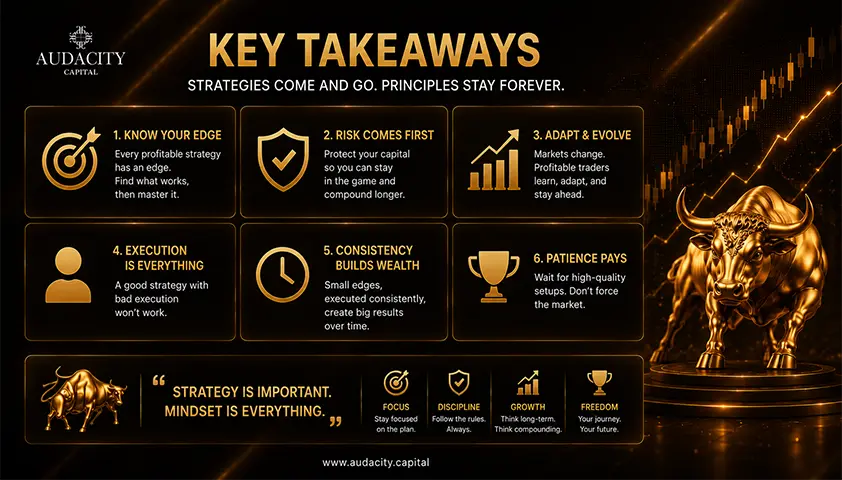
There is no single trading strategy that is consistently the most profitable. The best strategy depends on your experience, available time, risk tolerance, and the market you're trading.
For example:
- Trend following performs well during strong directional markets.
- Swing trading suits traders who prefer fewer, higher-quality setups.
- Scalping can generate frequent opportunities but requires speed and discipline.
- Smart Money Concepts help traders align with institutional market structure.
- Algorithmic trading removes emotional decision-making and enables consistent execution.
The most profitable traders don't rely on one strategy. They adapt their approach to changing market conditions while maintaining disciplined risk management.
Key Takeaways
- No single strategy works in all market conditions. The most profitable traders know which tool to use when.
- Risk management is not part of your strategy. It is the foundation of it. Without it, no strategy survives long enough to be profitable.
- Consistency beats complexity. A simple strategy executed with discipline will always outperform a sophisticated strategy executed with emotion.
- 2026 markets reward context. Understanding why price is moving, not just where, separates average traders from funded ones.
- The best strategy is the one you understand deeply, can execute under pressure, and can follow without second-guessing.
- Getting funded amplifies a good strategy. A trader with a proven edge who is undercapitalised is leaving money on the table.
Ready to apply these strategies with real capital?
Audacity Capital funds traders through our Ability Challenge, Ability One program and FTP.
Your strategy. Our capital.
Frequently Asked Questions
Swing trading is widely recommended for beginners because it does not require constant screen time, setups are cleaner on higher timeframes, and there is more time to analyse trades before execution. Start with one strategy, master it, and build from there.
Yes, and most experienced traders do. Multi-timeframe confluence trading is itself a combination approach. The key is ensuring the strategies complement each other rather than create conflicting signals. Do not layer complexity on top of confusion.
There is no universal timeline, but most consistently profitable traders have a minimum of one to two years of deliberate practice behind them. The difference between those who make it and those who do not is rarely intelligence. It is discipline and willingness to learn from losses.
Significantly. Spreads, execution speed, swap rates, and platform stability directly impact profitability, especially for scalpers and news traders. Trade with a regulated, reputable broker and understand their cost structure before committing.
Swing trading with strict risk management (1-2% risk per trade) on major currency pairs or index instruments is generally considered lower risk for retail traders. That said, no strategy is risk-free. The goal is always to manage risk, not eliminate it.
Absolutely. In fact, these strategies are specifically relevant for prop firm traders because they are rule-based, manageable under drawdown limits, and scalable with larger capital. The edge does not change with more money. Execution discipline does.
Try each one in a demo environment. Observe which approach feels natural to your personality, your schedule, and your trading psychology. A night shift worker will not scalp the London open. A high-energy trader will not patiently hold swing trades for two weeks. Know yourself first.

Готовы применить дисциплинированный риск к криптовалютам? Изучите новые криптоинструменты Audacity Capital и примените свою торговую стратегию.
Узнать большеРассылка
Подпишитесь на нашу рассылку.
Присоединяйтесь к нашему сообществу

Начните свое путешествие сегодня с нашей бесплатной пробной версией
С гордостью демонстрируйте свои навыки и достижения с помощью сертификатов и получайте признание за свой тяжелый труд и преданность делу от потенциальных инвесторов и коллег.
Бесплатная пробная версияПохожие статьи
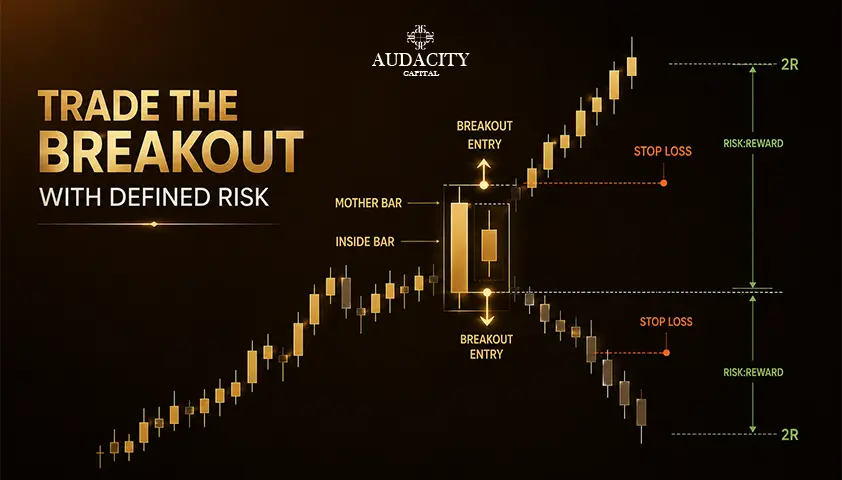
Inside Bar Trading Strategy: Rules, Entries and Risk Guide
Master the inside bar trading strategy with practical rules for pattern identification, entry triggers, stop placement, risk management, and testing.

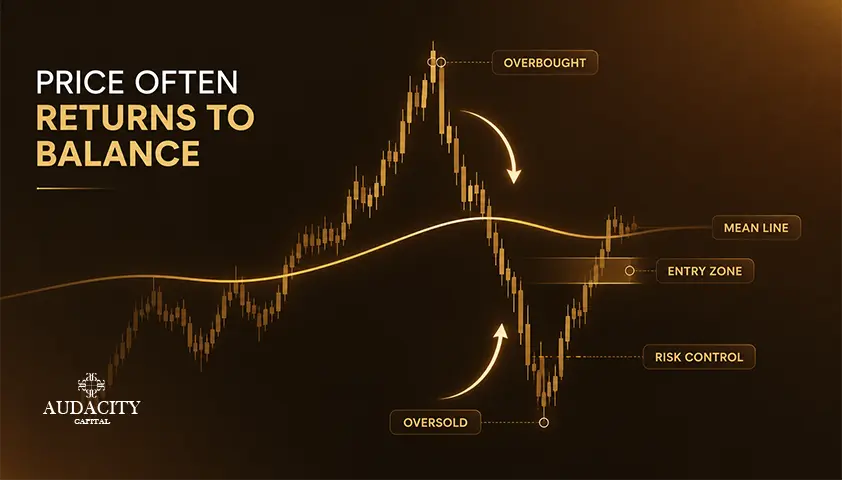
Mean Reversion Trading Strategy Explained (2026)
Prices that stretch too far tend to snap back to an average, but only in the right market. Learn the tools, the setup, and the trend risk.
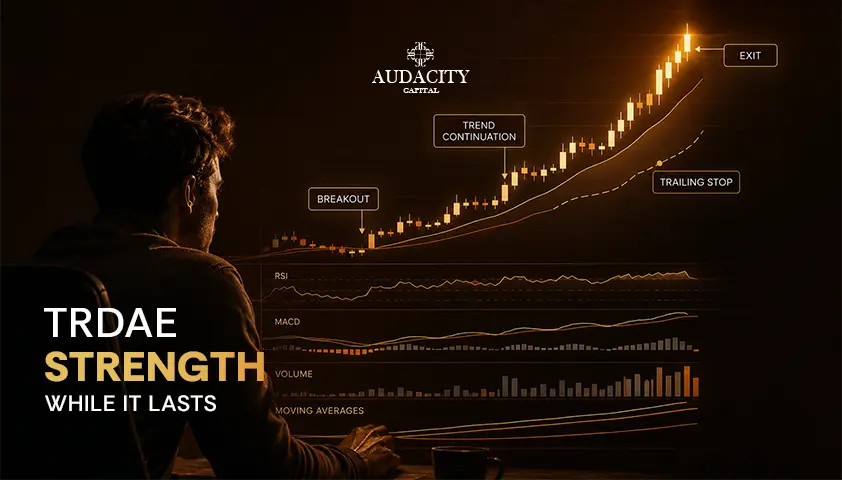
Momentum Trading Strategy: A Comprehensive Guide
Master the core principles of a momentum trading strategy. Learn how to use key indicators, manage sharp-reversal risks, and master exit timing.
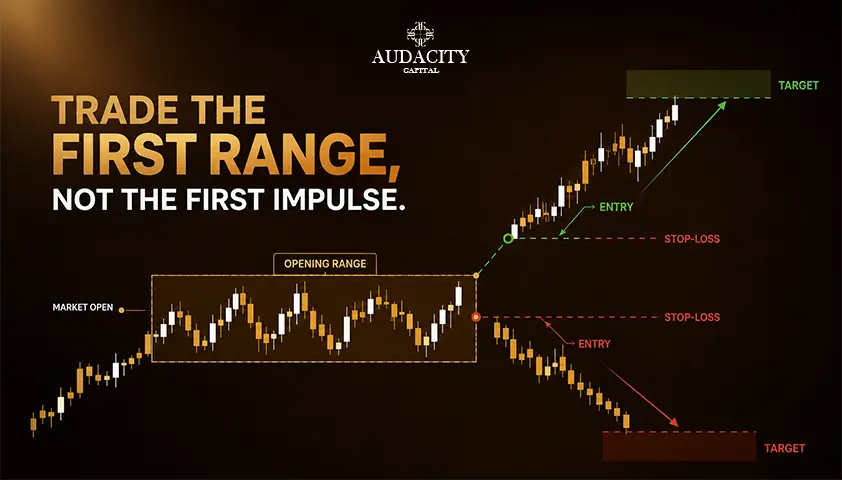
Opening Range Breakout Strategy: Rules, Setups and Examples
Learn how the opening range breakout strategy works, including ORB rules, 5, 15 and 30-minute setups, entry signals, stop losses and risk management.