



Roniel's Trading Journey
From Losses to Profit: Ron’s Funded Trader Success Story
Trader Snapshot
Experience | 10+ years (since 2012) |
Trading Style | Day trading (price action, no indicators) |
Risk per Trade | 1%–2% (max 2%) |
Risk-Reward Ratio | 1:1.5 to 1:2 |
Trades per Day | 1–2 trades (max 3) |
Key Strength | Discipline & strict risk management |
Roniel's Trading Journey
Introduction and Background of Ron
- Ron is an experienced trader, having started learning financial market trading in 2012.
- He was introduced to prop trading during the COVID-19 lockdown in 2020.
- In 2021, Ron joined Audacity Capital’s Funded Trading Program (FTP), successfully passing the challenge and meeting the first-stage target of 10% profit on a $50,000 account.
- He traded a $30,000 account but faced consecutive losses afterward, which taught him valuable lessons in discipline and lot size calculation.
- Ron credits Audacity Capital with helping him become a profitable trader by improving his discipline and risk management skills.
Early Trading Experience and Discipline Development
- Before, Ron used whole numbers for lot sizes (e.g., 0.1, 1.0), but learned to calculate precise lot sizes (e.g., 0.66, 0.13) based on risk parameters.
- His risk tolerance is generally 1-2% per trade, aiming for maximum 2%.
- The FTP program’s maximum lot size back then was 0.5, which Ron adapted to gradually.
- Despite setbacks, Ron’s experience sharpened his approach to risk and money management.
Switching to the Ability Challenge Program
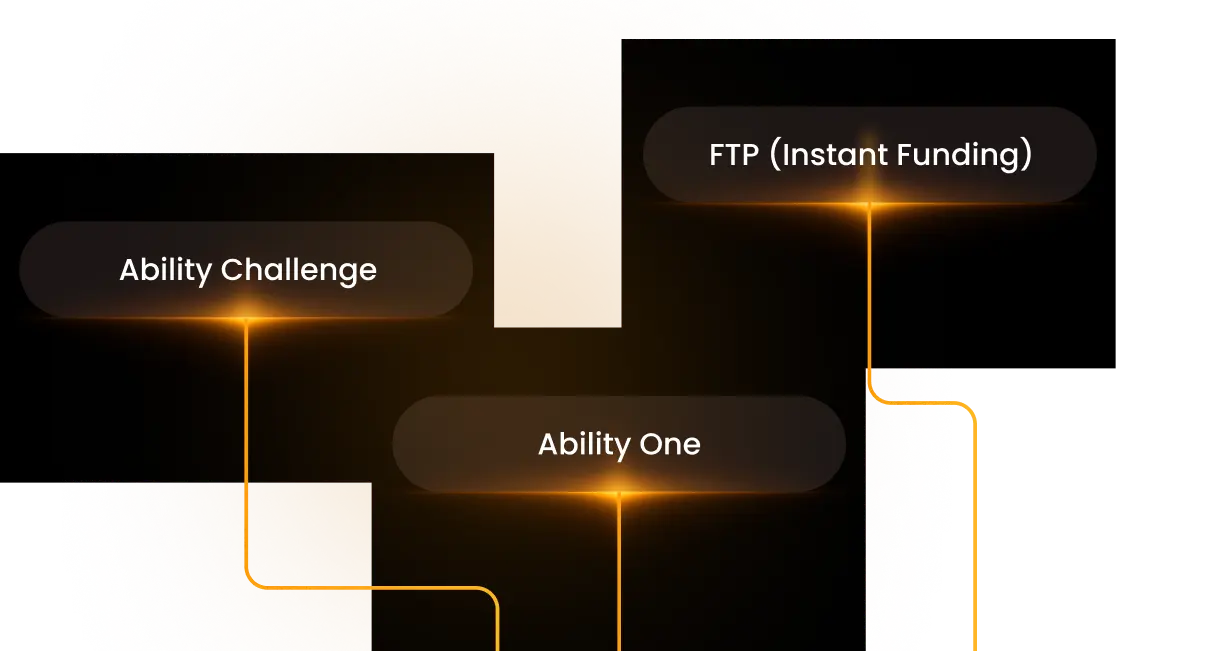
- Ron chose to participate in the Ability Challenge because:
- It was cheaper than other programs.
- It tested his patience further.
- It allowed more control over his trading grid and style.
- The funded trading program had limitations that did not suit his trading style, while the Ability Challenge offered a better fit.
- He emphasizes the importance of choosing a trading program aligned with one’s comfort and style to avoid issues adapting to rules.
Trading Style Evolution and Risk Control
- Ron shifted from trading over 10 currency pairs in 2021 to focusing on only 1-3 assets currently.
- 90% of his trades focus on just one asset.
- He limits himself to a maximum of two losses per day; if reached, he stops trading for the day.
- Similarly, if he hits his daily profit target, he also stops trading.
- This strategy highlights his emphasis on psychological discipline and risk control.

Are You Looking For A Funded Trader Program?
Join Our Funded Trader ProgramPsychological Challenges and Coping Strategies
- The hardest part for Ron has been maintaining discipline.
- After placing trades, he closes his laptop and engages in activities like badminton to avoid obsessing over trades.
- Despite over a decade of experience, he still experiences fear when trades move into negative territory.
- He controls impulsive trading by avoiding entries that do not meet his setup criteria, preferring to accept regret rather than remorse from mistakes.
- His mantra: “Regret is better than remorse.” He waits patiently for the next opportunity since the market operates 24 hours.
Asset Focus and Trading Times
- Currently, Ron focuses on three main assets with distinct trading times in the Philippines time zone:
Asset | Trading Time (Philippines) | Notes |
J30 (Dow Jones 30 Index) | 3:15 PM | UK market time |
Tech 100 (Nasdaq 100) | 8:00 PM | Evening session |
AUD/JPY | 9:00 AM | Morning session |
- This diversification across different market openings allows him to capitalize on volatility throughout the day.
Trading as a Business and Time Commitment
- Ron trades about 15 minutes per day, focusing on day trading.
- Trading is a business for him, not a hobby.
- He also runs a coffee shop and a badminton court business, which is his other income source.
- He mostly uses the 1-hour time frame, focusing strictly on current market conditions rather than past data.
Entry Strategy and Risk-Reward Parameters
- Ron watches the 1-hour candle movements just before his chosen trading time (e.g., 3:00-3:15 PM for J30).
- He assesses candle action to determine potential market direction.
- His risk-reward ratio is either 1:1.5 or 1:2.
- He risks 1% per trade aiming for 1.5% to 2% reward.
- For AUD/JPY, he waits for strong volatility at 9:00 AM to enter.
- Notably, he does not rely on indicators, trading purely based on price action and candle movement.

Compete with traders worldwide, climb the leaderboard, and win funded accounts.
Join Our Free Trading CompetitionImpact of Market Volatility on Trading
- Ron views current market volatility as an advantage.
- Previously, stop-losses or take-profits could take 3-5 days to trigger.
- Now, with increased volatility, his average trade duration is 4-6 hours.
- This faster movement helps reach targets more quickly, assuming proper analysis and risk management are applied.
Overall Journey with Audacity Capital
- Ron regards Audacity Capital as the first prop trading company he successfully engaged with.
- Before joining, he lacked discipline and blew up personal accounts.
- The firm’s strict risk parameters and trading rules forced him to adopt better discipline.
- He learned that focusing on one asset and proper risk management is better than trading multiple pairs.
- The key to profitability is proper lot size calculation based on stop-loss values and risk percentage.
- This lesson was a turning point in his trading career.
Best and Worst Trades
Trade Type | Description | Key Lesson |
Worst Trade | Used 80% of his own capital, gambling to double money overnight or within an hour. Resulted in blowing up the account. | Trading is not gambling; it requires discipline, analysis, and risk calculation. |
Best Trade | Successfully hit the target on his first 30,000 account. | Achieving milestones in prop trading boosts confidence and is a major trader achievement. |
Advice for New Traders Entering Prop Trading
- Keep trading simple.
- Focus less on numerous indicators and more on accurate lot size calculation based on stop-loss levels.
- Most traders fail to calculate lot size properly, which is critical for risk management.
- Risk only 1-2% per trade and limit yourself to 1-3 trades per day (Ron prefers 1-2).
- If you have three consecutive profitable days, take a rest on the fourth day.
- If you have three consecutive losing days, take a break and reassess your strategy.
- Do not trade if you are not in good physical or psychological condition (e.g., lack of sleep).
- Trading requires mental preparedness and discipline, even if actual market time is short.
Closing Remarks
- Ron’s journey over five years reflects steady growth in confidence and consistent profitability.
- His disciplined approach and risk management can serve as a model for other traders.
- The interviewer expressed interest in following Ron’s progress in the future and encouraged him to continue his successful trading path.
Key Insights:
- Discipline and precise lot size calculation are critical for successful trading.
- Trading style must align with the trader’s personality and comfort with program rules.
- Managing psychological factors, including limiting daily losses and trades, is essential.
- Market volatility, while challenging, can be leveraged as an advantage for quicker target achievement.
- Trading is a business demanding preparation, mental clarity, and risk control, not gambling or impulsive decisions.
Summary Table: Ron’s Trading Rules and Practices
Aspect | Practice / Rule |
Risk per trade | 1% to 2% maximum |
Lotsize calculation | Based on stop-loss value, not fixed increments |
Number of trades/day | 1 to 3 trades; stop after 2 losses or hitting target |
Asset focus | 1 to 3 assets only (J30, Tech 100, AUDJPY) |
Trading time | 15 minutes per day; using 1-hour candle analysis |
Risk-reward ratio | 1:1.5 or 1:2 |
Trading style | Day trading, price action without indicators |
Psychological tools | Stop trading after losses; engage in other activities to detach |
Trading condition | Only trade when physically and mentally fit |
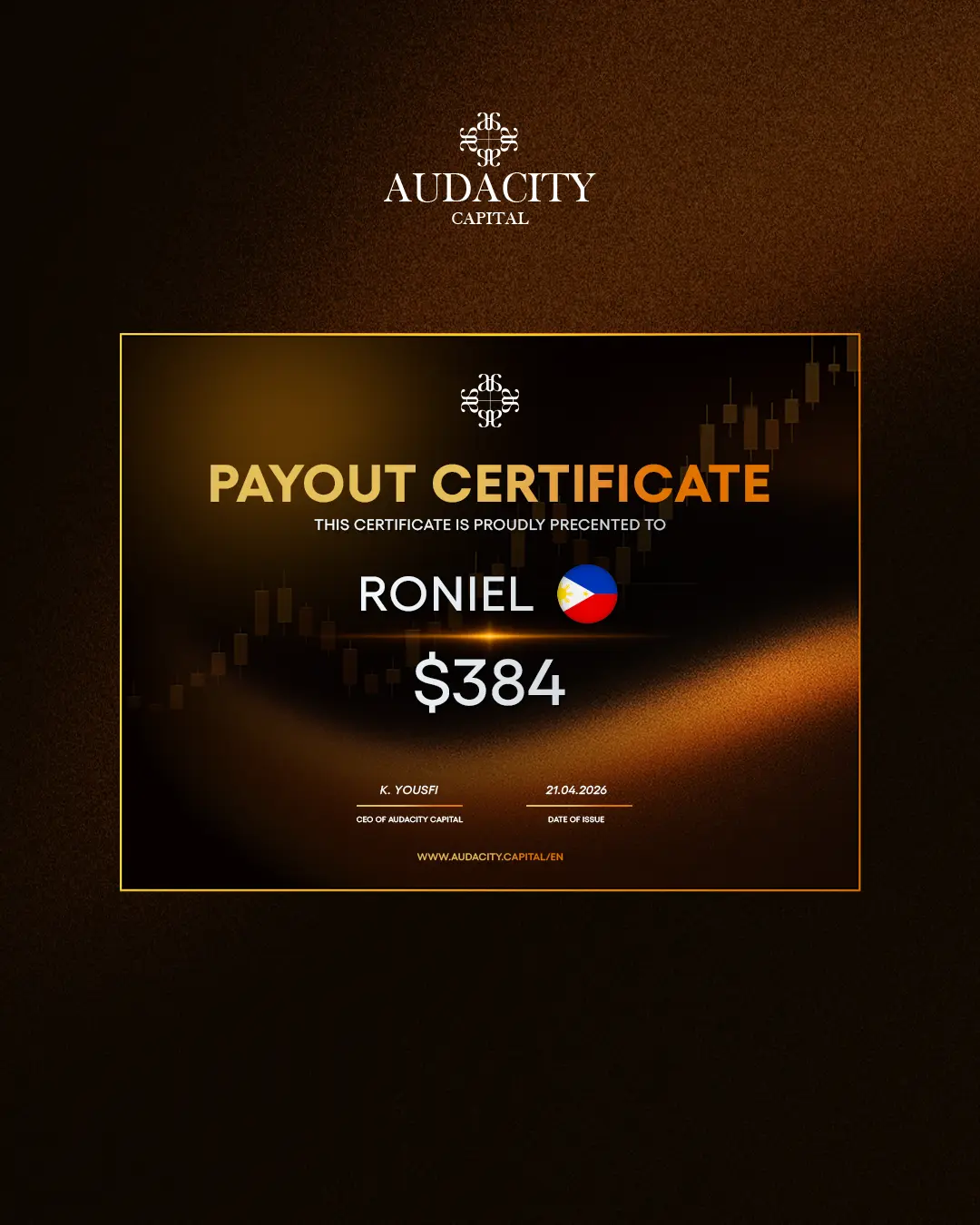
Certification
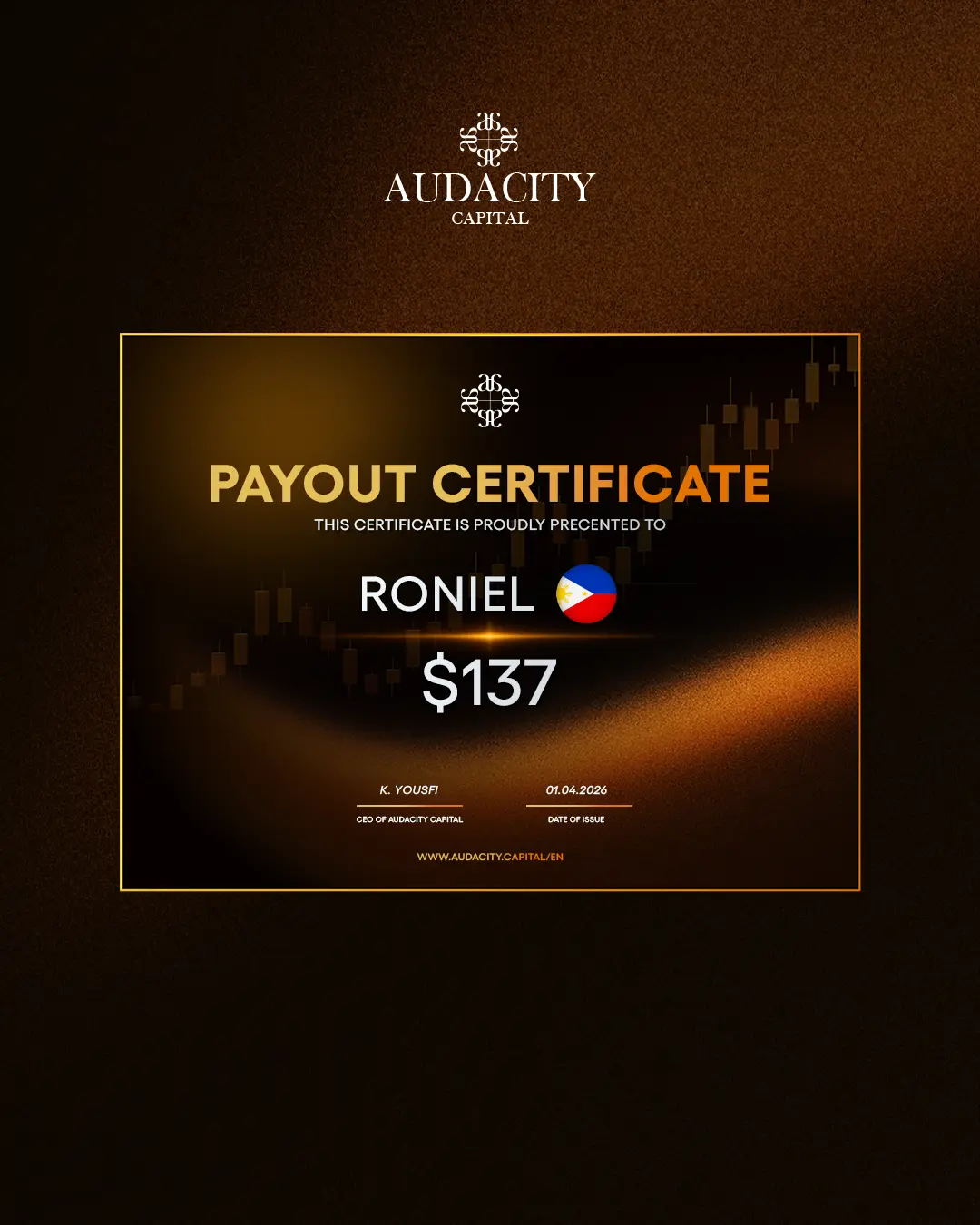
Certification
Choose Your Funded Account



Challenge
Related Success Stories

12 Years of Experience, Discipline & Progression with Audacity Capital
I had to do it the right way, and that meant focusing on consistency and controlling my emotions.

Brian’s Journey From Emotional Trading to Funded Success
Focus on one asset, master it, then diversify.
How Florida Turned 15 Years of Experience Into Scalable Results
Discipline and patience are the key to becoming a successful trader.