


What Is Liquidity in Trading? A Complete Guide


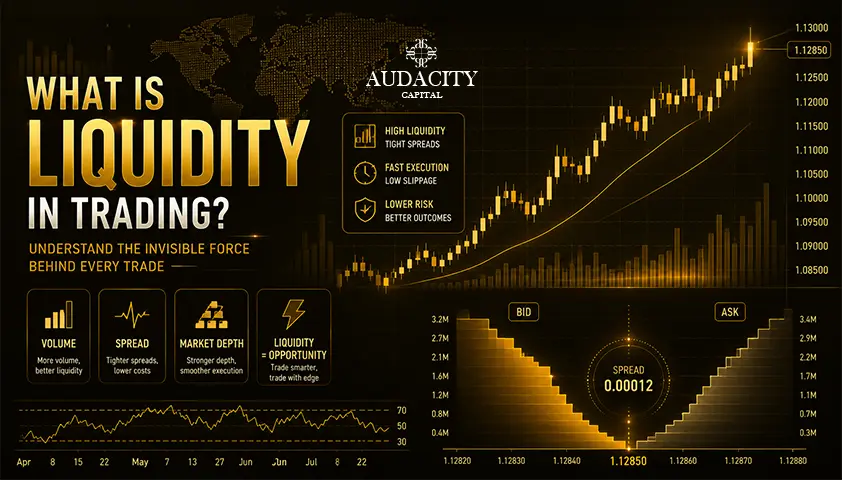
Every time you buy or sell, an invisible force decides whether your order fills instantly at a fair price or slips and quietly costs you more.
That force is liquidity. In simple terms, liquidity is how easily and quickly you can buy or sell an asset without your own order moving the price much.
A highly liquid market lets you get in and out fast at a price close to what you saw on the screen. An illiquid one makes you wait, accept a worse price, or both. By the end of this guide, you will know how to spot liquidity before you trade and exactly how it affects your costs.
What Is Liquidity in Trading? The Simple Definition
Think of liquidity as the difference between selling a best-selling phone and selling a rare collectible. The phone has thousands of buyers waiting, so you sell it instantly at a fair market price. The collectible has only a handful of interested buyers, so you either wait a long time or drop your price to attract one.
Markets work the same way. Selling a major currency pair or a popular large-cap stock is fast and clean. Selling an obscure micro-cap or an exotic currency pair can be slow and expensive.
Here is the mechanism in one beat: for your order to fill, someone has to take the other side of it. Liquidity simply measures how smoothly that matching happens. When buyers and sellers are plentiful and active, the match is instant. When they are scarce, the match is slow and your price suffers.
The Three Things That Make Up Liquidity
Liquidity is not a single number. It is built from three components that work together. Understanding each one is the fastest way to read a market before you commit.
1. Trading Volume
Trading volume is how much of an asset has changed hands over a set period, such as a day. Higher volume usually means more participants are active, which improves the chance your order is matched quickly at a fair price.
One important clarification: volume is a signal of liquidity, not liquidity itself. A market can show a busy volume figure for the day yet turn thin in a single quiet hour. Treat volume as a strong clue, not the final word.
2. Bid-Ask Spread
The bid-ask spread is the gap between the highest price buyers are willing to pay, the bid, and the lowest price sellers will accept, the ask. This gap is one of your most direct trading costs.
A tight spread means the asset is liquid and cheap to trade. A wide spread means it is illiquid and expensive. For example, a major pair like EUR/USD might trade with a spread of roughly one pip in normal conditions. An illiquid asset could carry a spread of one to two percent of its price, which you pay the moment you enter and exit.
3. Market Depth (The Order Book / Level 2)
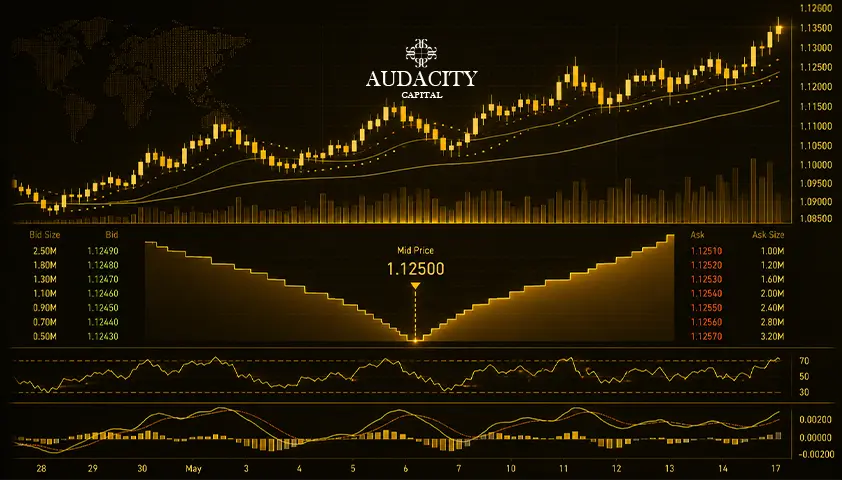
Market depth describes how many buy and sell orders are stacked at price levels near the current price. A deep book has plenty of orders waiting on both sides, so even a larger order barely moves the price. A thin book has few orders, so even a modest trade can push the price noticeably.
Traders see this in the order book, often called Level 2 data, which shows the resting orders above and below the current price. Depth is the part of liquidity most beginners never look at, yet it explains why two assets with similar volume can fill very differently.
Why Liquidity Matters (And What It Costs You)
Liquidity is not an abstract concept. It is real money. In a liquid market you get tight spreads, fast fills, minimal slippage, and easy exits. In an illiquid market you face wide spreads, partial fills, slippage, and the risk of getting stuck in a position you cannot exit at a fair price.
Slippage is the difference between the price you expected and the price you actually got. If you click to sell at 1.1000 but your order fills at 1.0996, that gap is slippage, and it is a real loss even when the chart looks calm and orderly.
The cost shows up differently across trading styles:
- Scalpers and day traders live and die by tight spreads, because they trade often and small costs add up fast.
- Swing traders can get caught trying to exit an illiquid name right when news hits and buyers disappear.
- Long-term investors feel it most when moving large size, because a big order in a thin market pushes the price against them.
How to Spot Liquidity Before You Trade
You do not need advanced tools to judge liquidity. A quick checklist before you enter is enough to avoid most ugly surprises.
- Compare average daily volume with today's volume to see if activity is normal or unusually quiet.
- Check the size of the bid-ask spread. Tight is good, wide is a warning.
- Look at visible market depth in the order book. Plenty of resting orders nearby means smoother fills.
- Notice how often the asset trades. Many times per second is liquid. Once a minute is not.
The takeaway rule is simple: the less liquid the asset, the more your own order moves the market. A small order in a deep market is a ripple. The same order in a thin market is a wave that pushes the price against you.
High Liquidity vs Low Liquidity (With Examples)
The clearest way to picture this is a highway versus a dirt road. On a highway, traffic flows smoothly and you reach your exit fast. On a narrow dirt road, one slow vehicle holds everyone up.
High liquidity environments include major FX pairs, large-cap stocks such as Apple or Microsoft, and popular ETFs during regular trading hours. Here you get tight spreads and clean fills. Low liquidity environments include exotic currency pairs, micro-cap stocks, thin altcoins, and most assets after hours. Here you find wide spreads and surprising fills.
The crucial point for a global audience is this: the same asset can be liquid at one time of day and illiquid at another. The market itself breathes, which sets up the next section. The difference between high liquidity vs low liquidity is often just a matter of timing.
High Liquidity | Low Liquidity | |
Bid-ask spread | Tight | Wide |
Order fills | Fast, near quoted price | Slow, slippage likely |
Price impact of your order | Minimal | Large |
Example markets | Major FX, large-cap stocks, big ETFs | Exotic pairs, micro-caps, thin altcoins |
Execution risk | Lower | Higher |
What Changes Liquidity (Time of Day, News, Volatility)
Liquidity is never constant. It rises and falls throughout the day and around major events. Here are the main forces that move it.
Time of day and sessions.
Liquidity in forex trading is deepest during major session overlaps, especially when London and New York are both open. It thins out in the quiet hours and during the midday lull between sessions. This is why the same pair can feel effortless to trade at one hour and sticky at another. The session overlap is where market liquidity is explained most clearly in practice: more active participants means tighter spreads and cleaner execution.
News and economic events.
Major releases and company earnings can either flood a market with participants or scare them away. Spreads may briefly tighten as activity surges, then blow out wide as uncertainty spikes and order fills become unpredictable.
Volatility and stress.
In periods of turmoil, market makers, the firms that quote both buy and sell prices to keep markets running, widen their spreads to protect themselves. Some participants pull their orders entirely. The result is that liquidity can evaporate at the exact moment you need it most, which is what fuels flash crashes and violent reactions to surprise central-bank moves. High volatility and low liquidity are a dangerous pair.
Liquidity Risk and How to Manage It
Liquidity risk is the risk that you cannot enter or exit a position at a fair price when you want to. It is the difference between a clean exit and being trapped.
The consequences are concrete. You can get stuck in a losing position because no one is buying at a reasonable price. Or you may be forced to sell into a thin market, pushing the price down against yourself with every order you place.
A few practical habits help you manage it:
- Favor liquid instruments where spreads are tight and depth is strong.
- Use limit orders rather than market orders in thin conditions, so you control the price you accept.
- Reduce your position size during low-liquidity hours.
- Avoid trading illiquid assets right around major news, when spreads can swing wildly.
This is general education, not financial advice. Trading carries significant risk, and the way each trader applies these ideas will depend on their own situation and strategy.
One More Meaning: "Liquidity" in Smart Money Concepts
You may also hear "liquidity" used a second way, especially in Smart Money Concepts and ICT trading. There it refers to pools of resting stop-loss and pending orders clustered at certain price levels, which larger players are said to target through "liquidity grabs" and "stop hunts."
It is the same underlying idea, orders gathered at price levels, viewed from a strategy angle rather than an execution one. That is a separate topic with its own depth, which we cover in our companion guide.
Putting It Together
Liquidity is the ease of getting in and out of a trade at a fair price. It is built from three parts, trading volume, the bid-ask spread, and market depth, and it is shaped by timing, news, and volatility.
Master those, and you understand one of the most important forces behind your trading costs. Choosing liquid instruments at liquid times is one of the simplest ways to cut the hidden costs that quietly erode results.
One factor many traders overlook is the broker or firm they trade through, because it directly affects the liquidity they actually get. Deeper institutional liquidity means tighter spreads and cleaner fills.
Audacity Capital offers traders access to up to premium institutional liquidity, fast execution, and free education through Trader University, all within a simulated, skill-building environment designed to help serious traders sharpen their edge. Past or hypothetical performance does not predict actual results, and trading always carries risk.
Frequently Asked Questions
Liquidity is how easily and quickly you can buy or sell an asset without moving its price much. In a liquid market, many buyers and sellers are active, so your order fills fast at a fair price. In an illiquid market, you wait longer or accept a worse price.
No. Volume measures how much of an asset traded over a period, while liquidity describes how easily you can trade without moving the price. High volume usually signals good liquidity, but it is only a clue. A market can show busy daily volume yet turn thin and difficult during quiet hours.
The bid-ask spread is the gap between the highest price buyers will pay, the bid, and the lowest price sellers will accept, the ask. A tight spread means the asset is liquid and cheap to trade. A wide spread means it is less liquid and more expensive to enter and exit.
Major forex pairs such as EUR/USD, large-cap stocks like Apple and Microsoft, and popular ETFs during regular trading hours are among the most liquid markets. They attract many participants, which keeps spreads tight, fills fast, and price impact from individual orders very small.
Liquidity risk is the danger that you cannot enter or exit a position at a fair price when you want to. It can leave you stuck in a losing trade or force you to sell into a thin market, pushing the price against yourself with each order you place.
Liquidity tends to be lowest during quiet hours, such as the gap between major trading sessions and the midday lull. In forex, it thins out when the main sessions are not overlapping. It also drops during holidays and the moments right before major news releases.

هل أنت مستعد لتطبيق مخاطر منضبطة على العملات المشفرة؟ استكشف أدوات التشفير الجديدة من Audacity Capital واجلب استراتيجية التداول الخاصة بك.
اعرف المزيدالنشرة الإخبارية
انضم إلى نشرتنا الإخبارية.
انضم إلى مجتمعنا الاجتماعي

ابدأ رحلتك اليوم مع تجربتنا المجانية
اعرض مهاراتك وإنجازاتك بفخر من خلال الشهادات واحصل على تقدير لعملك الجاد وتفانيك من المستثمرين المحتملين والأقران.
تجربة مجانيةمقالات ذات صلة
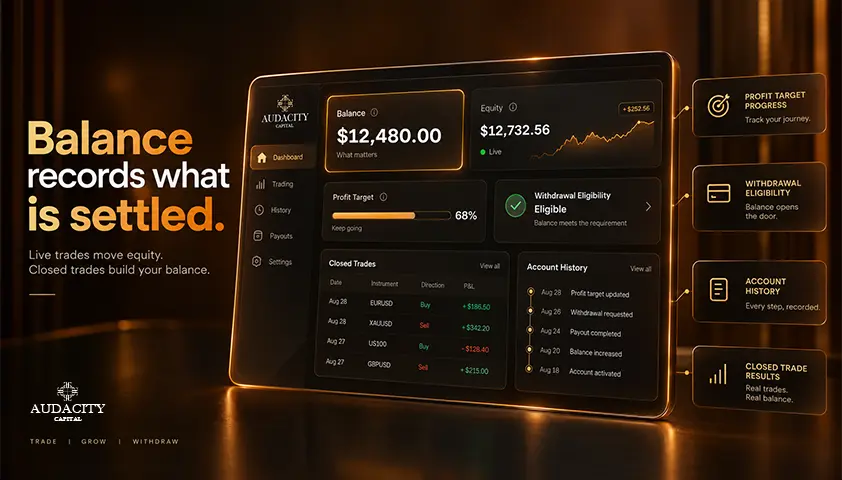
Equity vs Balance in Trading: Which Number Matters
Equity vs balance explained: what each number includes, why margin calls and prop firm rules run on equity, and where your balance still decides things.


Micro Futures Contracts Explained
What micro futures contracts are, why a smaller size does not mean lower risk, the margin trap that catches small accounts, and what they actually cost.
What Is BOS in Trading? A Complete Guide to Break of Structure (2026)
Learn what BOS in trading means, how Break of Structure works, how to identify bullish and bearish BOS, and how traders use it in market analysis.

Prop Firms With No Consistency Rule in 2026
Compare prop firms with no consistency rule. Find firms offering flexible profit requirements, trading conditions, and payout policies for traders.