



Is Forex Trading Legit? How to Spot Scams and Trade Safely


Is Forex Trading Legit or is it another way for people to lose their money? If you have been looking into currency trading, you have probably come across both opinions. Some traders describe Forex as a genuine financial market, while others associate it with fake investment schemes, questionable brokers and people promising returns that are difficult to believe.
If you are here looking for a universal yes or no, you may be disappointed. A better answer requires looking at the market itself and the companies that provide access to it. Trading currencies through a legitimate financial intermediary and handing money to someone who claims to trade on your behalf are different. It’s important to understand this difference before making a deposit. And that is why today we will cover how Forex works, what makes a trading arrangement legitimate, and where you need to be careful so that you yourself can decide if Forex trading is legit.
Is Forex Trading Legit or a Scam?
As a financial activity, forex trading is legitimate. However, how a trader accesses the market adds huge value to this answer.
In the foreign exchange market, one currency is exchanged for another. For example:
- Banks exchange currency to manage currency exposure.
- Businesses exchange currency to make international payments.
- Financial institutions participate in transactions involving currencies and related derivatives.
- Individual traders can also speculate on changes in exchange rates.
Still, not every Forex retail transaction happens in the same way. Some products trade through regulated exchanges; some forex products are traded OTC, via a dealer, so it's different. In the latter, the dealer acts like a counterparty to the customer's trade instead of connecting the customer to a central exchange.
This is an important distinction when asking forex trading is it legit. The currency market itself is not a scam, but a broker can operate fraudulently or offer arrangements that expose customers to considerable risk.
How Legit Is Forex Trading? Understanding the Role of Regulation
The legitimacy of forex trading only comes once you have examined the regulations. A broker can maintain a very professional website/ online presence, a have familiar trading platform, but it still doesn’t tell you if the company is authorised for forex trading.
In their own jurisdiction, financial regulators oversee firms and set requirements to protect customers and maintain proper conduct in the market.
What Does a Regulated Forex Broker Actually Mean?
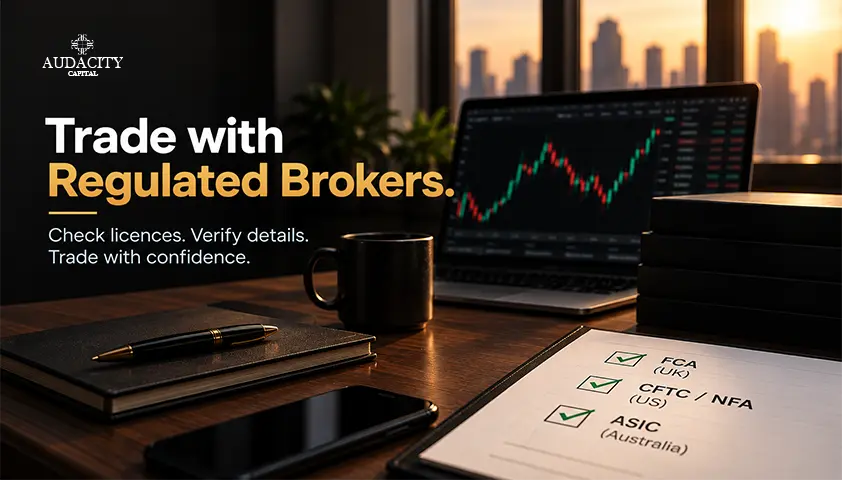
An entity with required authorisation from a financial authoriser in its jurisdiction to offer particular financial services is called a regulated Forex broker.
A regulated broker has to meet certain financial requirements, maintain records, disclose trading risks and submit to regulatory supervision depending on the specific jurisdiction and the activities it processes. If things go wrong, customers may have a proper complaint procedure or dispute resolution to fall back on.
Being registered does not mean profits are guaranteed or that every deposit is safe. What is covered depends on product, entity and rules.
Which Regulators Should Traders Know?
Before opening an account, traders should be familiar with certain regulators. For instance:
- Traders in the United States must be familiar with the Commodity Futures Trading Commission (CFTC), which oversees certain Forex activities. Another is the National Futures Association (NFA), which handles registration and background checks for relevant firms.
- Similarly, traders in the UK must know the Financial Conduct Authority (FCA), which regulates authorised financial firms.
- Australian traders must know about the Australian Securities and Investments Commission (ASIC).
Apart from knowing that, it is also important to check the exact legal name of the company. You can find it in the relevant regulator's register.
NOTE: Seeing a familiar regulatory logo on a website is not sufficient evidence of authorisation.
Why Do People Think Forex Is a Scam?
Forex trading is not a scam, but people often view it with suspicion. This happens commonly with those who cannot distinguish between a trading loss and an investment scam. Since currency prices move every day and sometimes every minute, traders can lose money even when their broker is operating legitimately. However, when someone loses their savings through a questionable investment programme, the experience can easily create the impression that the entire Forex market is fraudulent.
Unrealistic expectations have added to this perception. Beginners may come across online traders who display expensive lifestyles and claim that currency trading provides a reliable monthly income. Such claims can make the market appear much easier than it actually is. When those promised results never show up, people start doubting if Forex itself is real.
Offshore firms with unclear owners and very little oversight also make it worse. Some people get pulled in through friends recommending it or posts in online groups, not through their own research.
So it's not quite right to conclude forex is a scam from that. Some companies and individuals use Forex to get money fraudulently, but that doesn't make real currency trading fraudulent.
Legitimate Forex Trading vs Forex Scams: What Is the Difference?
What to examine | Legitimate trading arrangement | Potential scam warning sign |
Company identity | Legal entity can be independently verified | Company details are missing or copied |
Regulation | Applicable permissions can be checked | Licence cannot be verified |
Trading terms | Costs and conditions are disclosed | Important fees are hidden |
Profit claims | Risks and possible losses are explained | Guaranteed returns are promised |
Withdrawals | Conditions are documented beforehand | Extra payments demanded to release funds |
Contact details | Match official company records | Fake addresses or impersonated firms |
Performance | Claims have verifiable supporting records | Fabricated profits and testimonials |
Common Forex Trading Scams You Should Know About
There can be several ways of forex-related frauds and the one doing it won’t necessarily approach investors as a broker. Sometimes, these scam offers may come from individuals claiming to manage accounts, sell a profitable trading system or give access to an exclusive investment opportunity. The following are some of the common forex trading scams worth understanding.
Fake Forex Brokers and Trading Platforms
Fraudulent brokers can go to lengths where they mirror the website or branding of any known financial company just to gain trust. Some even display registration details belonging to another business. Others operate their own platforms and show customers artificial trade results or account balances. The displayed profit can create confidence, even when no genuine trading has taken place.
Guaranteed Profit and Managed Account Scams
These schemes usually begin with an offer to trade using someone else's money. The individual promises a fixed return or claims to have a system that limits losses. Once the customer deposits funds, further payments may be requested to increase the account balance or continue the service.
Signal Sellers, Trading Robots and Fake Gurus
Paid signals and automated trading software aren't scams necessarily. Problems comes when sellers use made-up testimonials, success rates that can't be verified, or claim their system works in every market condition. Screenshots of profitable trades don't prove a reliable trading record.
Withdrawal and Advance-Fee Scams
Some fraudulent operators make withdrawals difficult and add new fees whenever a customer requests payment. These are often described as taxes, verification fees or commissions. The CFTC warns customers should be particularly careful when offshore dealers demand additional payments before releasing funds.
How to Avoid Forex Trading Scams: 8 Things to Check Before Depositing Money
When picking one from hundreds of Forex brokers, comparing account types or looking for the lowest spread is never enough. Your Forex broker is going to handle your deposits, provide you with the right trading conditions and a lot more; therefore, before committing money, check the company’s background.
The CFTC's advisory on OTC Forex mentions multiple details on what you should know before investing your money.
- Start with the regulator's register. Search for the broker via the relevant authority's official website. Because the company mentions CFTC, NFA or FCA, that doesn’t mean it is actually authorized.
- Match the company details. Make sure the registered name, address, website and contact info match the broker's details. Don't skip the legal entity named in the customer agreement.
- Examine its background. Check for disciplinary action and regulatory warnings. You should also look into the people running the business, as a company's record may not tell you everything about its principals.
- Find out how the trading arrangement works. If you're opening an OTC Forex account, figure out whether the broker is the counterparty to your trades. That changes how orders are handled and what prices and conditions you get.
- Know the actual trading costs. Don't just rely on advertised spreads — go through the account documents. Commissions, overnight charges and margin requirements can change the cost of holding a trade.
- Check how you can access your money. Before investing even a little bit of your money, do read the withdrawal policy. Specifically check the processing conditions, applicable fees and the restrictions and make sure they won’t affect access to your funds.
- Avoid depending on someone's profit claims. Stop going behind online recommendations, especially those screenshots showing a large account balance. They are not evidence that a broker or trading service is genuine. Always be cautious when someone pressures you to deposit quickly; it is wise to step back.
- Always know where your money is going. Never skip checking the payment beneficiary. Ensure that the beneficiary is consistent with the verified company and has documented funding instructions. Also, compare platform prices with independent sources where possible.
US customers can use the CFTC's registration guidance and the NFA BASIC database to investigate relevant dealers and their backgrounds. If you are elsewhere, use your own jurisdiction's official register.
What Are the Real Risks of Forex Trading?
An authorised broker doesn’t mean that Forex trading is a low-risk activity. Regulation concerns the company and the services it is permitted to provide. It cannot control currency prices or prevent a trader from making a poor decision. This is why the financial risks deserve separate attention.
Leverage Can Magnify Losses
With margin, traders can open positions using only part of the full exposure as collateral. This makes larger positions possible with less initial capital, but losses can build quickly when the market goes against the trade. Some OTC arrangements can expose customers to losses beyond their original deposit.
OTC Trading and Counterparty Risk
Retail OTC Forex is not the same as buying a currency contract on an exchange. The dealer may be the counterparty and control the platform through which the customer places and closes trades. So before opening an account, know these terms.
Market Volatility and Trading Costs
Currency pairs can get very volatile after surprise economic news or central bank policy changes. So even if you got the direction right, spreads, commissions and overnight charges still hit the final result. Not to mention slippage, which can cause execution at a different price than you expected.
Most Retail Traders Do Not Automatically Make Money
The CFTC's current Forex fraud guidance reports that roughly two-thirds of retail Forex traders lose money each quarter, based on quarterly profitability information from registered US dealers. This is a useful warning about the difficulty of trading, not a prediction of every individual's result.
How to Choose a Legitimate Forex Broker?
A suitable Forex broker should make it reasonably easy to understand who operates the account and what happens to your money once you deposit it. Look up the regulatory status first, but finding the name in a register doesn't mean you're done. Check if the authorisation covers the financial service you intend to use.
Official Forex Broker Verification Resources
Jurisdiction | Relevant authority | Official verification resource |
United States | CFTC / NFA | |
United Kingdom | FCA | |
Australia | ASIC |
Check trading costs too. Look at the spread plus any commission, and whether there's an overnight financing charge for holding a position. They are important for participants who either trade a lot or hold a trade for several days.
Know well about deposits and withdrawals, especially how your broker is handling them. In the account agreement, an explanation of the procedures without leaving important conditions unclear is non-negotiable.
Customer support is important as well, especially when you need an explanation about an order or payment.
And finally, don't mix up the platform with the broker. Trading platforms are tools that brokers use and having a known, proven platform doesn’t directly mean that the broker is genuine too. Therefore, always separately check the legal identity and regulatory permissions of the company.
Can Beginners Make Money from Forex Trading?
There’s no guarantee of making money from forex trading or any kind of trading. Beginners can definitely participate in Forex trading, but opening an account doesn’t automatically lead to making money.
The currency prices are associated with market expectations and economic conditions and therefore even a well-planned trade can make you lose money. Beginners must take time to understand how market and economic movements affect different currency pairs and only then risk their real money.
A safe starting point for beginners is practicing through a demo account. It lets you place trades, check how the platform works, and build more skills without depositing real money.
NOTE: Demo results are not proof that an approach will work with real money too. In a real trade, whether emotions and execution conditions are different, the result can change too.
You also need a trading plan that defines how much you are prepared to risk per trade. Position size, leverage, trading costs — all of that affects the outcome. A few profitable trades aren't enough to say a strategy is reliable. You have to review it across a meaningful number of trades and different market conditions.
Is Forex Trading Safe? What Traders Should Understand Before Starting?
Because a broker has a regulatory licence, it doesn’t automatically make Forex trading safe. Having a license means the company is allowed to do foreign trade activities and follows certain rules as per the jurisdiction. But it doesn't protect you from unpredictable market moves, nor does it guarantee returns. You have to understand this difference before opening an account and putting real money at risk.
If you are still stuck on how safe is forex trading, consider these two factors:
- The amount of leverage involved.
- If you understand the product being offered.
An OTC currency contract, for example, has a different trading arrangement from an exchange-listed currency future. The protections available to customers can also vary between countries.
The question of is forex safe to invest therefore depends on the circumstances. A person who does not understand margin requirements or cannot afford to lose the money being traded is taking on a level of risk that deserves serious consideration. Forex should never be treated as a substitute for a dependable source of income.
Verdict
So is forex trading legit? Look, the market itself is real. But that's not the whole story. You have to check the broker separately and also what product you're actually trading. Regulation helps, but it won't stop you from losing money. And just because an offer looks amazing doesn't mean you can trust it. Do your homework, check the regulator's site before you deposit, and know how your account works. Don't go in expecting guaranteed returns.

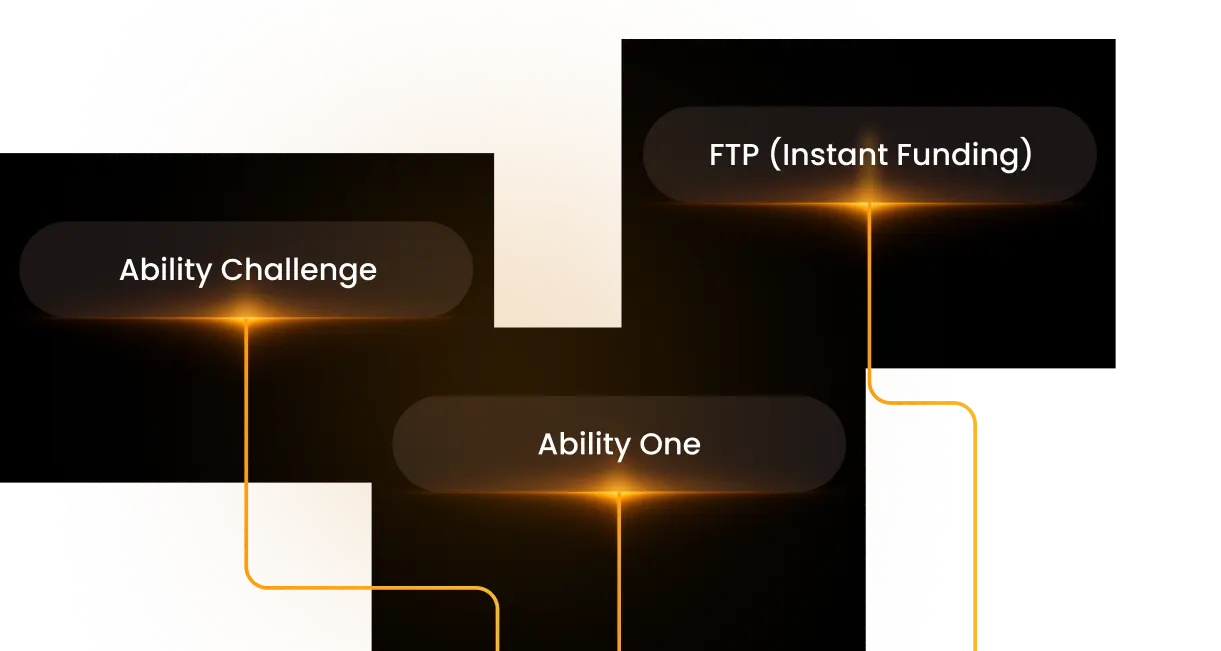
Are You Looking For A Funded Trader Program?
Join the Funded Trader ProgramFAQs
Forex as a market is legitimate and currencies are exchanged there daily. But there are also fake brokers and investment schemes in this space. Always verify the company and the trading arrangement before depositing money.
The legitimacy of Forex trading doesn’t change based on your experience level. It is a genuine activity, but being a beginner can expose you to considerable risks. When you are just starting, know how currency pairs work, learn about leverage, and choose only an appropriately regulated broker.
Look up their legal entity on the regulator's official website. Check if contact details match, what they are actually allowed to offer and if they have any warnings or actions against them.
Forex trading has market risk and counterparty risk. Even if the broker is regulated, leveraged trades can still lead to big losses. How much protection you get also depends on the product and the country.
No, it's not risk-free. It depends on your finances, knowledge and capacity to absorb losses. Don't use money that you need for rent or bills.
Many people associate Forex with fake brokers, misleading profit claims and traders losing money. However, genuine trading losses and financial fraud are different situations.
Forex trading is real and yes, traders can make money. But losses are also common and past results don't guarantee future profits. To be consistent, you need a solid approach and careful risk management.

暗号資産に規律あるリスクを適用する準備はできていますか?Audacity Capitalの新しい暗号資産商品を探索し、あなたの取引戦略を持ち込んでください。
詳細を見るニュースレター
ニュースレターに登録して最新情報を入手。
ソーシャルコミュニティに参加

関連記事
NQ in Trading – What is NQ in Trading?
Learn what NQ means in trading, how E-mini Nasdaq-100 futures work, their contract specifications, trading hours, strategies and risks.

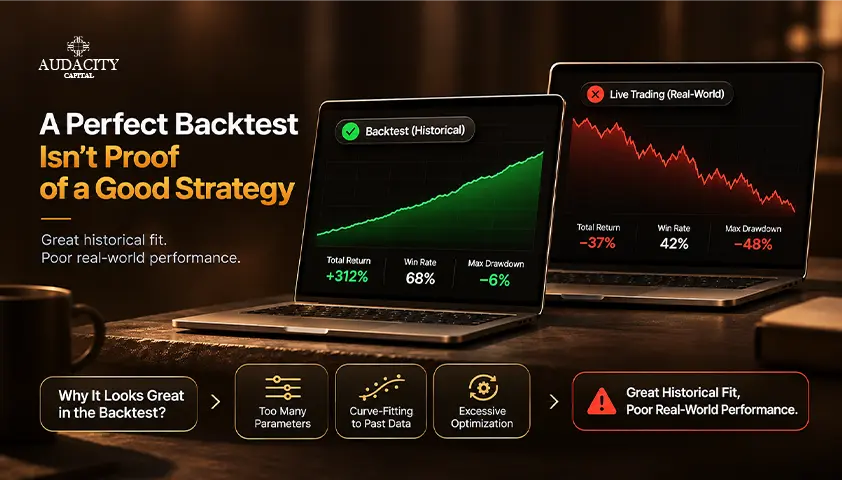
Overfitting in Trading: Signs, Causes & How to Avoid It
Learn what overfitting in trading means, why strategies become overfit, the warning signs to watch for, and how to build more robust trading systems.
What Is the Slow Stochastic Oscillator? Formula, Signals and Strategies
Learn how the Slow Stochastic Oscillator works, understand its formula and signals, and explore trading strategies and risk management.
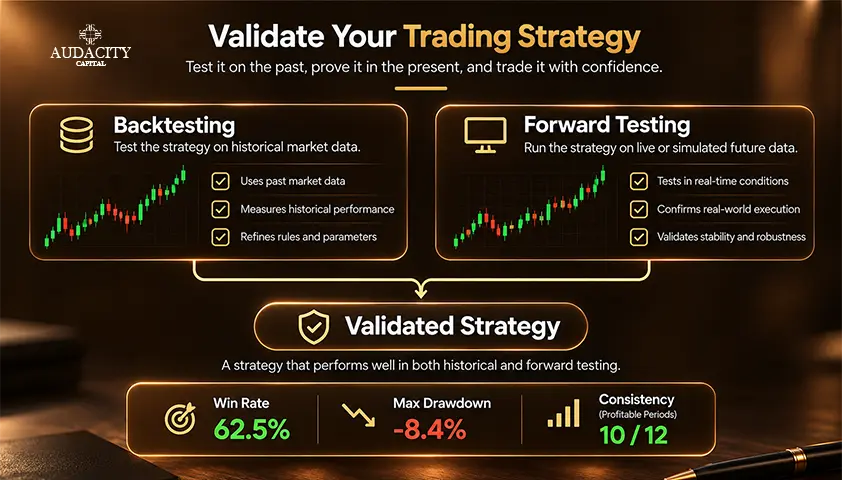
Backtesting vs Forward Testing: How to Validate a Trading Strategy
Compare backtesting vs forward testing, learn how each works, why results differ, and how traders use both to validate a trading strategy.