



What Are The Risks Of Forex Trading For Beginners?


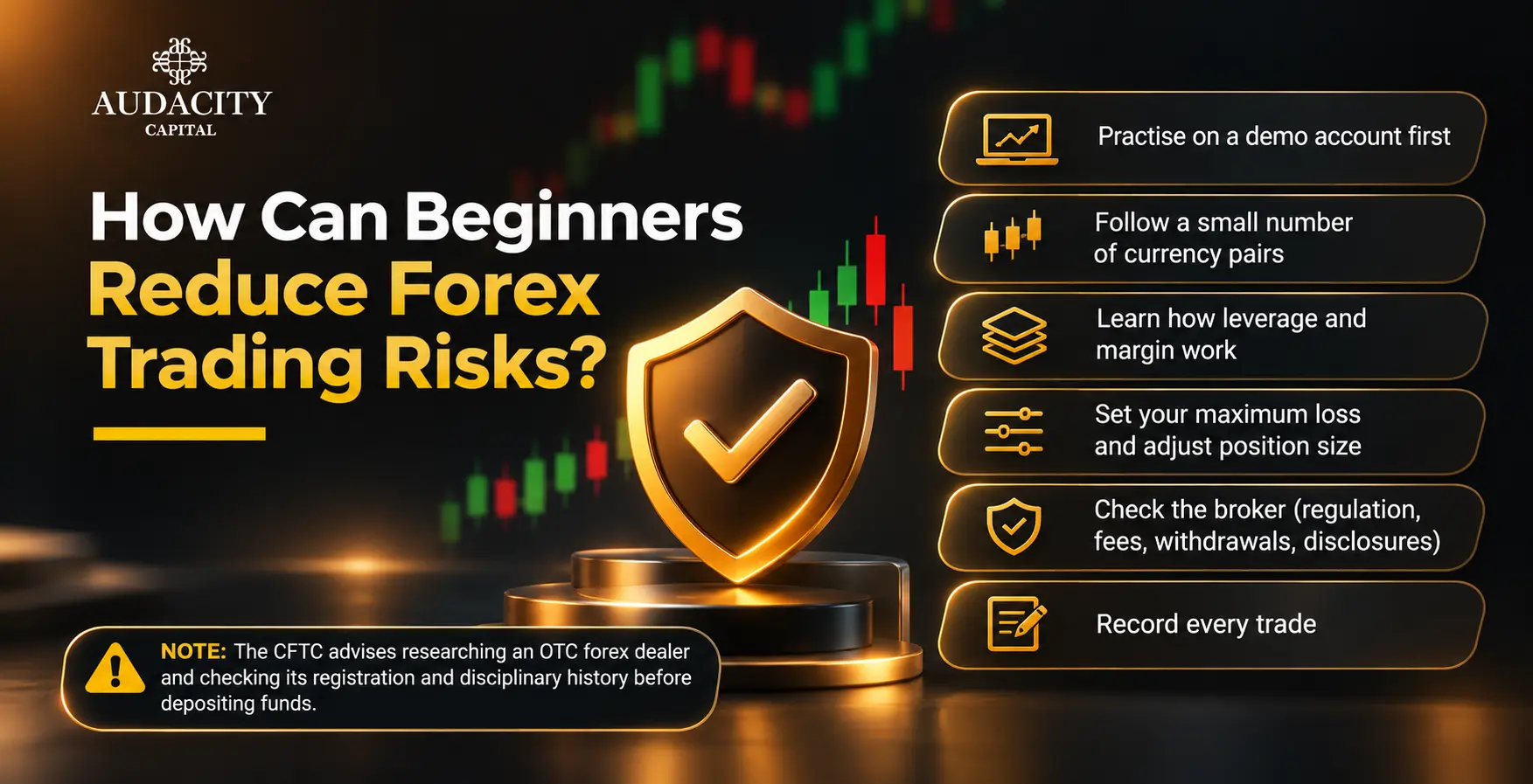
Forex trading can be risky because currency prices can change quickly. The main ones include losing money because of market movements, using too much leverage, paying trading costs, and making poor decisions.
If you are a beginner looking for answers to what are the risks of forex trading, read this guide carefully.
What Is Forex Trading?
Forex trading means buying one currency and selling another at the same time. The currencies are typically in pairs like EUR/USD or INR/USD. In this, the first currency is compared with the second one.
For example, if you trade EUR/USD, you are trading the euro against the US dollar. If the price moves in the direction you expected, you may make a profit. If it moves against you, you can lose money.
The forex market is open for most of the week and has high trading activity in major currency pairs. This makes it easy to enter and exit many trades, but prices can still move quickly.
Forex trading also uses leverage and margin. These allow traders to control a larger position with less money, but they also increase the possible loss. This is why beginners need to understand forex trading risks before putting real money into the market.
What Are the Risks of Forex Trading?
Forex trading has several risks that beginners need to understand before using real money. The biggest ones come from leverage, fast price changes, trading costs, broker problems and poor trading decisions. There is also a risk of scams, especially when traders choose an unknown or unregulated platform. Learning how to manage risk in forex trading starts with understanding each of these in turn:
1. Leverage and Margin Risk
Leverage lets you control a bigger trade with less money, so a small price move can change your balance a lot. Margin is the money that keeps a leveraged trade open.
If the market turns hard against you, the broker may close the position or ask for more funds. With that, leverage becomes the biggest forex trading risk for beginners.
2. Market Volatility Risk
Currency prices are never still, and they move heavily with central bank decisions, inflation reports, jobs data, and political surprises. You make a trade and it looks fine but a minute after it can move far against leaving you with no time to react.
That brings us to the question: Is forex trading high risk? It can be, especially with large positions and during major news.
3. Spread, Slippage and Execution Risk
There’s a cost with every trade. The spread is the gap between the price to buy and the price to sell. When the market moves fast or fewer people are trading, the spread widens.
Another problem comes from slippage because your order can fill at a different price from the one you expected. A stop-loss helps cap a loss, but in fast conditions it doesn’t promise an exit at the exact price you picked.
4. Broker and Counterparty Risk
Your broker sits in the middle of every trade, so choosing one is part of managing risk. Poor execution and financial trouble can both hurt you. Plus, weak oversight can make withdrawals difficult. Check who regulates the broker and what protects your money before you open an account. The CFTC also advises checking a firm’s registration and disciplinary history before sending funds.
5. Overnight and Interest Rate Risk
Interest rates drive currencies, so a central bank decision or a hint about future rates can move a pair quickly. When you hold a trade overnight, it can bring a swap or financing charge. This looks small at first and adds up over several days. The market keeps moving while you sleep, so a position can change a lot before you look again.
6. Trading Psychology Risk
Not every loss comes from the market. After a loss, you may feel tempted to take a bigger trade to win the money back, or to move your stop-loss when a trade starts going badly. Fear of missing a move can also push you into a rushed entry. Once emotions take over, ignoring your plan gets easy, and a small loss can turn into a big one.
7. Scam and Regulatory Risk
Watch out for platforms promising guaranteed profits, very high returns or secret trading systems, and for people who build trust on social media before asking you to deposit more. Some fake platforms even show profits on screen while making withdrawals hard. Check the broker’s regulatory status before you deposit money.
The CFTC warns traders to be cautious of unregistered forex dealers and promises of unusually high or guaranteed returns.
Is Forex Trading High Risk?
Yes, forex trading can be high risk, and it is mainly due to leverage.
Currency prices change within seconds, and with leverage, a trader can control a position far bigger than the money in the account. Therefore, a small price move can turn into a large gain or loss.
The CFTC warns that leverage can cause rapid losses in OTC forex trading. Traders may lose all of their margin and, in some cases, may be liable for losses beyond their initial deposit.
Leverage, however, isn’t the only factor. The size of your trade, the amount you can willingly lose, and how the market behaves in volatile moments all shape the risk.
Currency prices move every second, but it isn’t the entire danger in itself. The real problem is always in taking more risk than the account can carry. No forex trading plan or trading journal can remove risk entirely. However, a trader can decide how much to put at stake; plus sensible position sizes, a clear loss limit, and a regulated broker can make a difference.
How to Manage Risk of Forex Trading?
As just mentioned, you can’t remove the risk of forex trading, but you can definitely manage your finances around P&L.
A trader can decide how much risk they want to accept so that a single bad trade doesn’t damage their whole account. But this planning starts way before the trade opens:
- Before you enter the market, choose an amount first and specify your maximum loss so that you don’t raise funds if a trade goes wrong.
- From that limit, decide position size using this formula:
Position size = Amount you are willing to risk ÷ Risk per unit.
For example, you got a loss of $50 on EUR/USD with a 25-pip stop. Each pip can then cost $2 at most, which points to two mini lots. A bigger account doesn’t call for bigger trades.
- Now it is time to place the stop-loss. Use a stop-loss not at a random number of pips but where the trade idea fails. Don’t move it further to dodge a loss, or it will defeat its own purpose.
Slippage can also come from fast markets, and thus an exit can fill at a worse price than the one you chose.
- Many people use leverage as a target, but it is best to use it as a tool. A broker may offer a high level, but using less leaves room for ordinary price swings.
- Always keep an eye on the economic calendar. Major economic shifts like interest-rate decisions, inflation reports, and employment data always cause sudden moves in the market. Therefore, before entering the market during an economic event, think twice. You don’t always have to hold back, but evaluate which move will affect your position.
- Having a daily loss limit should be non-negotiable. Once you reach your limit, wait and come back tomorrow instead of turning one bad session into several.
- Maintain a trading journal with the pair, entry, exit, size and reason for each trade, and note whether you followed your rules. Over time it shows whether your losses came from the market or from breaking your own rules.
What Are the Advantages of Forex Trading?
Forex trading contains risks but those risks cannot deny advantages.
Trading is open for most of the week because the forex market runs through major financial centres around the world.
You can trade using a lot of currency pairs. Some pairs trade far more actively than others, letting you pick one suitable for your strategy and your hours.
You can take positions in both directions – buy a pair when you are expecting it to rise and sell a pair when you are expecting it to fall.
One major advantage the people often overlook is the liberty to practise on a demo account. It helps you place orders and manage positions before any real money is at stake.
Businesses use currency markets too, mostly to manage how exchange-rate moves affect international payments.
These advantages make forex accessible and flexible, but the same access leads to losses when traders handle leverage, position size or decisions poorly. That’s why forex trading risks still need understanding before real money goes in.
How Can Beginners Reduce Forex Trading Risks?
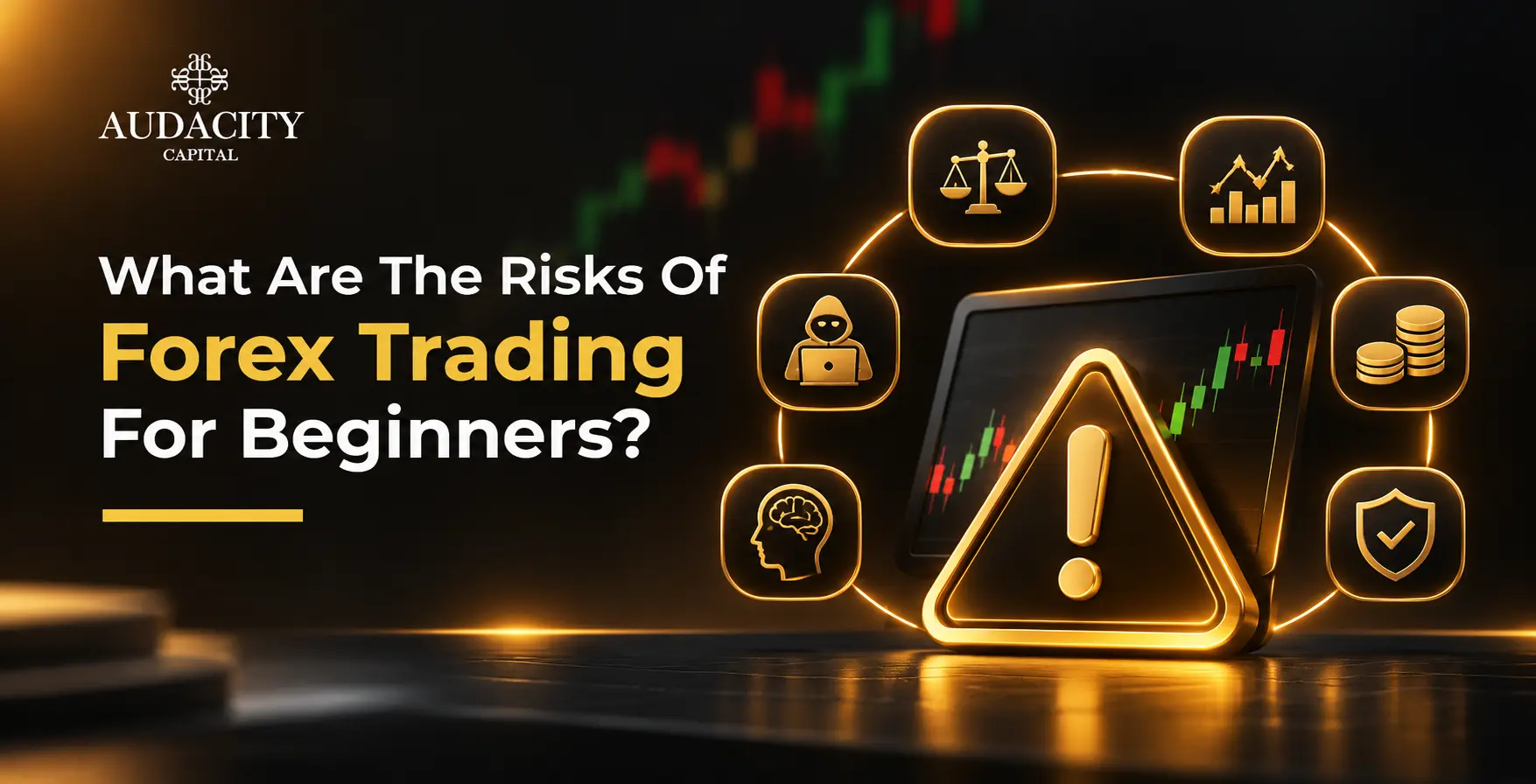
Beginners don’t need a complicated system to manage risk, and a simple routine does more good.
- Practise on a demo account first, so you learn how orders, spreads and stop-losses work before real money is involved.
- Follow a small number of currency pairs, which helps you learn how they normally move.
- Learn how leverage and margin affect your account before you open a leveraged position.
- Set your maximum loss before every trade, and choose the position size from that limit.
- Check the broker before you deposit, including its regulatory status, fees, withdrawal rules and risk disclosures. The CFTC advises researching an OTC forex dealer and checking its registration and disciplinary history before making an initial deposit.
- Record every trade, so repeated mistakes show up.
You can’t avoid every losing trade, so the goal is to make sure a normal loss never turns into a serious financial problem.
Conclusion
So, what are the risks of forex trading, and what can you do about them?
Simply learn where the risks come from: is it leverage, position size, market moves or your broker. Once you know that, keep each loss within an amount the account can handle. Remember losses are part of trading, and no plan removes them.
Frequently Asked Questions
Forex trading is so risky simply because currency prices move within minutes and sometimes seconds. Plus, leverage magnifies the effect of every move and therefore even a small change can turn into a large loss.
Forex traders who manage risk better usually start before the trade opens. They know how much they can lose, their position size, and where to place a stop-loss- basically, a trading plan.
The 10 forex trading risks that every beginner should be familiar of includes:
- Excessive leverage
- Fast price movements
- High spreads
- Slippage
- Poor execution
- Broker failure
- Low liquidity
- Interest-rate changes
- Emotional trading
- Forex scams
These risks feed each other.
When less money is exposed to the market, forex risk drops. Factors like controlled leverage, smaller positions and clear loss limit, they all soften the damage from an unexpected move. The change from sudden swings also cuts down the chance of sudden swings via calmer market conditions.
Yes, you can lose more in some arrangements. Since with leverage you control a position larger than your deposit, your losses can generally go beyond the initial amount, depending on the broker, the product, and the protection in your country.
From the beginner's lens, excessive leverage is the biggest risk in forex trading. Leverage, when it's excessive, lets a normal market move produce a large loss. Plus, the same problem worsens with poor position sizing.
Beginners can indulge in forex trading, but it isn’t completely risk-free or safe for beginners. As a beginner, you can avoid many mistakes simply by learning how currency pairs, leverage, margin and orders work, then practising on a demo account and starting with small exposure.

क्या आप क्रिप्टो पर अनुशासित जोखिम लागू करने के लिए तैयार हैं? Audacity Capital के नए क्रिप्टो उपकरणों का पता लगाएं और अपनी ट्रेडिंग रणनीति लाएं।
और जानेंन्यूज़लेटर
हमारे न्यूज़लेटर से जुड़ें।
हमारे सामाजिक समुदाय में शामिल हों

आज ही अपनी यात्रा शुरू करें हमारे नि:शुल्क परीक्षण के साथ
प्रमाणपत्रों के माध्यम से अपने कौशल और उपलब्धियों को गर्व से प्रदर्शित करें और संभावित निवेशकों और साथियों से अपनी कड़ी मेहनत और समर्पण के लिए पहचान प्राप्त करें।
नि:शुल्क परीक्षणसंबंधित लेख
Risk Management in Trading: Strategies, Rules and Examples
Learn key trading risk management strategies, including stop-losses, position sizing, leverage control, and drawdown limits.

How to Trade During a Recession: Strategies and Tips for Traders.
Funded Forex Trader : how to Trade During a Recession. Start trading with a funded account now!

Struggling To Face Losses In Forex Trading? Here’s How To Bounce Back
Learn how to recover from losses in forex trading with proven strategies, mindset tips, and a step-by-step plan to rebuild confidence and trade consistently.
Stop Loss Orders To Reduce Risk
Earn more profit by using stop loss orders techniques to reduce risk in forex trading. One of the best strategy to keep more profit.