



14 Best Forex Brokers With Lowest Spreads in 2026 — Real Data, Honest Comparison



Best Forex Brokers With Lowest Spreads: Quick AnswerThe forex brokers with the lowest spreads can vary depending on account type, currency pair, trading session and commission structure. Brokers commonly associated with low-spread trading include Fusion Markets, Pepperstone, IC Markets, XTB, AvaTrade, eToro, Saxo Bank and FXTM, although the lowest total trading cost depends on the specific account and trading volume. When comparing low-spread forex brokers, look at average spreads, commissions, total cost per lot, execution quality, regulation, trading platforms and the currency pairs you trade rather than relying on a broker's advertised minimum spread. |
|---|
Spread is the most common trading cost in forex — and also the most commonly misrepresented.
Brokers advertise "0.0 pip spreads" while burying a $7-per-lot commission in a footnote. Others quote minimum spreads that only appear during peak London session hours and widen significantly during off-peak periods. Marketing spreads and real-world spreads are not the same number.
This guide cuts through that. We compare the best forex brokers with the lowest spreads in 2026 using real EUR/USD data — not demo accounts, not minimum quotes, but verified average spreads during live market conditions — with the all-in cost (spread + commission combined) calculated per standard lot so you can compare apples to apples.
How We Compare Forex Brokers With the Lowest Spreads
We compare low-spread forex brokers using more than their advertised minimum spread. Spreads can change depending on the currency pair, trading session, market volatility, account type and liquidity conditions.
For this comparison, we consider the average EUR/USD spread, commission, estimated round-trip trading cost, account type, execution conditions, platform availability and regulatory information where available.
A broker advertising a 0.0-pip minimum spread is not automatically cheaper than a broker offering a 0.3-pip spread with no commission. For this reason, we compare the total trading cost, rather than ranking brokers based only on their lowest advertised spread.
Data note: Spread and commission figures can change over time. Traders should verify current pricing directly with each broker before opening an account.
Understanding Spreads Before You Compare
What Is a Forex Spread?
The spread is the difference between the bid (sell) price and the ask (buy) price of a currency pair. If EUR/USD has a bid of 1.08500 and an ask of 1.08501, the spread is 0.1 pip (0.00001). You pay this cost every time you open a trade.
Read more about our recent guide about what are spreads in trading
Why the Advertised Spread Is Rarely the Whole Story
Spreads are the single largest cost most traders pay — and the difference between a 0.1 pip and 1.0 pip spread on EUR/USD can cost thousands per year. For a trader executing 50 lots per month, a 0.5 pip improvement in spread saves $250 monthly — $3,000 annually.
But the advertised spread is almost never the number you'll pay consistently. Most broker marketing focuses on the minimum quoted spread — often the 0.0 pip figure on raw accounts that appears during peak liquidity hours. In practice, average EUR/USD spreads across all trading hours (including off-peak) are typically 0.12–0.18 pips even on the tightest accounts.
Spread vs Commission — The Two Pricing Models
Model | How It Works | Best For |
|---|---|---|
Standard / Spread-only | No commission. Wider spread (typically 0.6–1.5 pips). Broker earns through the markup. | Beginners, low-volume traders |
Raw / ECN / Commission-based | Tight raw spread (0.0–0.3 pips). Fixed commission per lot ($3–$7 round-trip). | Active traders, scalpers, high volume |
Always compare on an all-in basis — raw spread × $10 per pip + round-trip commission — rather than quoted spread alone, because a 0.0 pip spread with a $7 commission costs the same as a 0.7 pip spread-only account.
Lowest Spread vs Lowest Trading Cost
A forex broker with the lowest spread does not necessarily have the lowest overall trading cost. A broker may advertise a 0.0-pip spread but charge a commission on every lot traded.
For example, a 0.0-pip spread with a $7 round-trip commission can be more expensive than a 0.5-pip spread with no commission, depending on the account and trade size.
To compare brokers more accurately, calculate the estimated round-trip cost:
Total trading cost = spread cost + commission
For a standard EUR/USD lot, where one pip is approximately $10, a 0.5-pip spread represents approximately $5 in spread cost before commission.
The exact cost can vary depending on the currency pair, account type, position size and current pricing.
What Does "Zero Spread" Actually Mean?
A zero-spread account means the difference between the bid and ask price is set to zero for major pairs. However, this doesn't mean zero-cost trading. Because the broker isn't making money on the spread, they charge a fixed commission per trade instead — usually $6–$7 per standard lot round-trip. The pricing structure moves the cost from a variable (the spread) into a predictable, transparent fee.
Quick Comparison — Best Forex Brokers With Lowest Spreads 2026
Broker | Account | EUR/USD spread | Commission RT | Approx. all-in cost / lot | Platforms | Suitable for |
|---|---|---|---|---|---|---|
Fusion Markets | Zero/RAW | 0.09 pips | $4.50 | ~$5.40 | MT4, MT5, cTrader | Low-cost active trading |
Pepperstone | Razor | 0.10 pips | $7.00 | ~$8.00 | MT4, MT5, cTrader, TradingView | Active traders |
IC Markets | Raw | 0.10 pips | $6.00–$7.00 | ~$7.00–$8.00 | MT4, MT5, cTrader | Algo/high-volume trading |
XTB | Pro | ~0.90 pips | Commission applies | Varies | xStation | Active traders |
AvaTrade | Standard | ~0.80 pips | $0 | ~$8.00 | MT4, MT5, AvaTrade platforms | Simple spread pricing |
eToro | Standard | ~1.00 pip | $0 | ~$10.00 | eToro platform | Beginners/copy trading |
Saxo | Classic | ~1.10 pips | $0 | ~$11.00 | SaxoTraderGO, SaxoTraderPRO | Professional/wider market access |
FXTM | Advantage | ~0.10 pips | Variable | Varies | MT4, MT5 | Precision/active traders |
FP Markets | Raw | ~0.10 pips | $6.00 | ~$7.00 | MT4, MT5, cTrader, TradingView | Raw-spread traders |
Tickmill | Raw | ~0.10 pips | $6.00 | ~$7.00 | MT4, MT5, TradingView | Active traders |
CMC Markets | FX Active | ~0.65 pips avg. | $5.00 | ~$11.50 | Next Generation, MT4, MT5 | Active traders |
IG | Standard/DMA | ~1.13 pips | Varies by account | Varies | IG, MT4 | Broad market access |
Interactive Brokers | Forex | ~0.626 all-in | Volume-based | ~0.626 pips | TWS, IBKR platforms | High-volume/professional |
Capital.com | Standard | ~0.70 pips | $0 | ~$7.00 | Capital.com, MT4, TradingView | Commission-free trading |
How to Read “All-In Cost Per Lot”
All-in cost per lot is the total round-trip cost of opening and closing one standard lot (100,000 units) of EUR/USD, including both the spread and any applicable commission.
Spread cost = Average spread (pips) × $10
All-in cost = Spread cost + Round-trip commission
When comparing brokers or trading accounts, look at the total all-in cost rather than the quoted spread alone, since a tighter spread can still result in a higher overall trading cost if commissions are higher.
The 14 Best Forex Brokers With Lowest Spreads in 2026
1. Fusion Markets — Best Overall Low Spread Broker
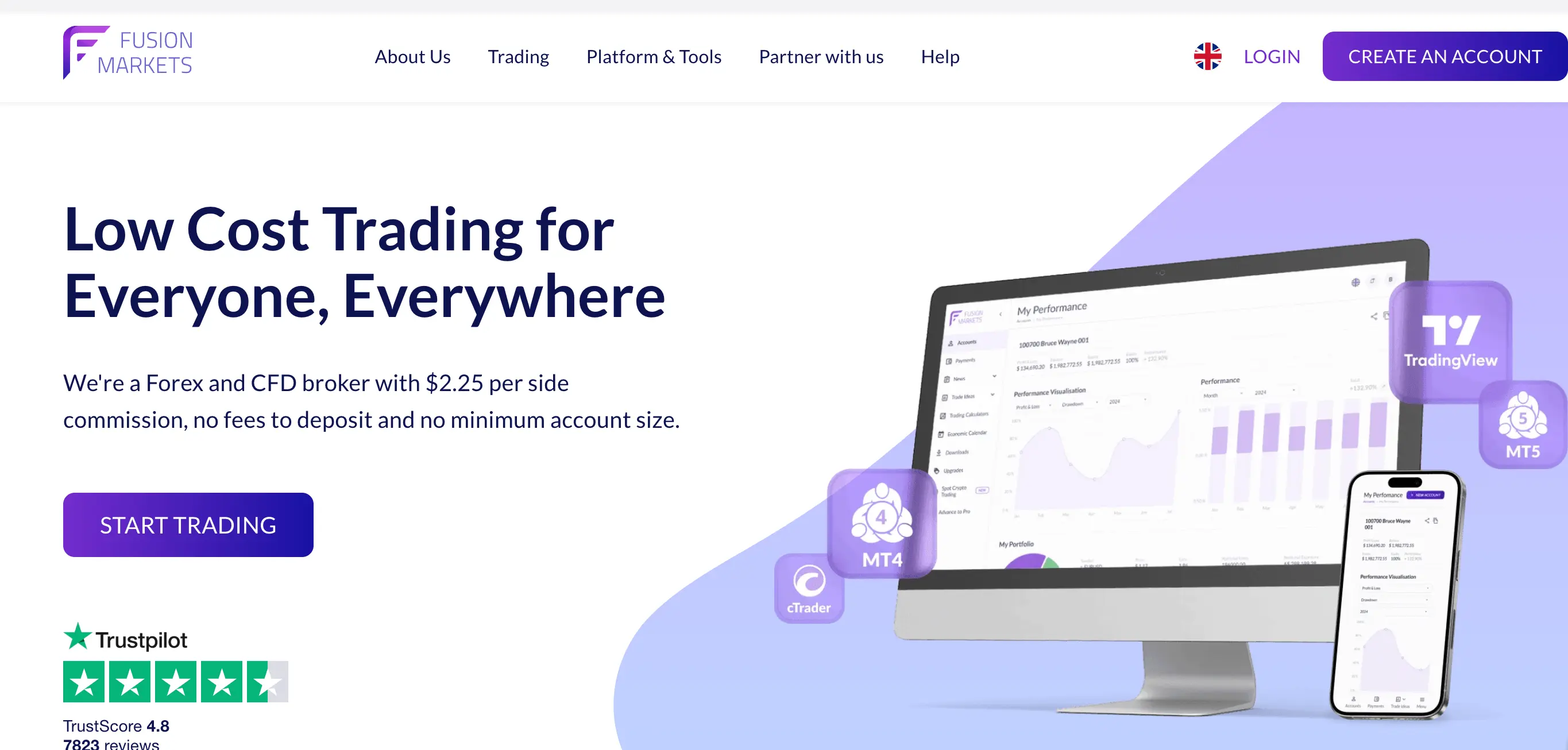
EUR/USD Average Spread: 0.09 pips (RAW account) Commission: $2.25 per side ($4.50 round-trip) All-In Cost: ~$5.40 per standard lot Platforms: MT4, MT5, cTrader Regulation: ASIC (Australia), VFSC (Vanuatu)
Fusion Markets offers the lowest commission rate of any forex broker tested in 2026 at $2.25 per side — 53% lower than the industry average. Combined with an average EUR/USD spread of 0.09 pips on their RAW account, the all-in cost per lot is consistently among the most competitive in the market.
Fusion Markets operates on an ECN model — no dealing desk intervention, tight raw spreads sourced directly from institutional liquidity providers. Execution speed averaged 79 milliseconds in testing, compared to an industry average of 129.7ms — making it well-suited to scalpers and active traders where execution latency directly affects profitability.
Account Types:
Account | EUR/USD Spread | Commission | Best For |
|---|---|---|---|
Classic | ~0.91 pips avg | None | Beginners, low frequency |
RAW | ~0.09 pips avg | $4.50 round-trip | Active traders, scalpers |
Pros:
- Lowest all-in cost per lot of any broker in this comparison
- Fast execution (79ms average)
- No minimum deposit
- MT4, MT5, and cTrader supported
Cons:
- Regulatory footprint is narrower than brokers like Pepperstone — ASIC is tier-1, but the firm's offshore entity may have reduced investor protections depending on client jurisdiction
- Fewer advanced research and educational tools than larger brokers
- Limited product range beyond forex and CFDs
Best for: Scalpers, active day traders, and algorithmic traders who prioritise the lowest possible per-trade cost and fast execution.
2. Pepperstone (Razor Account) — Best Regulation + Tight Spread
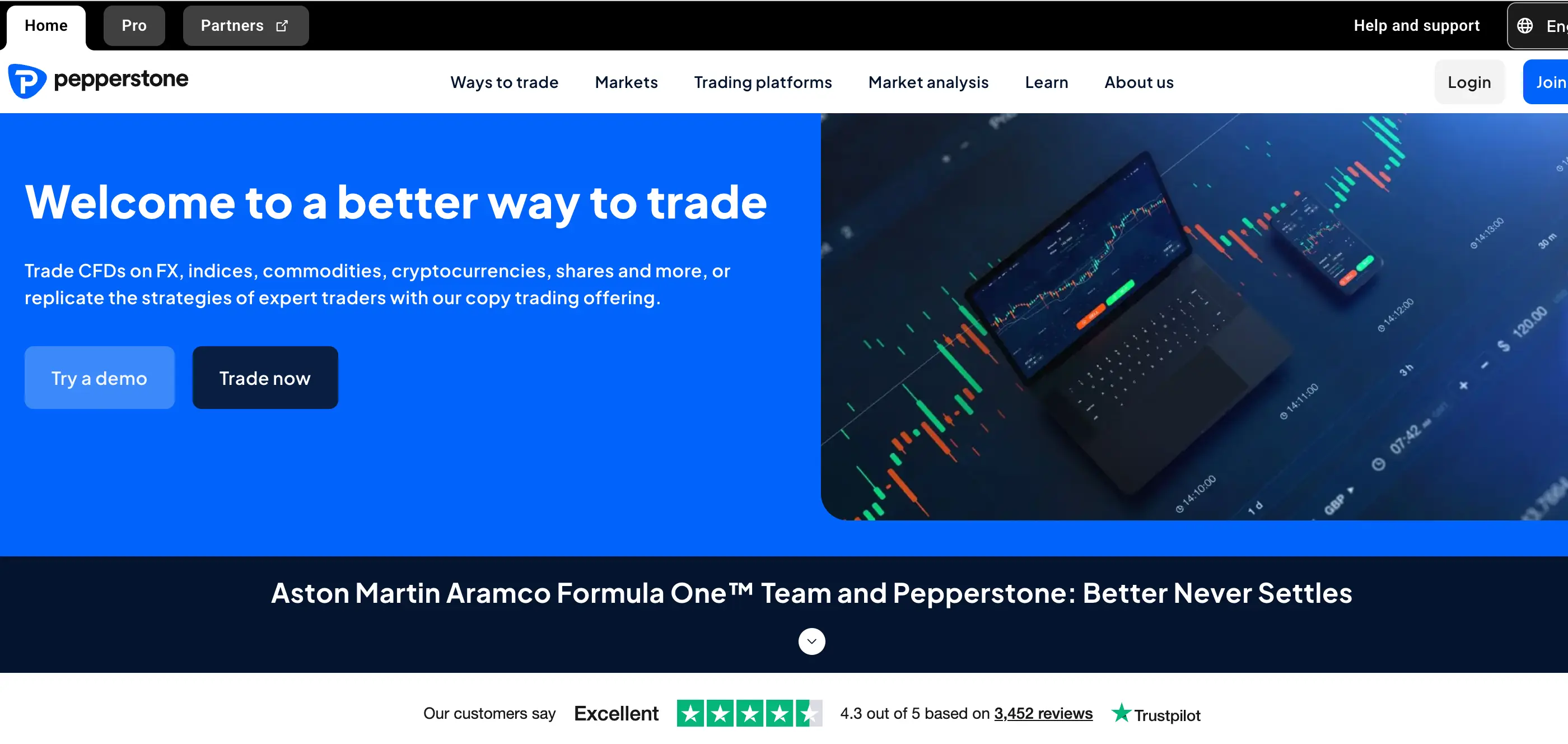
EUR/USD Average Spread: 0.10–0.18 pips (Razor account) Commission: $3.50 per side ($7.00 round-trip) All-In Cost: ~$7.80–$8.80 per standard lot Platforms: MT4, MT5, cTrader, TradingView, proprietary platform Regulation: FCA, ASIC, CySEC, DFSA, SCB, CMA
Pepperstone holds regulatory licences from the FCA, ASIC, CySEC, DFSA, SCB, and CMA — the widest regulatory footprint of any broker in the tight-spread tier. UK clients benefit from FSCS protection up to £85,000.
During testing, Pepperstone provided 0.0 pip spreads on major currency pairs 100% of the time outside the rollover period — delivering on their advertised spreads, which is excellent and uncommon among competitors who advertise 0.0 pips but rarely deliver them consistently.
Pepperstone's Razor account is available across all four major platforms simultaneously — MT4, MT5, cTrader, and TradingView — giving traders more flexibility in platform choice than most raw-spread alternatives.
Account Types:
Account | EUR/USD Spread | Commission | Best For |
|---|---|---|---|
Standard | ~0.6–1.1 pips avg | None | Beginners, low frequency |
Razor | 0.0–0.18 pips avg | $7.00 round-trip | Active traders, all strategies |
Pros:
- Most comprehensively regulated raw-spread broker available to retail traders globally
- 0.0 pip spreads consistently delivered during peak hours
- Widest platform selection of any broker on this list (MT4, MT5, cTrader, TradingView)
- Strong customer support and research tools
Cons:
- All-in cost ($7.80–$8.80) is higher than Fusion Markets
- Not available in all jurisdictions
Best for: Experienced traders who want institutional-grade execution quality with maximum regulatory protection, across any platform they choose.
3. IC Markets — Best for MetaTrader Volume Traders
EUR/USD Average Spread: 0.02 pips (cTrader Raw account) Commission: $6.00 round-trip (cTrader) / $7.00 (MetaTrader Raw) All-In Cost: ~$6.20 per standard lot (cTrader) Platforms: MT4, MT5, cTrader Regulation: ASIC, CySEC, FSA (Seychelles)
IC Markets is one of the largest MetaTrader brokers in the world by trading volume. Average EUR/USD spreads of just 0.02 pips on the cTrader account produce an all-in cost of 0.62 pips after factoring in the $3 per side commission — one of the tightest effective costs in the industry.
IC Markets provides spread discounts to traders completing more than 100 standard lots per month, and offers free VPS hosting for traders meeting a 15 standard lot monthly threshold — particularly valuable for traders running automated strategies around the clock.
Account Types:
Account | EUR/USD Spread | Commission | Platform |
|---|---|---|---|
Standard | ~0.8–1.0 pips | None | MT4/MT5 |
Raw Spread (MT) | ~0.02 pips | $7.00 RT | MT4/MT5 |
Raw Spread (cTrader) | ~0.02 pips | $6.00 RT | cTrader |
Pros:
- Industry-leading EUR/USD spreads of 0.02 pips average
- Volume discounts and free VPS for active traders
- Strong MetaTrader infrastructure and reliability
- ASIC regulated
Cons:
- MetaTrader Raw account commission ($7 round-trip) is marginally higher than cTrader
- Customer support response times vary
Best for: High-volume MetaTrader traders and algorithmic traders who want institutional-level spreads with strong platform infrastructure.
4. FP Markets — Raw Pricing With Competitive Commission
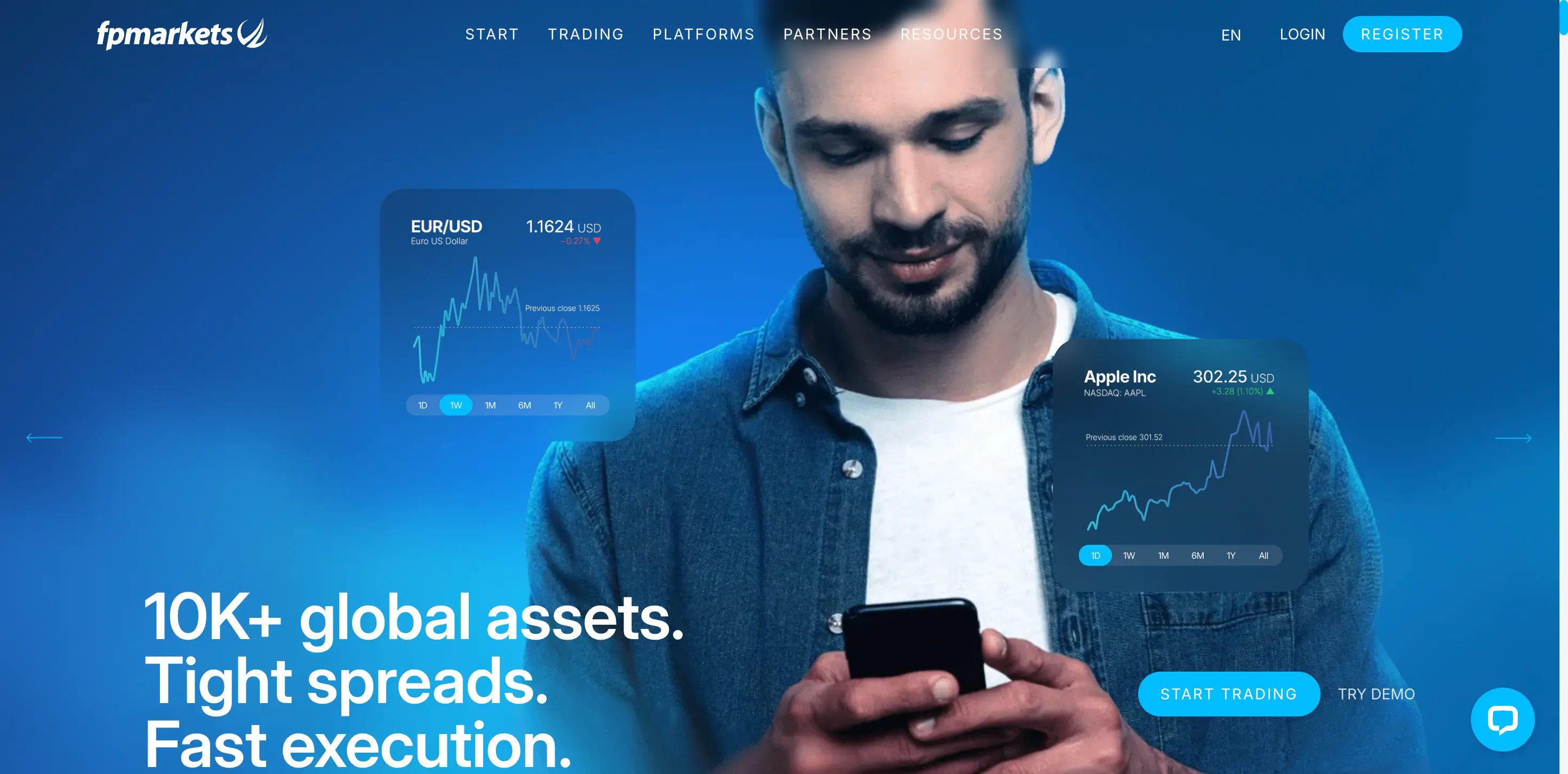
EUR/USD Average Spread: From 0.0 pips Commission: $3 per side ($6 round-trip) All-In Cost: Depends on the actual spread Platforms: MT4, MT5, cTrader, TradingView Regulation: ASIC and other regional regulators
FP Markets' Raw account currently offers spreads from 0.0 pips with a $3-per-side commission on USD-denominated forex accounts. That equals $6 round trip per standard lot.
The broker also offers Standard accounts where commission is built into the spread. Its Raw account is available across MT4, MT5 and cTrader, with TradingView also supported on the Raw account.
Account Types:
Account | EUR/USD Spread | Commission | Suitable For |
|---|---|---|---|
Standard | From 1.0 pips | None | Casual traders |
Raw | From 0.0 pips | $6 round-trip | Active traders, scalpers |
Pros:
- Raw spreads from 0.0 pips
- $3-per-side USD commission
- MT4, MT5, cTrader and TradingView
- Raw pricing sourced from liquidity providers
- EAs supported
Cons:
- Actual spread varies by market conditions
- Commission depends on account currency
- Conditions vary by jurisdiction
Best for: Active traders and scalpers who prefer raw spreads with a transparent commission structure.
5. Tickmill — Low-Commission Raw Account

EUR/USD Typical Spread: 0.1 pips Commission: $3 per side ($6 round-trip) All-In Cost: approximately 0.7 pips when the spread is 0.1 pips Platforms: MT4, MT5 Regulation: CySEC, FCA and other regional regulators
Tickmill's current EUR/USD instrument information lists a 0.0-pip minimum spread and 0.1-pip typical spread. Its Raw account charges $3 per lot per side, or $6 round trip.
Tickmill describes the Raw account as being designed for experienced traders who want tight spreads and competitive commissions.
Account Types:
Account | EUR/USD Spread | Commission | Suitable For |
|---|---|---|---|
Classic | From 1.6 pips | None | Beginners |
Raw | 0.1 pips typical | $6 round-trip | Experienced traders |
Pros:
- 0.1-pip typical EUR/USD spread
- $3-per-side Raw commission
- Raw spreads from 0.0 pips
- MT4 and MT5
- Multiple regulatory entities
Cons:
- Typical spread is not a guaranteed spread
- Spreads can widen during market volatility
- Raw account is more suitable for experienced traders
Best for: Experienced active traders and scalpers looking for a low-commission raw-spread account.
6. CMC Markets — FX Active Pricing
EUR/USD Minimum Spread: 0.0 pips Commission: $2.50 per side ($5 round-trip) All-In Cost: Depends on the actual spread Platforms: Next Generation, MT4 and MT5 Regulation: Multiple regional regulators
CMC Markets' FX Active account offers spreads from 0.0 pips on six major currency pairs, including EUR/USD, with a commission of $2.50 per $100,000 traded per transaction, or $5 to open and close a standard-lot position.
CMC notes that the 0.0-pip figure is a minimum spread, not an average spread. Actual spreads can widen according to market conditions and trading hours.
Account Types:
Account | EUR/USD Spread | Commission | Suitable For |
|---|---|---|---|
Standard CFD | Variable | Included in spread | General traders |
FX Active | From 0.0 pips | $5 round-trip | Active traders |
Pros:
- FX Active spreads from 0.0 pips
- $2.50-per-side commission
- MT4 and MT5 support
- Next Generation platform
- Six major pairs included in FX Active
Cons:
- 0.0 pips is a minimum, not an average
- Actual spread varies by market conditions
- FX Active availability can depend on jurisdiction
Best for: Active traders who want commission-based pricing and access to very tight spreads on major currency pairs.
7. Capital.com — Commission-Free Forex Pricing
EUR/USD Spread: Variable Commission: $0 on forex positions All-In Cost: Spread-dependent Platforms: Capital.com, TradingView and MT4 where available Regulation: Multiple regional regulators
Capital.com uses a spread-based pricing model for forex and states that it does not charge a separate trading commission on positions. Its spreads are dynamic and change according to market conditions.
For EUR/USD and other liquid forex pairs, Capital.com says spreads are generally lower than for less-liquid markets. Traders can see the applicable spread on the deal ticket before opening a position.
Account Types:
Pricing Model | EUR/USD Spread | Commission | Suitable For |
|---|---|---|---|
Standard | Variable | None | Traders who prefer spread-only pricing |
Pros:
- No separate forex trading commission
- Dynamic pricing shown before trade execution
- Competitive pricing on liquid currency pairs
- Simple spread-based structure
Cons:
- Spread varies with market conditions
- Overnight funding can apply
- Actual spread should be checked before trading
Best for: Traders who prefer a straightforward spread-based pricing model without a separate forex commission.
8. AvaTrade — Best for Fixed Spreads
EUR/USD Average Spread: 0.9 pips (fixed) Commission: None All-In Cost: ~$9.00 per standard lot (consistent) Platforms: MT4, MT5, AvaTradeGO (proprietary), WebTrader Regulation: Central Bank of Ireland, ASIC, FSA (Japan), FSCA, ADGM
AvaTrade is one of the few major brokers still offering genuinely fixed spreads — the spread you see is the spread you pay, regardless of market conditions, news events, or session overlap timing. For traders who find variable spreads unpredictable, this consistency has real value.
The fixed EUR/USD spread of 0.9 pips is not the tightest on this list, but it is guaranteed not to widen during volatility. This is particularly relevant during high-impact news events — most variable spread brokers widen to 3–5 pips around NFP or FOMC releases, while AvaTrade maintains its fixed rate.
Pros:
- Fixed spreads — no surprises during high volatility
- No commission — simple cost structure
- Minimum deposit of $100 — accessible entry point
- Broad selection of currency pairs
- Strong regulation across multiple jurisdictions
Cons:
- 0.9 pip fixed spread is higher than the raw spread alternatives above
- High inactivity fees (above industry average)
- Fixed spreads mean you cannot benefit from tighter spreads during liquid sessions
Best for: Traders who value cost predictability over cost minimisation — particularly those who trade news events or during volatile sessions where variable spreads can widen dramatically.
9. XTB — Best for Active Traders With No Commission
EUR/USD Average Spread: 0.1 pips (Pro account) Commission: None (spread-only model) All-In Cost: ~$1.00 per standard lot Platforms: xStation 5 (proprietary), MT4 Regulation: FCA, CySEC, KNF (Poland)
XTB offers one of the most competitive commission-free spread models available. The Pro account delivers EUR/USD spreads from 0.1 pips with no commission — making the all-in cost per lot among the lowest of any spread-only account in the market for traders who prefer the simplicity of commission-free pricing.
Beyond spreads, XTB supports 48+ currency pairs alongside stock CFDs, commodities, indices, ETF CFDs, and cryptocurrencies. The xStation 5 platform is proprietary and well-regarded for its charting tools and built-in market analysis.
Account Types:
Account | EUR/USD Spread | Commission | Best For |
|---|---|---|---|
Standard | ~0.9 pips | None | Beginners |
Pro | ~0.1 pips | None | Active traders |
Pros:
- No commission on the Pro account — lowest all-in cost for spread-only
- Micro-lot trading available
- Strong educational resources (XTB courses for beginners and experienced)
- Fast deposit and withdrawals
Cons:
- Inactivity fee applies after 12 months without trading
- xStation is proprietary — traders who prefer MT4 have limited options on the tighter account
Best for: Active traders who want tight spreads without the complexity of commission calculation. XTB's Pro account delivers near-raw spreads without per-lot fees.
10. Saxo Bank — Best for Professional Traders and Wide Market Access
EUR/USD Spread: From approximately 1.0 pip on Classic pricing*
Commission: Included in applicable FX pricing
All-In Cost: Varies by account tier and jurisdiction
Platforms: SaxoTraderGO, SaxoTraderPRO
Regulation: Multiple regulated entities
Saxo pricing varies by jurisdiction, account tier and trading activity. Published minimum spreads should not be treated as average spreads.
Saxo Bank has over 30 years of experience since its founding in 1992 and provides access to a broad range of global markets through its trading platforms. Its product portfolio includes forex, stocks, bonds, ETFs, commodities, futures and other instruments under one platform.
Saxo's pricing varies by account tier, jurisdiction and trading activity. Higher-tier clients may qualify for lower pricing, making the broker potentially more competitive for active and higher-volume traders than for clients on standard pricing.
Account Tiers:
Tier | Minimum Deposit | EUR/USD Spread | Commission |
|---|---|---|---|
Classic | $2,000 | 0.4 pips | Yes (per trade) |
Platinum | $200,000 | Tighter | Lower |
VIP | $1,000,000 | Tightest | Lowest |
Pros:
- Exceptional research quality — one of the best in the industry
- Broad product portfolio: forex, stocks, options, bonds, futures, ETFs
- Well-designed professional trading platforms
- Regulated by FSA (Denmark), FCA, and other tier-1 regulators
Cons:
- $2,000 minimum deposit is high relative to most competitors
- Futures, options, and bond fees are above average
- No 24/7 customer support or live chat option
- Pricing is most competitive only at higher volume/deposit tiers
Best for: Professional and high-net-worth traders who want access to a wide range of markets beyond forex on a single platform, and who trade sufficient volume to access competitive pricing tiers.
Other Low-Spread Forex Brokers to Consider
11. eToro — Best for Beginners and Copy Trading

EUR/USD Average Spread: ~1.0 pip Commission: None All-In Cost: ~$10.00 per standard lot Platforms: eToro proprietary platform Regulation: FCA, CySEC, ASIC, FinCEN (US)
eToro is the most widely recognised beginner-friendly broker in the world, primarily due to its CopyTrader feature — allowing users to automatically mirror the positions of experienced traders. For new forex traders who want to participate in currency markets while learning from professional strategies, eToro's social trading ecosystem is unmatched.
However, its spreads are the widest on this list. At approximately 1.0 pip on EUR/USD, the all-in cost per lot (~$10) is roughly double that of raw-spread alternatives.
Real Spread Note: eToro markets competitive spreads, but EUR/USD spreads typically average around 1.0 pip depending on market conditions and volatility. These are not raw spreads — they include eToro's markup above the interbank rate.
Account Types: eToro offers a single standard spread-based account with commission-free forex trading. There is no ECN or raw spread option.
Pros:
- Beginner-friendly interface with minimal learning curve
- CopyTrader — copy experienced investors automatically
- Social trading community and performance transparency
- Regulated in multiple major jurisdictions including FCA and ASIC
Cons:
- Spreads are the widest of any broker on this list
- No raw spread or ECN account option
- Not suitable for scalpers or high-frequency traders
- Higher non-trading fees (withdrawal fee, currency conversion)
Best for: Complete beginners who want to learn forex trading while leveraging copy trading — not for traders prioritising execution cost.
12. FXTM — Best for High Leverage and Tight Spread Combination
EUR/USD Average Spread: 0.1 pips (ECN account) Commission: Yes (ECN account, varies by volume) All-In Cost: Varies by account type Platforms: MT4, MT5 Regulation: FCA, CySEC, FSC (Mauritius), FSCA (South Africa)
FXTM (ForexTime) provides fast account setup, tight spreads on major pairs, and a strong selection of educational resources. The ECN accounts offer raw spreads from 0.1 pips with commission-based pricing, while standard accounts provide commission-free trading with wider spreads suitable for beginners.
FXTM supports multiple trading account types — including a dedicated Shares account for stock trading alongside forex — and offers flexible leverage options across jurisdictions, subject to regulatory limits in each region.
Account Types:
Account | EUR/USD Spread | Commission | Best For |
|---|---|---|---|
Micro | 1.5 pips | None | Complete beginners |
Advantage | ~0.0 pips | Per lot | Active traders |
Advantage Plus | ~0.0 pips | None | Intermediate |
Pros:
- Multiple account types for different experience levels
- Strong educational content and webinars
- Fast account setup and responsive customer support
- MT4 and MT5 supported
Cons:
- Withdrawal fees and inactivity fees may apply depending on account type
- Trading costs vary significantly between account types — verify before opening
- CFD fees on non-forex products are above average
Best for: Traders who want flexible account options and a strong educational infrastructure alongside competitive spreads.
13. Interactive Brokers — Low All-In Trading Cost
EUR/USD All-In Cost: Approximately 0.626 pips per standard-lot round turn
Average EUR/USD Spread: Approximately 0.226 pips
Commission: Approximately $4.00 per standard-lot round turn
Platforms: Trader Workstation (TWS), IBKR Desktop, Client Portal, IBKR Mobile, TradingView
Minimum Deposit: $0
Suitable For: High-volume and professional traders
Interactive Brokers (IBKR) stands out for its low effective EUR/USD trading cost and broad access to global markets. Its current pricing combines an average EUR/USD spread of approximately 0.226 pips with a $4.00 commission per standard-lot round turn, resulting in an all-in cost of about 0.626 pips.
The important distinction is that 0.626 pips represents the all-in trading cost, not the quoted spread alone. This makes it unsuitable for direct comparison with brokers advertising only their minimum or average raw spread.
Pros:
- Low all-in EUR/USD trading cost
- $0 minimum deposit
- Wide range of global markets
- Advanced trading and order-management tools
- Multiple desktop, web and mobile platforms
Cons:
- $2 minimum commission per order can be less cost-effective for smaller trades
- Platform ecosystem can be more complex for beginners
- Does not offer MT4 or MT5
Best For: Active and high-volume traders who prioritize low overall trading costs and advanced trading tools.
14. IG — Best for Broad Market Access and Trading Flexibility
EUR/USD All-In Cost: Approximately 0.82 pips on Forex Direct pricing
Average EUR/USD Spread: Approximately 0.91 pips on the standard account
Commission: Varies by account and pricing model
Platforms: IG Trading Platform, MetaTrader 4, L2 Dealer and TradingView
Minimum Deposit: Varies by payment method and jurisdiction
Suitable For: Traders looking for broad market access and multiple trading options
IG offers several forex pricing models, with costs varying according to the account type and jurisdiction. Recent ForexBrokers.com testing recorded an average EUR/USD spread of approximately 0.91 pips on its standard CFD account, while its Forex Direct DMA pricing showed a lower spread with commission applied separately.
For comparison purposes, ForexBrokers.com reports an all-in EUR/USD cost of approximately 0.82 pips for the commission-based Forex Direct pricing model.
IG is therefore better considered as a broad-market broker with competitive forex pricing, rather than a broker that focuses exclusively on the lowest advertised spreads.
Pros:
- Multiple forex pricing options
- Broad range of markets and instruments
- Multiple trading platforms
- Forex Direct DMA available for eligible traders
- Established global broker
Cons:
- Pricing varies by account and jurisdiction
- Standard spreads are not always the lowest available
- Commission-based pricing may be more suitable for active traders
Best For: Traders who want access to forex alongside a broader range of financial markets and trading platforms.
Are There Truly 0 Spread Forex Brokers in 2026?
Yes — but with an important caveat. On major pairs like EUR/USD or USD/JPY, top-tier brokers including Pepperstone, Fusion Markets, and IC Markets can offer 0.0 pip spreads during peak market hours — the London and New York session overlap (approximately 13:00–17:00 GMT). However, zero spread does not mean zero cost. Brokers offering 0.0 pips will almost always charge a commission fee to process the trade.
The practical implications:
- A 0.0 pip spread with a $7 commission costs the same as a 0.7 pip spread-only account
- 0.0 pip spreads are typically available only during peak liquidity hours
- During off-peak hours, low-volatility sessions, or around news events, spreads widen — even on "zero spread" accounts
- For most traders, execution speed is actually more important than advertised spread. A 0.0 pip spread with high latency that slips your order by 2 pips is more expensive than a fast execution at 0.4 pips.
How Spreads Affect Different Trading Styles
Low spreads aren't equally important for every trading style. Their value depends largely on how frequently you trade and your profit targets per position:
Scalping and Day Trading: Every fraction of a pip directly impacts profitability. A scalper trading EUR/USD 100 times per day at 0.1 pips saves $100 per day compared to a 1.0 pip account — $26,000 per year on that volume alone. Fusion Markets, IC Markets, and Pepperstone are the right brokers for this profile.
Swing Trading and Position Trading: For longer-term traders, spreads are less critical. Since positions remain open for days or weeks, swap rates (overnight financing costs) have a greater impact on profit than spread differences. A swing trader may benefit more from AvaTrade's predictable fixed spreads than from chasing the tightest raw spread account.
Beginners: Spread cost matters less than platform usability, educational quality, and the reliability of the broker. eToro and XTB's Standard account are appropriate starting points — the spread premium is worth paying for the learning infrastructure and simplicity.
Key Factors to Evaluate Beyond Spread
1. Execution Speed For most traders, execution speed is actually more important than advertised spread. A broker with 10ms execution at 0.4 pips will produce better real-world results than a broker with 300ms execution at 0.1 pips — because slippage on slow execution routinely exceeds the spread difference. Look for brokers with servers co-located in major data centers (Equinix NY4, LD4, or TY3).
2. Regulation Always verify that a broker is regulated by a tier-1 authority: FCA (UK), ASIC (Australia), CySEC (EU), or MAS (Singapore). These regulators enforce client fund segregation, negative balance protection, and complaint resolution procedures.
3. True All-In Cost Calculate the all-in cost per lot before choosing an account type: (average spread in pips × $10) + round-trip commission = your true cost per standard lot. Compare this number — not the quoted spread.
4. Spread Consistency A spread that averages 0.1 pips during peak hours but widens to 2.0 pips during news events or Asian session lows is not a 0.1 pip spread for your trading. Check how spreads behave across different sessions and market conditions for your specific trading hours.
5. Platform Compatibility The tightest spread is useless if it is only available on a platform you cannot or will not use. Confirm the low-spread account type is available on your preferred platform (MT4, MT5, cTrader, or TradingView) before opening an account.
Common Mistakes When Choosing a Low Spread Broker
- Choosing based on minimum spread alone — minimum quotes appear only during peak hours. Compare average spreads across a full trading day.
- Ignoring commission costs — a "0.0 pip" account with a $7 commission is not cheaper than a "0.7 pip" account with no commission. Calculate all-in cost.
- Overlooking execution quality — slippage on a slow broker can easily exceed the spread you saved by choosing them.
- Ignoring regulation — an unregulated broker offering 0.0 pips offers you no protection if it fails to pay out.
- Not matching broker type to trading style — scalpers need raw spread ECN accounts. Swing traders may prefer fixed spreads. Beginners need platform quality more than tight spreads.
Which Broker Has the Lowest Spread? — Quick Decision Guide
- Lowest all-in cost overall → Fusion Markets (RAW account)
- Tightest spreads with best regulation → Pepperstone (Razor account)
- Best for MetaTrader high volume → IC Markets (cTrader Raw)
- Best commission-free tight spread → XTB (Pro account)
- Best fixed spreads → AvaTrade
- Best for beginners and copy trading → eToro
- Best for professionals and wide market access → Saxo Bank
- Best for flexible leverage + education → FXTM
Ready to Trade With Funded Capital?
Finding a low-spread broker is only one part of becoming a successful trader. If you're ready to trade with firm capital instead of your own funds, explore Audacity Capital's Funded Trader Program or choose Instant Funding if you want to start trading without completing a traditional evaluation. Eligible traders can scale their funded account up to $2 million while keeping up to 90% of the profits.
Turn Your Knowledge Into Opportunity
Practice your trading skills in our Free Monthly Trading Competition, where top traders can earn a Free Funded Account.
Related Articles
Sources & Methodology
Broker pricing can change frequently and may vary by account type, jurisdiction, currency pair and market conditions. The figures presented in this guide are intended for comparison and educational purposes.
We compare EUR/USD because it is one of the most actively traded currency pairs. Where available, we consider average spreads, account-specific pricing, commissions and estimated round-trip cost per standard lot.
Always verify current pricing, commissions, account availability and regulatory information directly with the broker before opening an account.
Frequently Asked Questions
The lowest consistently available EUR/USD spreads in 2026 come from raw ECN accounts at Pepperstone (Razor), Fusion Markets (RAW), and IC Markets (Raw cTrader) — all offering minimum spreads of 0.0 pips during peak liquidity hours, with average spreads of 0.09–0.18 pips across full trading sessions.
No. Zero-spread accounts charge a commission per lot instead. A zero-spread forex broker makes money through a fixed commission rather than through a spread markup — the total cost is similar to a spread-only account, just structured differently.
Fusion Markets is the best option for scalpers in 2026, offering the lowest commission ($4.50 round-trip) combined with an average EUR/USD spread of 0.09 pips and 79ms execution speed.
Spread competitiveness and regulatory safety are separate qualities. Pepperstone delivers both — tight raw spreads with FCA, ASIC, and four additional regulatory licences. Always verify a broker's regulatory status independently before depositing funds.
Although some brokers may advertise zero spreads, the information they provide can prove misleading to traders who only choose to focus on the lowest spread of that day. There are instances where this spread will be high most of the time.
The best thing you can do is to focus on the average spreads.
The term ‘spread’ refers to the difference between selling and buying points. In this case, two factors determine the spread – interbank spread and trading broker markup.
Interbank spread deals with currency pairs; the latter is the margin added by brokers.
Less than for scalping. For swing traders holding positions for days or weeks, overnight swap rates have a greater financial impact than spread differences. A swing trader should prioritise overnight financing costs, platform stability, and drawdown tools over raw spread tightness.
No, most zero spread accounts charge commissions instead of spreads.
The industry average EUR/USD spread across all retail brokers in 2026 is approximately 0.88 pips — equivalent to $8.80 per standard lot round-trip. Any broker below this benchmark is below-average cost.
Major pairs like EUR/USD and USD/JPY usually have the lowest spreads.
Yes, lower spreads reduce trading costs, especially for scalpers and day traders.
Yes, but beginners should understand commission structures before choosing such accounts.
It depends on your trading style. Scalpers prefer low spreads, while long-term traders may prefer no commissions.

Ready to apply disciplined risk to crypto? Explore Audacity Capital's new crypto instruments and bring your trading strategy.
Learn MoreNewsletter
Join our newsletter to stay up to date on features and releases.
Join Our Social & Community

Start Your Journey Today With Our Free Trial
Proudly showcase your skills and accomplishments through certificates and get recognition for your hard work and dedication from potential investors and peers.
Free TrialRelated Articles

Introducing Your All-new Trading Dashboard: Smarter, Faster And More Powerful!
Introducing the all-new Audacity Capital trading dashboard - a game changer for FX traders. Explore its smarter features today!


Audacity Capital Wins Excellence In Professional Trading And Excellence In Trading Innovation Awards For The International Investor Magazine’s 2020 Awards
Audacity Capital Wins Excellence in Professional Trading and Excellence in Trading Innovation Awards for The International Investor Magazine’s 2020 Awards. Start trading with a funded account now!

Top 10 Bad Mistakes To Avoid When You Start Trading
Avoid costly trading errors. Learn the top 10 mistakes beginners make when starting to trade and how to avoid them with practical tips.

Criteria for Choosing the Best Prop Trading Firm
Learn the key criteria for choosing the best prop trading firm, including drawdown rules, profit split, pricing, and payouts. Compare firms with a data-driven approach.