


Revenge trading
Six trades were taken without a meaningful pause.

Asim started with a patient and controlled approach, but six consecutive Gold losses on May 18 led to increased risk, impulsive decisions and a daily drawdown breach. The key lesson is that stopping after repeated losses and protecting capital is more important than trying to recover losses immediately.

Trader | Asim Majid |
Account Size | $60,000 |
Market | Gold, XAU/USD |
Early Trades | 2 wins |
Profit Before May 18 | +$1,277.80 |
May 18 Trades | 6 losses |
Loss for the Day | -$3,071.30 |
Closing Equity | $58,199.90 |
Daily Drawdown Threshold | $58,210.78 |
Breach Margin | Approximately $10.88 |
Primary Mistakes | Revenge trading, increasing size and impulsive execution |
Outcome | Daily drawdown breached |
Asim Majid started patiently, placing only two trades over 11 days. Both used defined Stop Loss and Take Profit levels and produced a combined profit of $1,277.80.
Then, on May 18, everything changed. Six Gold trades were taken in one day, and every one ended in a loss.
Asim’s first Gold trade used a 0.5-lot position with defined risk and closed for a $1,269.50 profit.
Six days later, he recorded another controlled win of $8.30 on GBP/USD. His patient and selective approach appeared to be working.
On May 18, Asim placed six Gold trades and lost every one.
His position size increased from 0.5 to 0.7 lots while he was already losing. He also switched repeatedly between buying and selling, reacting to previous losses instead of following a clear directional plan.
The six trades produced a combined loss of $3,071.30.
His final trade lasted only 76 seconds and was closed manually at a loss. The account’s equity fell below the daily drawdown threshold by approximately $10.88, causing the account to fail.
Asim started patiently with two controlled and profitable trades over 11 days.
On May 18, he continued trading Gold after the first losses.
He increased his position size and repeatedly switched direction while losing.
Six consecutive losses pushed the account below the daily drawdown threshold and caused the account to fail.
““In order to learn how to earn money, you need to learn how to lose money.””
— Karim Yousfi, CEO of Audacity Capital
Six trades were taken without a meaningful pause.
Position size rose while losses accumulated.
Asim repeatedly changed direction without a clear edge.
The final trade remained open for only 76 seconds.
There was no personal loss limit to stop the session early.
After the first two or three losses, Asim should have stopped trading and reviewed the market.
Reducing his position size, taking a cooling-off period and setting a personal loss limit below the official drawdown threshold would have protected the account.
After the first few losses, Asim should have stopped trading, reduced his risk and reviewed the session before taking any more trades.
Asim’s account did not fail because of one bad trade. It failed because six losses were allowed to continue without a pause.
A trading day without brakes can undo weeks of patience in a few hours.
Ask yourself:
If the plan has disappeared, close the platform.
Success Follow-up
Every trading failure can become a valuable learning experience. By understanding what went wrong, improving risk management and staying disciplined after losses, traders can turn setbacks into better decisions and stronger trading habits.

Allen Gold’s account suffered from excessive position sizing early in the trading period, with trades reaching 75 lots and causing significant losses. Although he later reduced his position sizes substantially, the early damage, inconsistent execution and repeated re-entries ultimately contributed to an absolute drawdown breach.
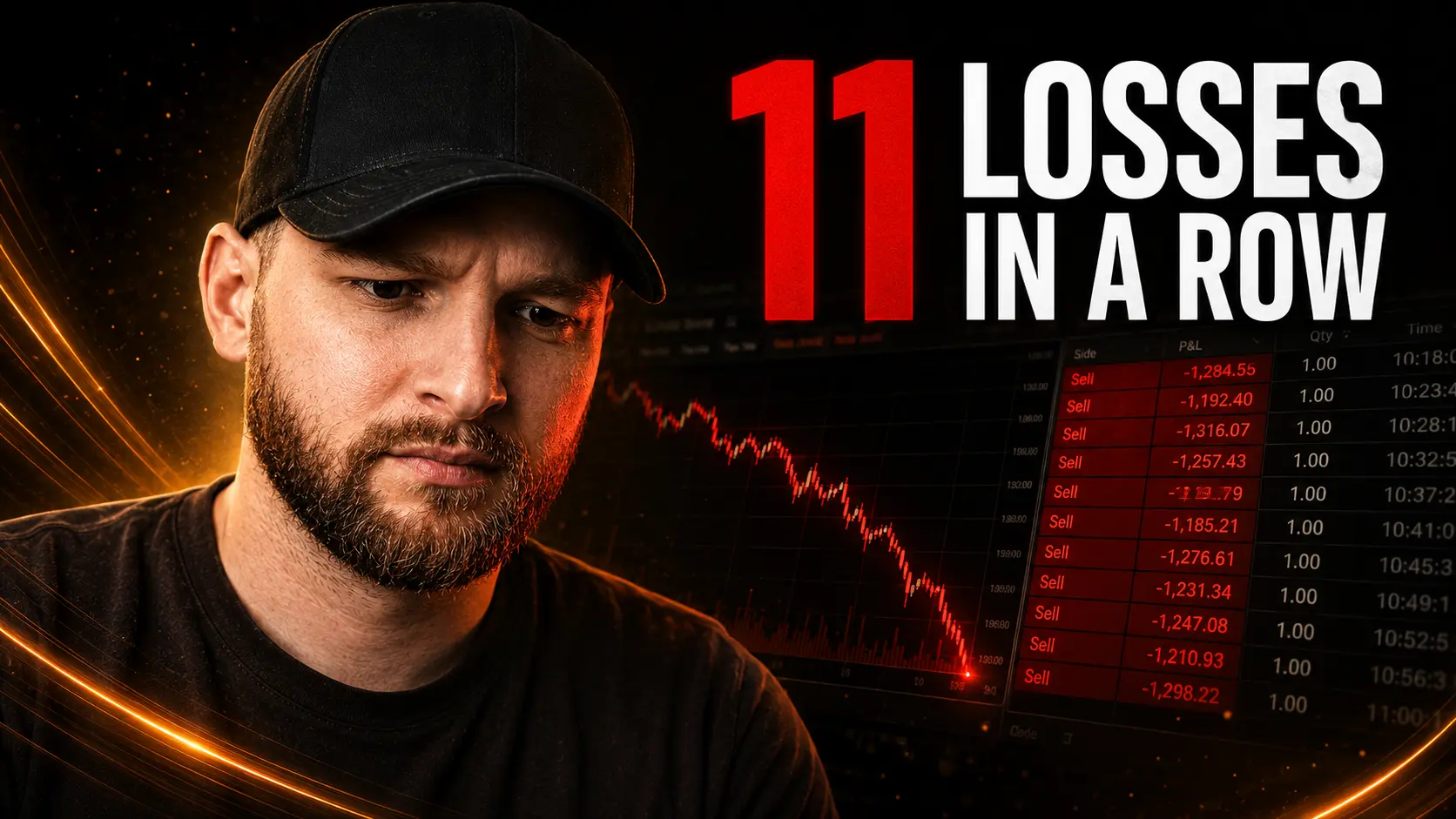
Simone Pastore began with disciplined trading, using sensible position sizes, stop-losses, and take-profits. However, after the first few losses, he repeatedly re-entered losing trades, increased his exposure, and abandoned his risk management plan. An 11-trade losing streak resulted in approximately $23,291 in losses and an 18.60% drawdown, demonstrating how revenge trading and poor discipline can quickly overwhelm a trading account.

Wyeeth Louw built a strong seven-trade winning streak, earning approximately $3,650 across Gold and Bitcoin. However, trading without a stop-loss or exit plan led to two unmanaged Bitcoin trades that lost approximately $9,277, wiping out all previous profits. The story highlights the importance of defining your risk before entering a trade and never relying on hope instead of a disciplined exit strategy.