


Uncontrolled position sizing
Trade volume ranged from 0.01 to 75 lots.

Allen Gold’s account suffered from excessive position sizing early in the trading period, with trades reaching 75 lots and causing significant losses. Although he later reduced his position sizes substantially, the early damage, inconsistent execution and repeated re-entries ultimately contributed to an absolute drawdown breach.

Trader | Allen Gold |
Account Size | $120,000 |
Total Trades | 121 |
Winning Trades | 46 |
Losing Trades | 75 |
Win Rate | 38% |
Average Win | +$483 |
Average Loss | -$448 |
Net P/L | -$11,379.14 |
Equity at Breach | $107,969 |
Outcome | Absolute drawdown breached |
Allen Gold kept the account active for approximately 19 months and gradually reduced his position sizes.
However, his early trading was dangerously oversized. Although he eventually corrected his risk, the adjustment came too late to prevent an absolute drawdown breach.
Allen’s average position size fell from 30.19 lots during his first 10 trades to 2.13 lots during his final 10.
This was a genuine improvement. He also survived approximately 19 months without an immediate account blow-up.
Allen’s position sizes ranged from 0.01 to 75 lots on the same account.
During the first month, he placed 60-lot USD/JPY trades and 75-lot GBP/JPY and EUR/JPY positions. Losses of $3,068 and $2,935 caused significant early damage.
Allen repeatedly opened large and small positions on the same instrument, in the same direction, only seconds apart. For example, some entries combined 15-lot and 1.5-lot positions.
This made his sizing appear improvised rather than based on a consistent risk model.
Allen’s worst period included seven consecutive losses.
Although revenge trading was not the dominant pattern, several rapid re-entries after losing trades suggest that some decisions may have been reactive.
Allen started trading with extremely large position sizes, including 60-lot USD/JPY and 75-lot GBP/JPY and EUR/JPY trades.
He continued using inconsistent position sizes and occasionally stacked multiple same-direction entries within seconds.
He took excessive early risk without a consistent risk model, allowing large losses to create damage before his position sizing was reduced.
Despite eventually reducing his risk, the account fell to $107,969 and breached the absolute drawdown limit.
Trade volume ranged from 0.01 to 75 lots.
Large positions caused substantial losses before risk was reduced.
A 38% win rate could not support the average win-and-loss profile.
Multiple same-direction positions were opened seconds apart.
Forty-four trades were placed between 01:00 and 04:00.
Allen re-entered within 15 minutes of a loss seven times while moving between Gold, forex pairs and Bitcoin without a clear early focus.
Allen should have used a fixed percentage of account risk to determine every position size from the beginning.
He also needed limits on stacked exposure, consecutive losses and late-night trading. These controls could have prevented the early oversized trades from creating long-term damage.
Use a fixed percentage-based risk model from the start, limit stacked exposure, and pause after consecutive losses before re-entering.
Allen eventually moved from oversized positions to more controlled trading, but the correction came after significant damage had already been done.
Surviving excessive risk does not make it safe. Sometimes it only delays the consequences.
Ask yourself:
Correct poor risk habits early. Waiting until the account is already damaged may be too late.
Success Follow-up
Every trading setback is an opportunity to learn, adapt and improve. By identifying mistakes, strengthening risk management and developing greater discipline, traders can turn difficult experiences into valuable lessons that support better decisions and more consistent trading habits.

Asim started with a patient and controlled approach, but six consecutive Gold losses on May 18 led to increased risk, impulsive decisions and a daily drawdown breach. The key lesson is that stopping after repeated losses and protecting capital is more important than trying to recover losses immediately.
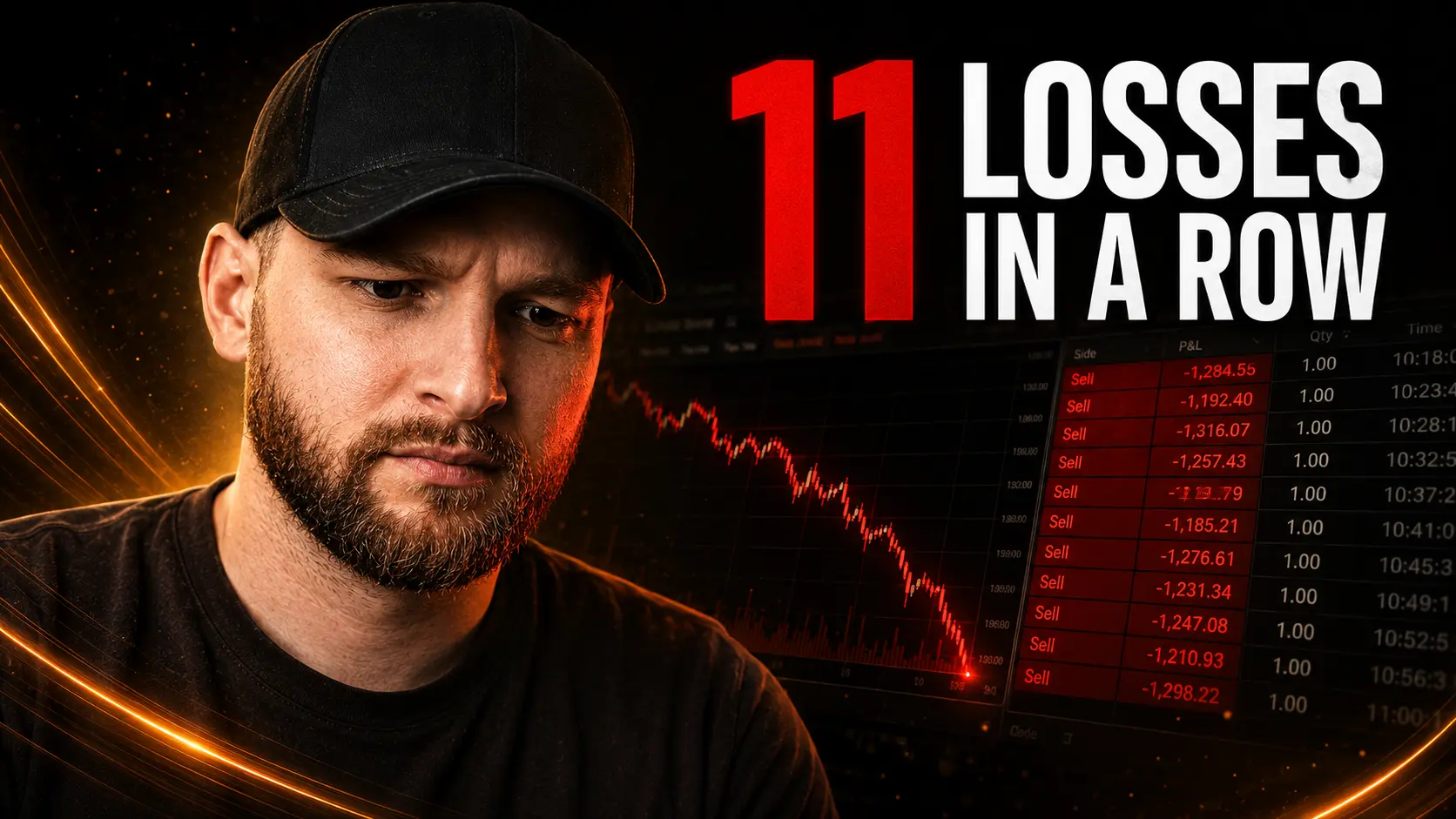
Simone Pastore began with disciplined trading, using sensible position sizes, stop-losses, and take-profits. However, after the first few losses, he repeatedly re-entered losing trades, increased his exposure, and abandoned his risk management plan. An 11-trade losing streak resulted in approximately $23,291 in losses and an 18.60% drawdown, demonstrating how revenge trading and poor discipline can quickly overwhelm a trading account.

Wyeeth Louw built a strong seven-trade winning streak, earning approximately $3,650 across Gold and Bitcoin. However, trading without a stop-loss or exit plan led to two unmanaged Bitcoin trades that lost approximately $9,277, wiping out all previous profits. The story highlights the importance of defining your risk before entering a trade and never relying on hope instead of a disciplined exit strategy.